
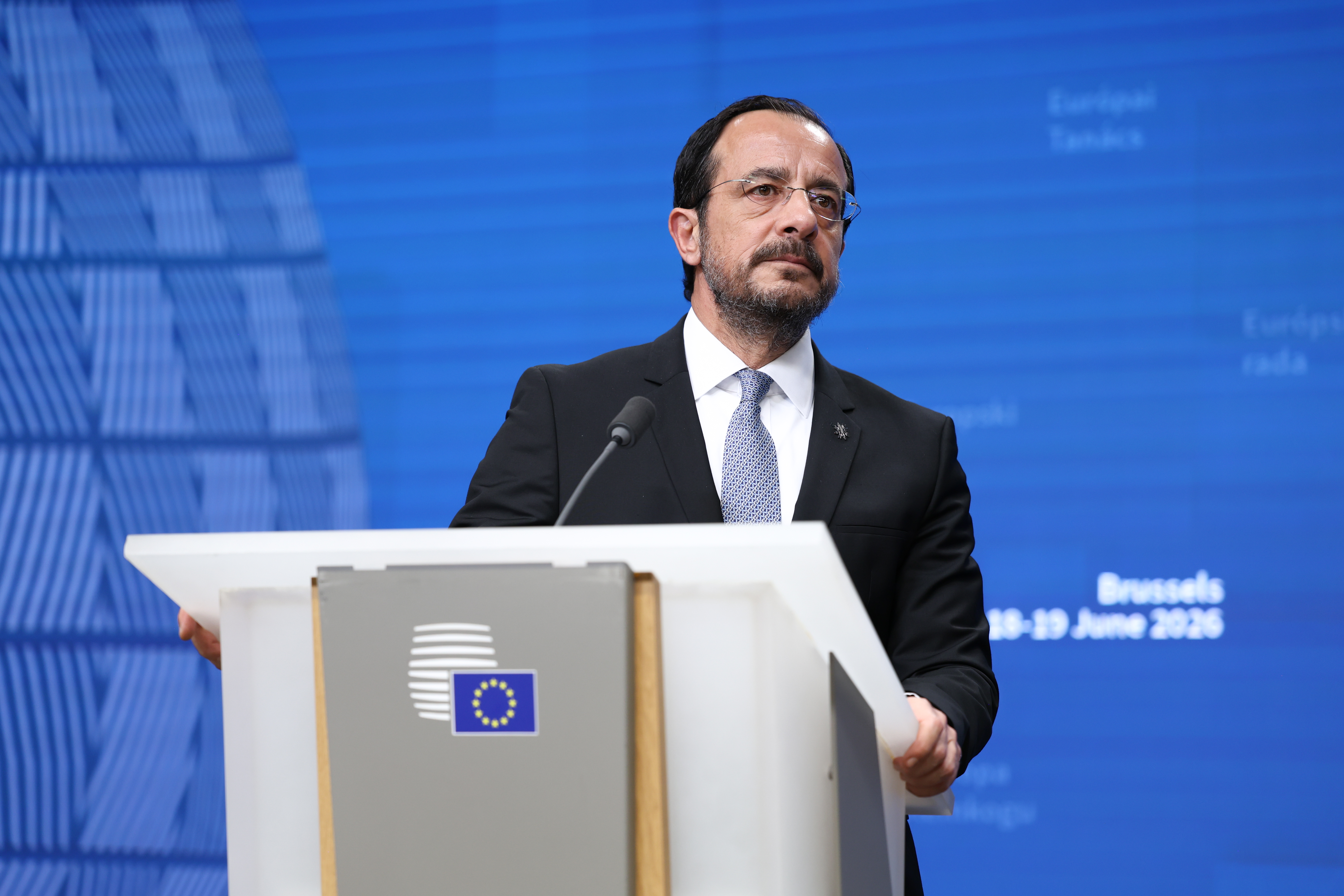
The European Union has “no other option” than to reach an agreement by the end of the year on the next multiannual financial framework, its long-term budget for the period covering the years between 2028 and 2034, President Nikos Christodoulides has said.
“That hard deadline of the end of this year is not moving. [French President Emmanuel] Macron was very clear when he said that he will not negotiate after December, and that has not changed,” he told the Cyprus Mail.
He said that it was for this reason that European Council President Antonio Costa has called an extraordinary summit to be held on November 26 and 27, with that summit to be preceded by Costa presenting a new budget proposal – the third so far for the next multiannual financial framework.
After the extraordinary summit in December, the leaders of the EU’s 27 member states will convene in Brussels again on December 17 and 18, and Christodoulides said that Costa has made it clear that come what may, a budget must be agreed upon by the end of that summit at the absolute latest.
“He told us that when we meet in December, there is no leaving and there will be no Christmas until and unless we have the budget decided and ready. There is no questions of negotiations going on into next year. It will not be accepted. The hard deadline for the budget to be devised is the end of this year,” he said.
Lithuanian president said December deadline is not ‘terribly fundamental’
His comments come after Lithuanian President Gitanas Nauseda had on Monday suggested that despite others’ insistence that a deal must be reached by the end of this year, negotiations could continue until as late as February.
“We have a very narrow window, and I would not regard it as some terribly fundamental matter whether we finish in mid-December or on February 4,” he told Brussels-based news website Rapporteur, with European leaders set to meet the following day, on February 5 next year, at Belgium’s Alden Biesen castle for an informal summit on the economy.
He explained that “the situation has been complicated” by the Spanish snap general election, which is set to take place on November 29, and added that the deadline of the end of this year is “very, very ambitious”
It has been long understood that the EU and its 27 member states have been seeking to finalise the next multiannual framework by the end of this year so as to ward off the risk of elections next year in France and Poland – and the possible election of the far right in both countries – derailing efforts to reach an agreement.
This deadline hardened at last month’s European Council summit, when Macron had told the leaders of the other 26 EU member states that France cannot agree to any budget deal after December, in view of the presidential elections being held in the country in April next year, as such a thing would be “too politically sensitive”.
Given this position, and with far-right candidate Marine Le Pen leading in the polls ahead of those elections, efforts have been heightened with the aim of striking a deal while Macron is in office and open to negotiations.
Next MFF may be 10% smaller than European Commission’s proposal
Should an agreement not be reached by the end of this year, matters may go to the wire, with the next French president unlikely to take office in mid-May, and it is possible that the winning candidate there, should it be Marine Le Pen, could change the complexion of the negotiations and the overall political character of Europe.
Elections will take place in Poland in November at the latest, meaning there could then be a mad dash to the finish for those negotiations, particularly with the legislation which follows the agreement typically taking months to negotiate with the European Parliament, draft and ratify.
For the last multiannual financial framework, EU leaders reached an agreement in July 2020 – five months out from its implementation – before then negotiating with the European Parliament until November, with member states then finalising their adoption of the agreed budget on December 14, 2020, and the parliament voting it through two days later.
This time around, Christodoulides had said last month that the overall multiannual financial framework may be more than 10 per cent smaller than the initial proposal submitted by the European Commission in July last year.
The commission had initially proposed a budget worth €1.76 trillion, which the Cypriot government reduced to €1.73 trillion when it submitted its own proposal in June while it was the holder of the Council of the EU’s rotating presidency.
Last month, the Irish government, which succeeded it, proposed a budget which amounted to only €1.62tn – an eight-per-cent cut on the commission’s proposal.



Click here to change your cookie preferences