
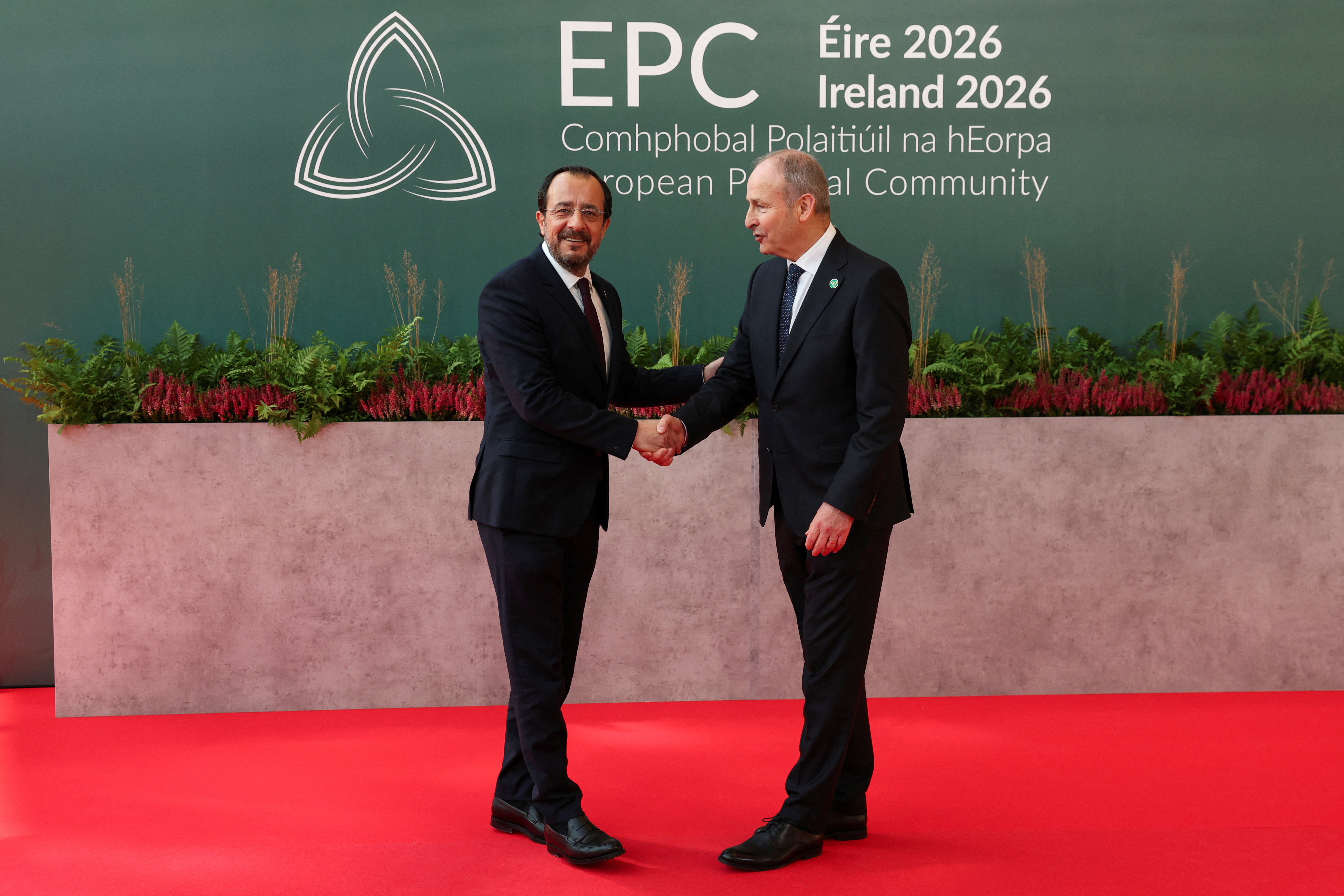
President Nikos Christodoulides on Thursday told the day’s European Political Community summit that Europe “cannot allow” hybrid attacks to become “the new normal”, with bomb hoaxes and hacking incidents increasing in frequency across the continent this year.
“Hybrid threats are becoming increasingly frequent and, perhaps most concerningly, beginning to be treated as something normal. From cyberattacks and incidents involving unmanned aerial vehicles to disinformation and foreign interference – something once considered rare – these occurrences are now increasingly becoming part of our daily lives,” he said.
As such, he said, “our response must be comprehensive, coordinated, and based on principles”.
“We have a duty to better inform and protect our citizens. Especially today with the rapid development of artificial intelligence, informing the public, raising awareness, and strengthening the resilience of our societies constitute the first line of defence,” he said.
He added that this is an approach which his government is pursuing, and said that the European Union must also “strengthen the oversight of digital platforms and technology companies”.
“Greater transparency, accountability, and effective safeguards against the malicious use of artificial intelligence are essential for protecting our democratic societies,” he said.

Christodoulides calls for use of ‘collective European tools’ to combat hybrid threats
On this front, he said that “collective European tools” to combat hybrid threats, cyberattacks, and information manipulation must be “effectively utilised”, and that the EU should also implement “targeted sanctions against those responsible for such actions”.
“The defence of Europe concerns not only the protection of borders and critical infrastructure, but also the protection of people, democratic institutions, and the trust upon which societies are built,” he said.
Cyprus was not spared last week when a wave of bomb hoaxes were sent to airlines across Europe, disrupting air traffic across the continent, with a flight from Prague bound for Larnaca having also been the subject of a threat.
That flight eventually landed safely in Larnaca, but was one of nine flights in and out of Prague airport which were the subject of bomb threats within the space of a single day, while other flights across Europe, including in Bulgaria and Portugal, were also targeted.
Controversial video deemed hybrid attack by government
The Cypriot government also concluded that the publishing of a video in January which alleged campaign finance lawbreaking on the part of Christodoulides and his associates was a hybrid attack on the government, though Black Cube, the Israeli private intelligence agency which was behind the video said it was “proud” of the work it had carried out.
It first appeared on social media on January 8, and features Christodoulides’ now former chief of staff Charalambos Charalambous and former minister Giorgos Lakkotrypis appearing to explain how they used and intended to continue to use cash donations to circumvent election campaign finance laws.
Both men also appeared to say that donations to Christodoulides by oligarchs under threat of appearing on international sanctions list would lead to him defending and assisting them to avoid sanctions from the European Union.
Following its publication, the government enlisted former Supreme Court judge Andreas Paschalides to investigate the matter. He found no criminal wrongdoing on the part of any individual featured, and said that “the conclusion is justified that the video is a form of hybrid attack aimed at harming the Cypriot state”.


Click here to change your cookie preferences