
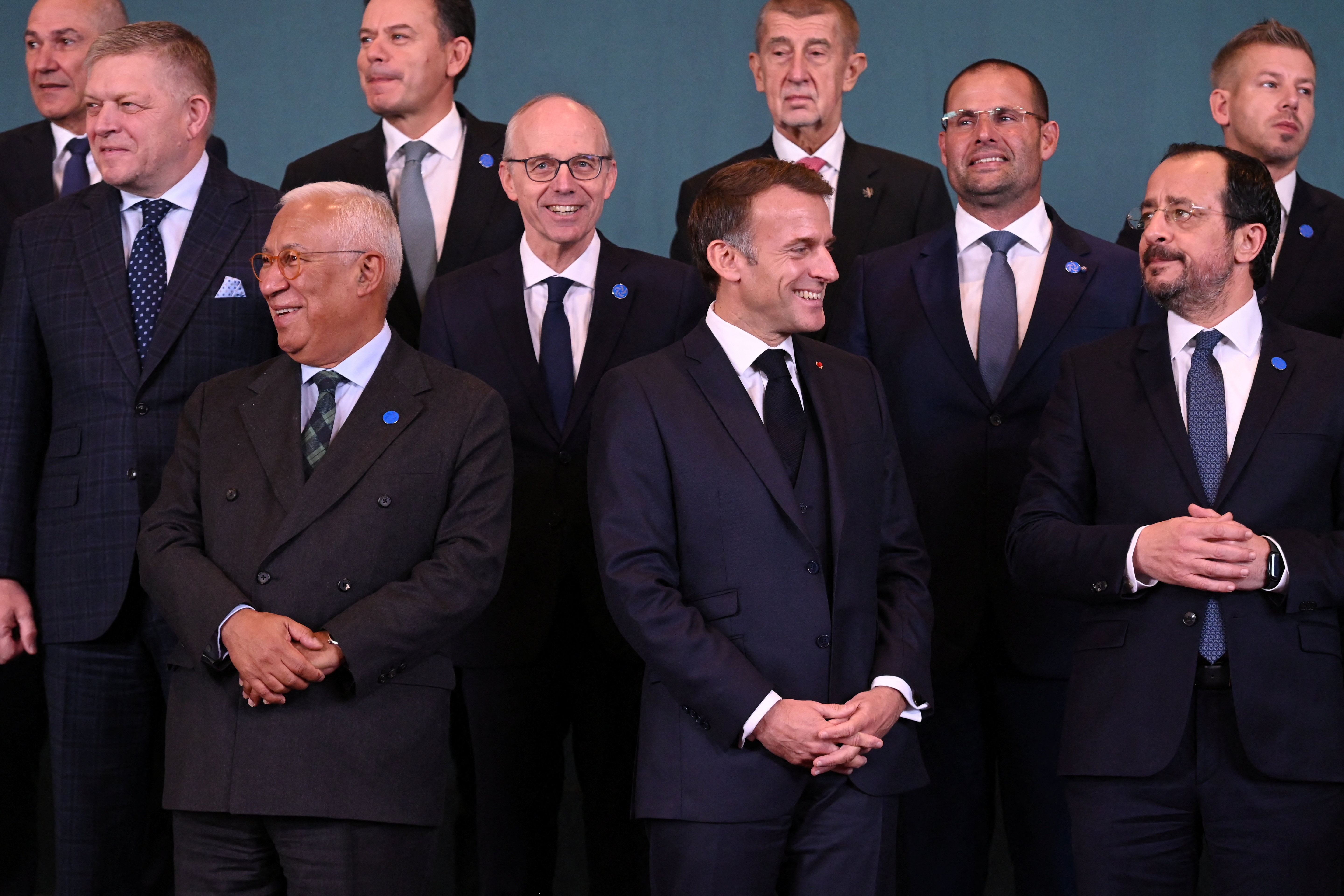
President Nikos Christodoulides was one of 39 European leaders who signed a joint statement stressing “the need to take a more comprehensive, systematic and whole-of-route approach” to countering irregular migration, on the sidelines of the week’s European Political Community summit in Dublin.
The statement was also signed by Council of Europe Secretary-General Alain Berset and European Commission President Ursula von der Leyen, with the leaders of 24 European Union member states – all except for French President Emmanuel Macron, Luxembourgish Prime Minister Luc Frieden, and Spanish Prime Minister Pedro Sanchez – among the 39 signatories.
“In the face of ongoing global instability, hybrid threats, including the instrumentalisation of migration, and the continued exploitation of vulnerable individuals by people-smuggling gangs, leaders reflected on the progress made since the last EPC, and the importance of their continued focus,” it said.
It added that “building on the priorities outlined” at the most recent summit, which was held in the Armenian capital of Yerevan in May, “leaders emphasised the need to take a more comprehensive, systematic and whole-of-route approach to countering illegal migration and the criminality which facilitates it”.
As such, they agreed on what they described as the “importance” of seven points, the first of which was “preparedness and response as key to border integrity”.
This, the statement said, “includes the use of tools like early warning systems to predict and manage flows and identify security risks”, and also includes “the need [for] new tools to respond to extraordinary threats, guaranteeing the resilience and security of borders”.
Europe must ‘tackle disinformation head-on’
Additionally, they stressed the need for Europe to “tackle disinformation head-on”, saying that “European countries have a key role to play in exposing the dangers of illegal crossings and countering false narratives”.
They also said that “information” must remain “at the heart of European efforts”, stressing that “partners should collaborate to align efforts as new approaches and innovative solutions are developed, tested and pursued”.
As well as this, they said they must “work together upstream”, explaining that “this includes supporting migrants and countries of origin and transit to keep people safer closer to home, and prevent dangerous onward journeys to Europe, while fostering skills development, job creation and mutually beneficial partnerships”.
On the matter of returning irregular migrants, they said they must “strengthen cooperation with countries of origin and transit, including by making effective use of available tools and incentives”.
This, they said, must “ensure that those without a right to stay in Europe can be returned effectively and in accordance with international law”.
In addition, they called for “more information flowing across borders”, saying that “smuggling gangs are experts in evading law enforcement, and seek to abuse immigration systems”.
International conventions ‘a cornerstone of protection’
“Information should be shared more seamlessly and systematically to keep pace with border security challenges and strengthen operational cooperation against criminal networks,” it said.
The final of their seven points was that international conventions are “a cornerstone of protection”, with the statement referencing the 1951 refugee convention and the Chisinau declaration, signed in Moldova this year, with the statement saying that the leaders had “stressed the importance of ensuring that conventions continue to meet modern migration challenges”.
This, it said, must be done “so that protection frameworks remain credible and sustainable”.
“Leaders affirmed their commitment to international collaboration on these issues, including through continued cooperation with the European Union and the Council of Europe,” it said.
It added that they had agreed to “keep momentum toward a sustained reduction in numbers”, and to discuss the matter again when the European Political Community next convenes in Switzerland in April.


Click here to change your cookie preferences