
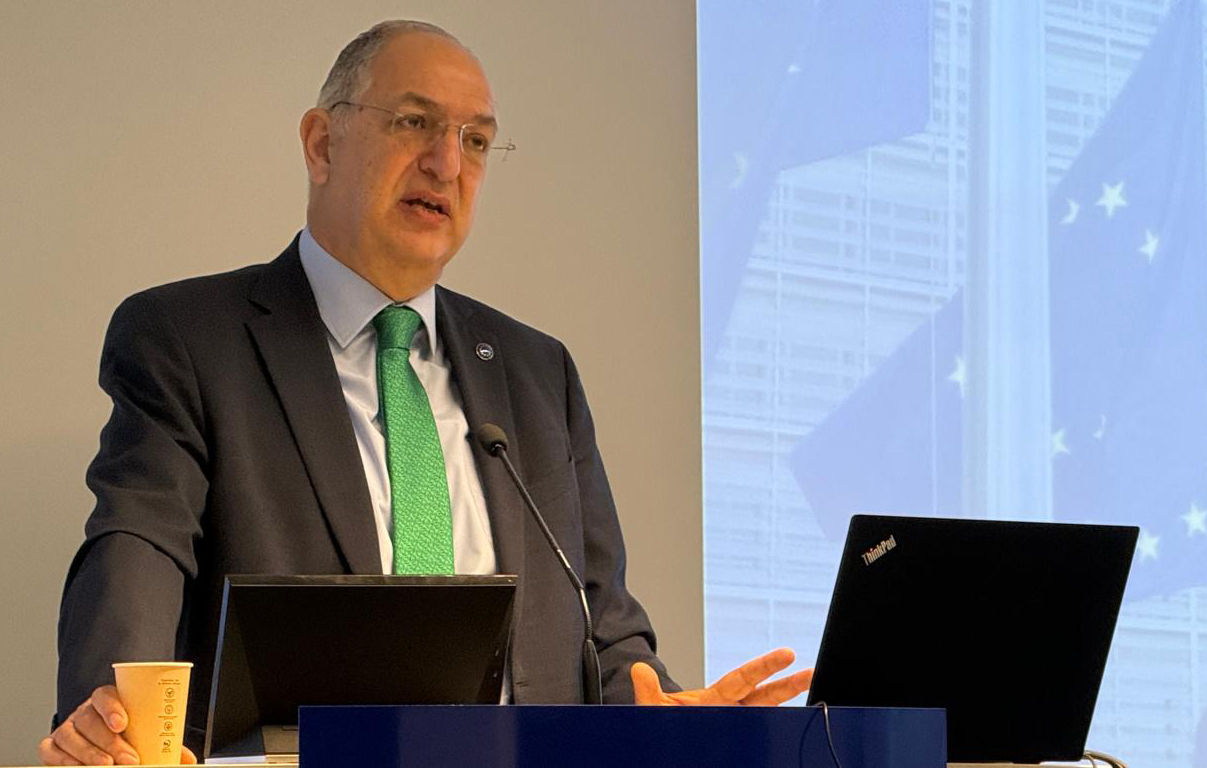
Cyprus’ close relations with most of its neighbours can aid the European Union’s fight against illegal and unregulated fishing when it takes over the Council of the European Union’s rotating presidency at the beginning of next month, European fisheries commissioner Costas Kadis said on Tuesday.
He told journalists that during the island’s six-month term, it is planned that an informal summit of ministers responsible for fisheries from EU member states in the Mediterranean region and neighbouring countries will be held in Cyprus with the aim of boosting the fight against illegal and unregulated fishing.
“Our fishermen make frequent complaints that fishermen from non-member states do not respect the rules and regulations” which govern sea fishing, he said, adding that such complaints have been expressed by Cypriot fishermen, as well as their colleagues in Croatia, Greece and Malta, before stating that Cyprus, during its six-month term, can open doors.
“Except for one, which we know about, Cyprus has very good relations with other neighbouring states,” he said.
Asked by the Cyprus Mail how Cyprus’ relations with neighbouring countries can be utilised in this regard, he said that one of the EU’s aims to this end is to “share good practices” executed in Europe to fight illegal fishing with governments of third countries so that they, too, can execute them.
“The goal is coordination with other states so that this anarchy, this unregulated fishing, is limited and brought to an end,” he said.
He then made reference to the MedFish4Ever declaration, signed in Valletta in 2017 when Malta held the Council of the EU’s rotating presidency, which set out a list of targets to be achieved over a ten-year period with the self-declared aim at the time of “saving the Mediterranean fish stocks and protecting the region’s ecological and economic wealth”.
He said that it is hoped that a new MedFish4Ever declaration will be signed in 2027 when Greece holds the rotating presidency, and that preparation work for such a declaration will begin in earnest in the coming months, during Cyprus’ six-month term.
The 2017 declaration was signed by European fisheries commissioner of the day Karmenu Vella, as well Croatia, France, Greece, Italy, Malta, Slovenia, Spain, and then agriculture minister Nicos Kouyialis of Cyprus, and representatives of non-EU member states Albania, Montenegro, Morocco, Tunisia, and Turkey.
Vella said at the time that in signing the declaration, the 13 countries and the EU were “making history”.
“We are affirming our political will to deliver tangible action … on fisheries and other activities that have an impact on fisheries’ resources, on the blue economy, on social inclusion, and on solidarity between the northern and southern shores of the Mediterranean,” he said.
That declaration had also promised to “develop a culture of compliance and eliminate illegal, unreported, and unregulated fishing”, with Kadis saying on Tuesday that he hopes the 2027 declaration will not only bring about a crackdown on illegal fishing but also promote sustainable fishing.
In addition to the planned meeting and 2027 declaration, Kadis also made reference to the EU’s methods of dealing with states which it says “turn a blind eye to illegal fishing activities”.
The EU operates a “yellow card” and “red card” system against such states, with the “yellow card” considered to be a first and final warning. A “red card” sees the state in question placed on the list of non-cooperating countries, with all fisheries products from that country then banned from the EU’s market.





Click here to change your cookie preferences