
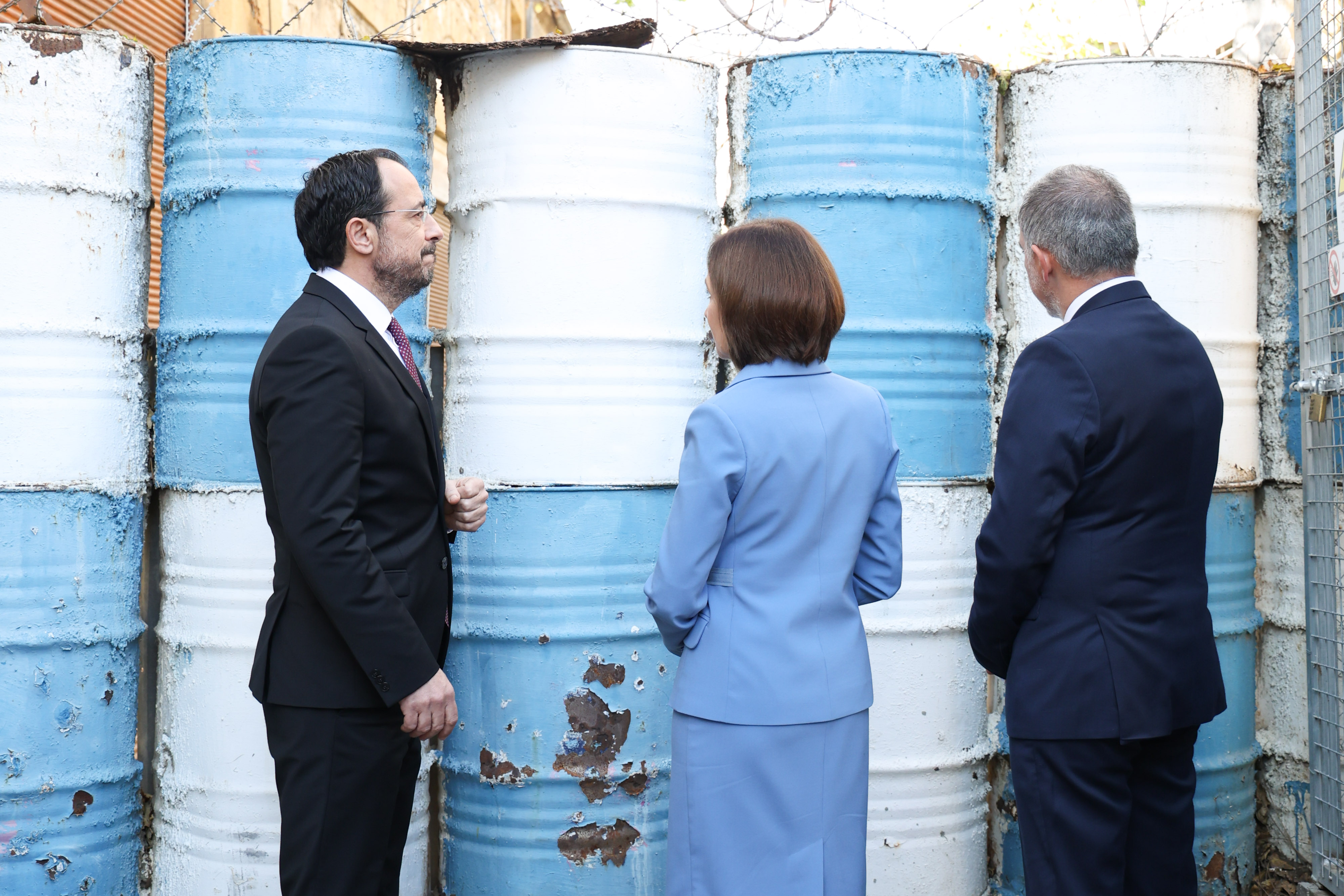
President Nikos Christodoulides came up with another proposal in an interview with Politico last week. He said that if Turkey agreed to the Cyprus Republic joining Partnership for Peace (PfP), the waiting room for Nato membership, Cyprus would by stages lift the obstacles to a closer cooperation between the EU and Turkey.
“We could imagine a step-by-step approach, with steps by Turkey for accession of Cyprus into PfP, and in parallel positive steps in EU-Turkey relations, always in combination with the resumption of negotiations for a settlement of the Cyprus problem, within the agreed framework,” he said.
This was another nebulous proposal, of the type the president seems to specialise in, uttered for effect rather than for anything else. What are the chances that Turkey would engage in discussions with a Republic it does not recognise and has dismissed as ‘defunct’? And what are the chances Turkey would agree to the ‘defunct’ Republic dictating the positive steps that would be taken for improving Ankara’s relations with the EU?
Whichever way the proposal is looked at, it is a non-starter. Even the timing was bad. On the same day Christodoulides’ interview was published Nato secretary-general Mark Rutte spoke about Russia’s threat to Europe, warning that Russia could be ready to use military force against Nato in five years. There are infinitely more important issues for Nato to deal with than Cyprus’ problematic membership aspirations.
In a speech in Berlin, Rutte stated: “Conflict is at our door. Russia has brought war back to Europe…. We are Russia’s next target.” He urged members of the alliance to increase defence spending and production to prevent a war waged by Russia that could be “on a scale of war our grandparents and great grandparents endured.”
Meanwhile, on Friday, the German government said it was “observing a significant increase in Russian hybrid activities,” claiming that a Russian campaign “seeks to destabilise Germany.” Apart from allegedly being behind information manipulation aimed at disrupting February’s federal elections, Germany’s government also blamed August’s cyber-attack on German air safety systems on a Russian hacker collective. A spokesman said the Russian ambassador to Berlin had been summoned.
A few days earlier, Britain’s Foreign Office made similar allegations against Russia in a policy paper, which also spoke about “an escalation of hybrid threats” that were “designed to destabilise our democracies, weaken our critical national infrastructure, and undermine our national interests, all for the advantage of malign foreign states.”
European states are not making things up and we do not think the Nato chief is exaggerating the Russian threat to Europe, which has been stepped up as a result of US president Donald Trump’s consistent pandering to Moscow, that he is intent on rewarding for its aggression against Ukraine. His peace proposal essentially dictates the capitulation of Ukraine to Russia and the surrender of more territory than has been captured by force of arms. The recently released US national security strategy – a foreign policy statement – shows greater hostility towards Europe than towards Russia which is openly threatening European security. Trump’s ambiguous stance towards Nato is also a major concern for Europe.
Against this background, how realistic is it of Christodoulides to think there is the slightest outside chance that his proposal regarding PfP and Turkey would even be registered let alone discussed? There is not a chance that in these times, when Europe and Nato are bracing for an uncertain future, that Turkey would be put under any pressure regarding its so-called Cyprus-related obligations to the EU or made to lift its objection to Cyprus’ Nato membership. The country that boasts Nato’s largest standing army in Europe is untouchable in times like these, even though Ankara remains on relatively good terms with the Kremlin.
As an experienced diplomat, Christodoulides must understand this and adjust his own policy objectives accordingly. When Europe is said to be under existential threat, a tiny country, without any defence capability, has no role to play, despite its supposed geostrategic importance. It is naïve to think that at a time when military power is the only things that matters, a country with none would be able to set the agenda. Cyprus may have the presidency of the European Council in two-and-a-half weeks, but it is imperative the president starts displaying the sense of perspective that has been completely lacking from his discourse.





Click here to change your cookie preferences