
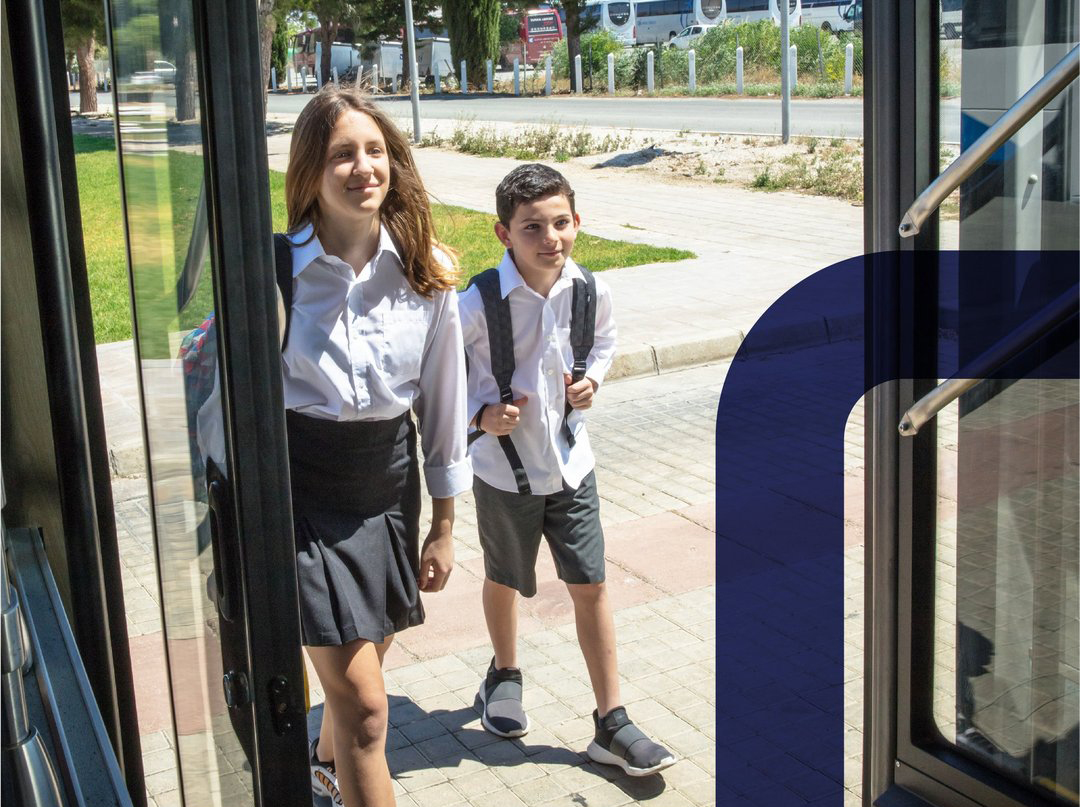
School buses for primary and secondary school students will not be operated on Thursday, due to the planned strike by teachers, the transport ministry said on Wednesday.
The strike will cover the first two periods, from 7.30am to 9am for Oelmek members and from 7.30am to 9.05am for Poed members, affecting about 310,000 students and parents.
Parents and guardians are advised to make alternative arrangements to ensure students arrive at nursery and primary schools by 9.05am, and high schools by 9am, during the disruption of morning school bus services.
Parents and guardians of children attending special education units in primary and secondary schools who travel by taxi must contact the driver to arrange transport at 9.05am instead of the usual 7.30am, the ministry states.
According to the ministry, buses will operate as usual to bring children home from school in the afternoon.
Buses for technical and vocational education and training schools will operate as normal throughout the day.
The ministry adds that students who are unable to reach school on time after the teachers’ measures end, will not be marked with absences.
Regarding secondary general education schools, including all-day special interest schools, any student absences for the full school day will be recorded but not counted.
Secondary technical and vocational education and training schools will operate normally and take attendance.
Students with general education classes taught by Oelmek members during the first two periods will be kept “creatively engaged,” depending on each school’s programme.
Community kindergartens are private and not affected by the public teachers’ strike. Parents should contact their kindergarten directly for details on operations and arrangements.
Teachers in primary and secondary education will face salary sanctions in line with relevant legislation.
The primary school parents’ association has appealed to educational organisations to reconsider the planned work stoppage.
The association’s president, Yiannis Ioannou, told Trito the reason for the strike remains unclear, as the organisations have yet to explain their objections to the bill.
According to Ioannou, in a meeting with the education minister, the association requested letters be sent to schools reminding teachers of their right not to strike.
Several teachers have already contacted him saying they do not wish to strike, giving hope that those who genuinely care about schools will go to work, he said.
Ioannou added that if a number of teachers turn up to schools despite the strike, the association is ready to support them so students can attend classes as usual.
President of the confederation of parents’ associations of public secondary schools, Loizos Constantinou, said that parents have expressed anger over the work stoppage.
“It is one thing to demand, another to want something for your sector, for your profession, for your conditions, and another to affect the rights of third parties and in this case the children and to inconvenience the parents,” he said, adding that the total number of parents and students affected is around 310,000.
“At 9 o’clock, one third of the population must be on the streets simply to take the children to school,” he pointed out.
Constantinou also said he is in contact with the ministry and that efforts are being made to find solutions, as buses cannot change their routes.
“Special arrangements will be made particularly for those from remote areas, so that children do not have absences, those who cannot get to school, and the indications we have are that the number of pupils who will manage to go will again be very small,” he said, adding that a relevant announcement will be made by the ministry.
Speaking on the same show, Oelmek president Demetris Taliadoros said, “One of the basic lessons is that democracies are not blackmailed. In democracies, the worker has the right to strike, which must, since it is constitutionally protected, be respected.”
Poed president Myria Vasiliou said the union had its members’ authorisation to strike since June but had refrained to do so until now.
“When an educational organisation which activates the strike measure sparingly does so, this alone should send messages and make it clear that to be forced to reach this point, […] our patience has been exhausted.”





Click here to change your cookie preferences