
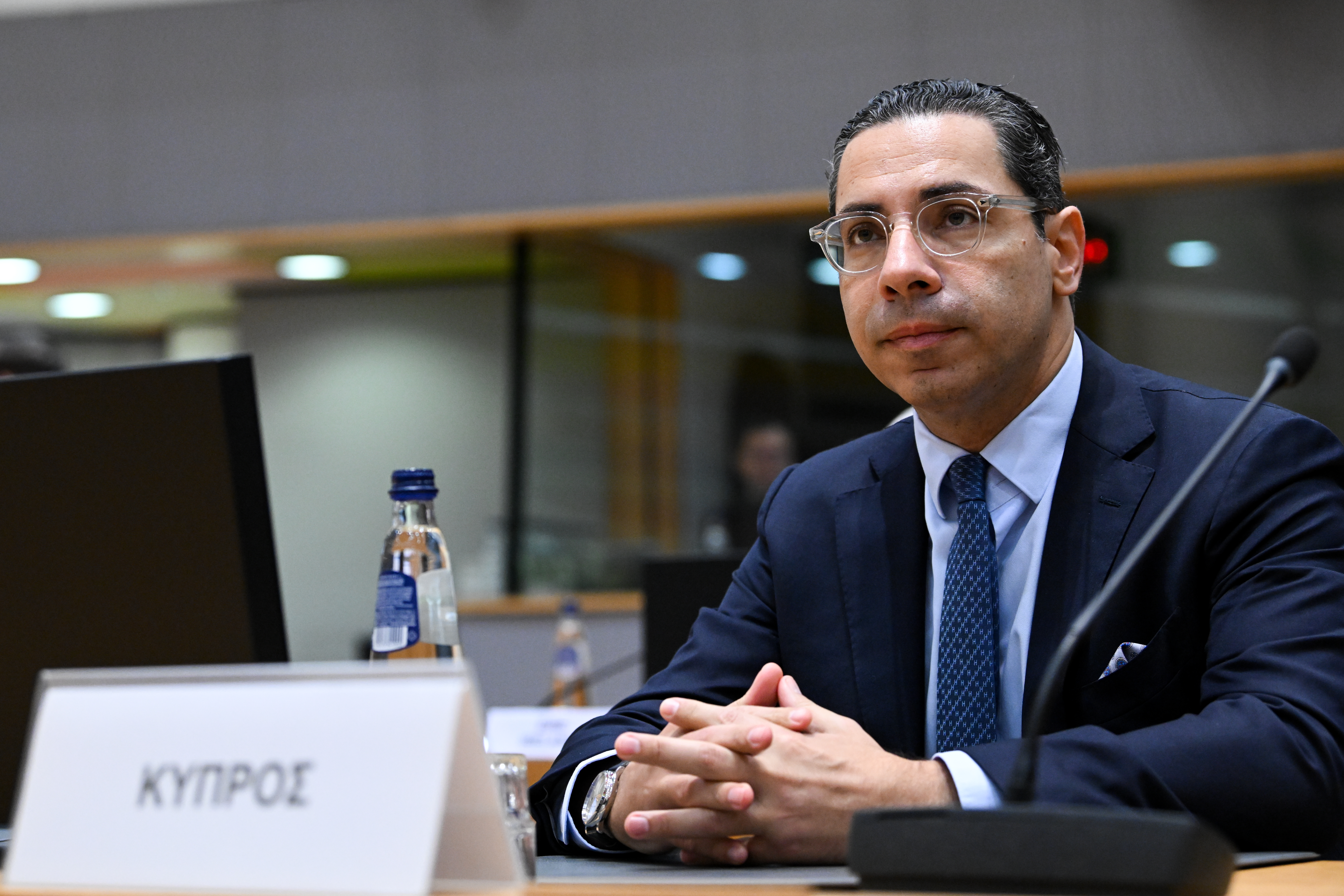
The war in Ukraine is “a test for European values”, Foreign Minister Constantinos Kombos said on Wednesday.
“It is a test for European values, a determining factor for the stability of Europe, and a testing ground for European economies,” he told the European Parliament’s foreign affairs committee (Afet).
He added that “sovereignty and territorial integrity and the inviolability of borders are under attack”, and likened the situation in Ukraine to that of Cyprus.
“My country has experienced this and continues to experience it, despite the fact that it is a member state of the European Union, from a country which remains a candidate for membership,” he said.
He added the EU “supports Ukraine across the spectrum, including through sanctions and through strong measures”, and stressed that this would remain the goal of the Cypriot government during its six-month term as the holder of the Council of the EU’s rotating presidency.
Later in his speech, he made reference to the €90 billion loan offered by the EU to Ukraine, which was ratified by the European Parliament last week, saying that the Cypriot government was ready to facilitate the rapid completion of the process of providing the funds by April.
Ukrainian President Volodymyr Zelenskiy had visited Cyprus earlier this month, saying at the time that “we are working to make as much progress as possible during this period on opening negotiating clusters and on Ukraine’s accession to the European Union”.
He had met his Cypriot counterpart Nikos Christodoulides, and said after that meeting that he and Christodoulides had “talked about strengthening sanctions against Russia, which must remain in place as long as Russia’s aggression and occupation continue”.
Christodoulides had at last month’s European Council summit said that the EU must “confront” countries which attempt to help Russia evade sanctions placed on it as a result of its invasion of Ukraine.
The EU unveiled its most recent round of sanctions against Russia – its 19th since the invasion of Ukraine in 2022 – in October last year, with those sanctions including a full ban on imports of Russian liquefied natural gas (LNG), which will come into effect on January 1, 2027, for long-term contracts and “within six months” for short-term contracts.
This sanction may prove to be a boon for Cyprus, which expects to be able to export its own LNG to Europe via Egypt in 2027.
European Energy Dommissioner Dan Jorgensen at the time described the ban on Russian LNG as “an unprecedented move that the EU makes in unity and full solidarity with Ukraine”.
“It will deal a major blow to Putin’s war machine and sustain peace efforts for Kyiv. Europe must regain its energy independence. Ukraine must prevail,” he said.


Click here to change your cookie preferences