
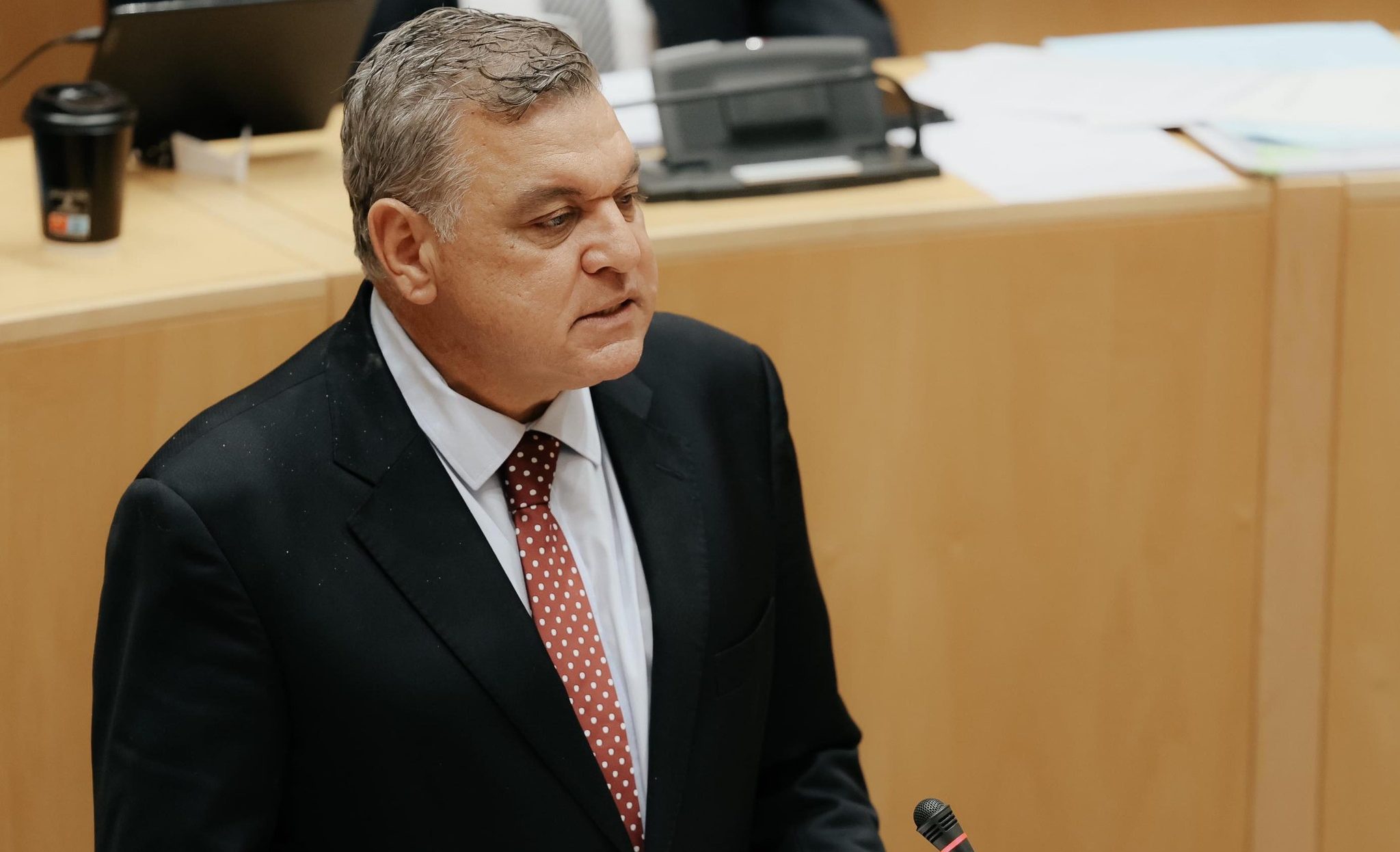
The criminal investigation file concerning Disy MP Nikos Sykas has been forwarded to the legal service, while the Limassol parliamentarian prepares to file a civil lawsuit against his party over his exclusion from the election ballot, according to local media reports on Monday.
The case stems from a complaint filed by Sykas’ partner over an alleged incident of violence that took place in Athens on New Year’s Eve.
Although the complainant later withdrew her allegation through a sworn statement, police continued the investigation, citing their obligation to pursue suspected domestic violence cases regardless of withdrawal.
Investigators from the Limassol police family violence unit are reported to have recently travelled to Athens, where they took statements from individuals identified by both sides as having knowledge of the incident.
The case file includes witness statements, photographic evidence, medical certificates and forensic reports.
Sykas is being investigated for offences including physical and psychological violence as well as assault causing actual bodily harm.
Following the completion of the investigative stage, the file was sent last week to the legal service, which will study the material and decide on whether to proceed with criminal charges.
After the supreme court unanimously lifted his parliamentary immunity earlier this month, Sykas gave a lengthy statement to investigators at the Limassol criminal court, accompanied by his lawyer Christos Pourgourides.
He denied striking or threatening his partner and rejected the allegations in their entirety.
Disy decided last month to remove him from the party’s ballot for the May parliamentary elections, citing its zero-tolerance stance on violence against women.
Sykas now intends to challenge that decision in court.
According to local media, he is expected to file a civil lawsuit tomorrow at the district court, allegedly to overrule the decision as illegal.
His legal team argues that the party acted prematurely and in breach of basic principles of fairness.
Pourgourides has said the decision was taken “without first hearing the person concerned” and amounted to a political misuse of the supreme court ruling on immunity.
“The court did not examine the substance of the allegations,” he has stressed.
“It ruled only on whether the police should be allowed to investigate.”
Disy’s leadership has defended the move as a matter of principle rather than of guilt.
Party leader and House president Annita Demetriou has said that “violence of any kind is incompatible” with Disy’s values, while emphasising respect for the presumption of innocence.
Disy’s Limassol branch publicly defended the principle that “everyone is innocent until proven guilty” and warned against what it described as exploitation of the case by organised interests.
“Judgment belongs to the justice system, not the court of public opinion,” the branch said in a statement.
The supreme court, in lifting Sykas’ immunity, ruled that the alleged offence was serious and unrelated to his parliamentary duties, underlining that “everyone is equal before the law”.
Authorities have repeatedly stressed that the withdrawal of the complaint does not automatically halt criminal proceedings in cases involving alleged domestic violence.
In a public statement, Sykas said he “categorically” denies the complaint and criticised what he described as a public trial before evidence had been evaluated.
He has also questioned why a political sanction should be imposed before the completion of judicial proceedings.



Click here to change your cookie preferences