
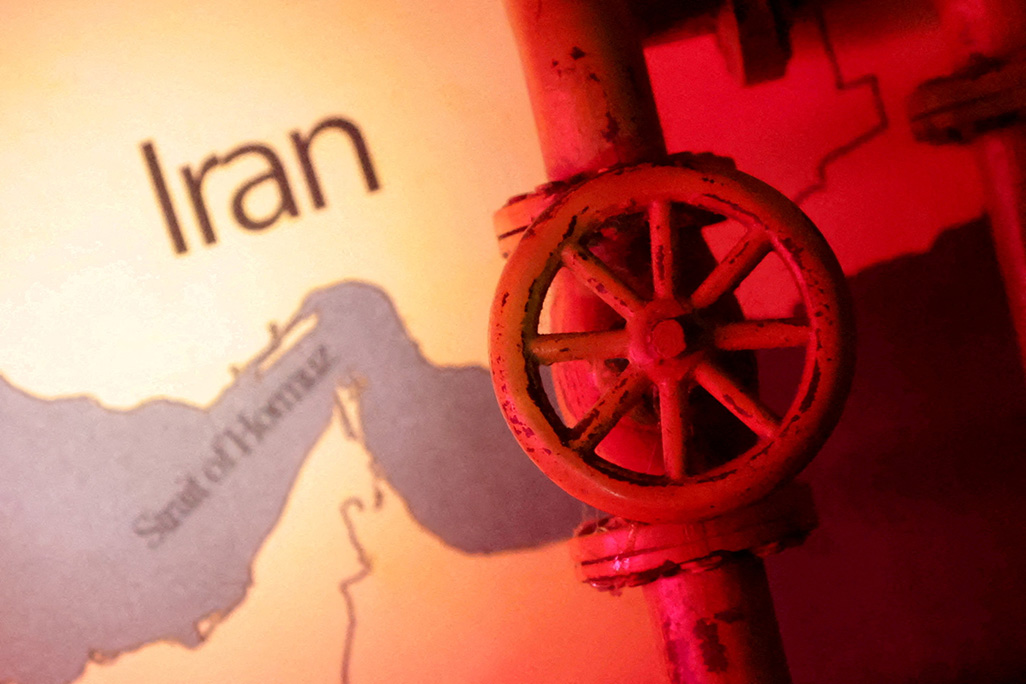
Middle East crisis is unprecedented and deeply worrying, warns Eurogroup boss
Eurogroup president Kyriakos Pierrakakis on Wednesday warned of an “unprecedented and deeply worrying” crisis in the Middle East, stressing that its duration will determine the scale of consequences for Europe.
Speaking at the annual forum of the European Investment Bank Group (EIB) in Luxembourg, Pierrakakis said the global environment is marked by significant uncertainty.
“We are at a moment when developments in the Middle East have intensified significantly, with repercussions that now reach Europe’s shores,” he said.
“What is unfolding constitutes an unprecedented and deeply worrying crisis, placing significant pressure on an already fragile international order,” he added.
He underlined that instability at the heart of global energy flows and critical trade corridors has direct and measurable consequences for Europe.
“The Middle East lies at the core of global energy flows and critical trade routes,” Pierrakakis said.
“When instability reaches that core, the consequences are immediate and measurable. Energy prices are rising. Transport and insurance costs are rising,” he added.
“The full scale of the impact will depend on the duration of the crisis,” he continued.
“That is where the real effects on maritime transport, supply chains and investor confidence will become visible,” he stressed.
Turning to broader strategy, he declared that “the era of geopolitical innocence has ended”, arguing that European sovereignty is now a prerequisite for economic survival and institutional strength.
“There is a clear sense of urgency, with full understanding that, in times of crisis, time is never neutral,” he said, referring to the need for strategic autonomy and resilience amid multiple geopolitical shocks.
“The Europe has the tools to shape events and reaffirm its strategic strength. We must move quickly and in a coordinated way to secure this,” he added.
Addressing internal economic challenges, he said Europe does not lack ideas, talent or savings, but scale.
“Europe does not suffer from a lack of ideas, does not suffer from a lack of talent, does not suffer from a lack of savings,” Pierrakakis stated.
Moreover, he said that “what is missing is the scale and the channels to turn savings into innovation”.
He described the Savings and Investment Union as “a structural reform that Europe has postponed for too long”.
“But it is also why we must now speak seriously about the next level the modernisation of the infrastructure through which capital moves,” he added.
Referring to the European Investment Bank and the European Investment Fund, he said they are “not merely lenders. They are builders of European capacity, reducing investment risk where markets hesitate”.
“In other words, the EIB Group is one of the few institutions with the legitimacy and credibility to bridge European savings with Europe’s need for scale,” he stated.
On digital finance, he said it represents a structural transformation in how capital is raised, allocated, settled and supervised.
“Digital finance is not a marginal upgrade. It is a structural transformation in the way capital is raised, allocated, settled and supervised. If we succeed, digital finance can do something profoundly important for Europe it can reduce distances,” he explained.
“Reduce the distance between savers and innovators, between small businesses and large capital, between national markets and a truly European market,” he continued.
Through this approach, he argued, “Europe can strengthen its strategic autonomy, reduce the cost of capital and finance innovation at scale while safeguarding the credibility and stability of the financial system”.





Click here to change your cookie preferences