
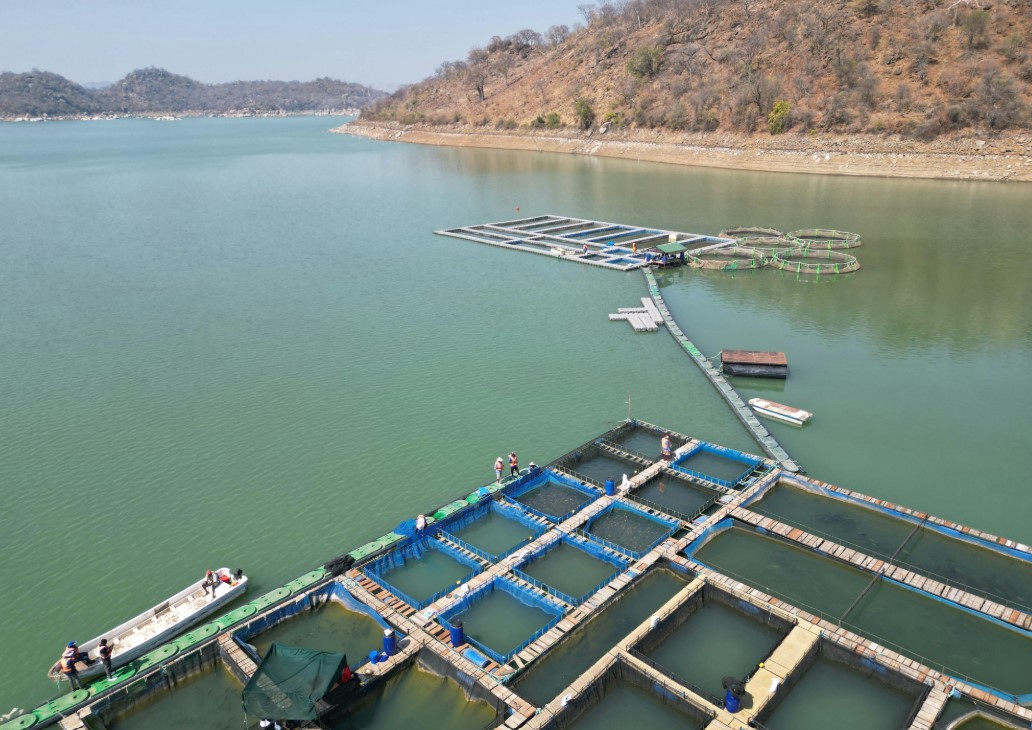
Cyprus produced 9,053.9 tonnes of farmed aquatic organisms in 2024, as overall aquaculture output across the European Union declined in both volume and value.
According to a report from Eurostat, total EU production of fish, molluscs, algae and crustaceans reached 1 million tonnes during this time, with a total value of €4.6 billion.
Compared with 2023, EU aquaculture production contracted by 3.7 per cent in volume and 3.6 per cent in value, reflecting a downturn in the sector.
Within this context, Cyprus’ output of 9,053.9 tonnes highlights its role as a smaller but active contributor to European aquaculture.
Production across the EU was heavily concentrated, with five countries accounting for just over two-thirds of total output.
Spain led production with 246,137 tonnes representing 24.3 per cent of the EU total, followed by France with 181,434 tonnes or 17.9 per cent.
Greece ranked third with 127,493 tonnes accounting for 12.6 per cent, while Italy produced 98,051 tonnes or 9.7 per cent and Poland 43,554 tonnes or 4.3 per cent.
Although Cyprus’ output remains significantly lower than the leading producers, it continues to contribute to the diversified structure of EU aquaculture production.
In terms of species, mussels dominated EU aquaculture in live weight with 32.8 per cent, followed by trout at 17.2 per cent and gilthead seabream at 10.0 per cent.
However, when measured by value, trout ranked as the most valuable species at 17.9 per cent of total aquaculture value.
Seabass followed with 14.5 per cent, while gilthead seabream accounted for 13.5 per cent, underlining the economic importance of these species.





Click here to change your cookie preferences