
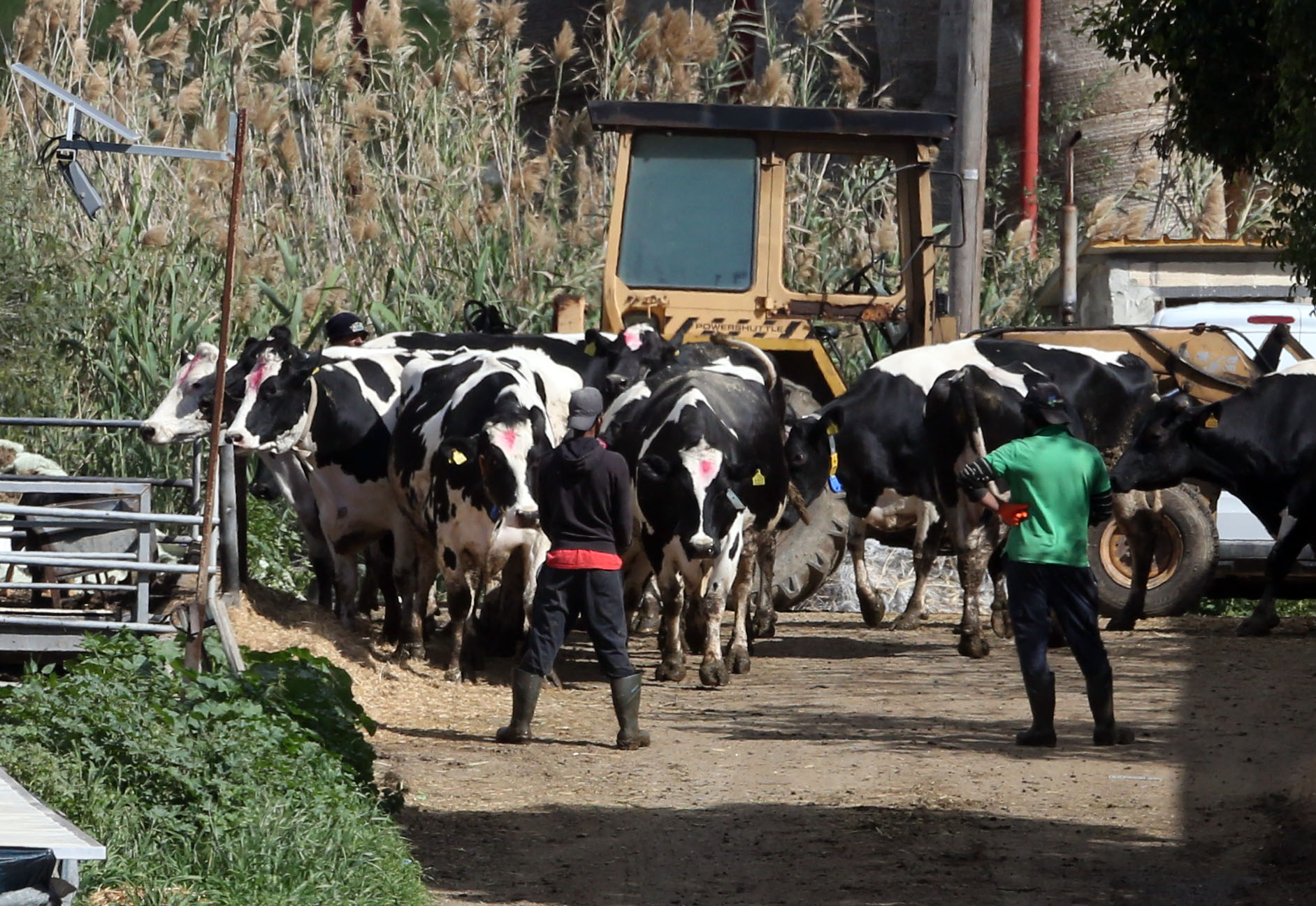
No positive cases of foot-and-mouth disease (FMD) have been detected during ongoing testing in the restriction zones, particularly around Pachna, while vaccinations are set to resume next week, members of the epidemiological team said on Friday.
The announcement came after a meeting with the Veterinary Services.
Speaking afterwards, team member and Tepak professor Demetris Tsaltas said only a small number of farms remained to be tested.
“There are still a few farms pending in Pachna and we hope the results there will also be negative,” he said.
According to Tsaltas, “830 livestock units across Cyprus have so far been inspected, excluding the remaining pending tests in the Pachna area.”
In Paphos, all second-round tests have returned negative results, while similar testing is due to continue within the 10-kilometre restriction zone in Limassol.
Tsaltas said approximately 2,293 cattle, or 3.5 per cent of the national herd, have been culled since the outbreak began. A further 43,411 sheep and goats, representing 9.5 per cent of the total population, and 23,242 pigs, or 7.7 per cent of the national herd, have also been culled.
Over the past week, 31 livestock units have been tested, with results from 25 already returned.
He praised the contribution of the police and National Guard in managing the outbreak.
“The assistance offered by the police and National Guard has been very, very important,” he said.
According to Tsaltas, police have been dealing with minor breaches of the relevant decrees, while National Guard personnel have assisted with disinfection operations.
“I believe that for the time being we are managing to control the situation and of course we will continue along the same lines,” he added.
Tsaltas said that before one concludes that the danger is over, an evaluation must be carried out and vaccinations must continue.
He said the current programme is expected to continue until early or mid-August.
“So far, the combination of biosecurity measures, vaccinations and restrictions appears to be working,” he said.
Tsaltas also urged farmers and members of the public to remain vigilant and report anything unusual to the Veterinary Services or the police.
“This is something that concerns us all, not just the farmers,” he added.
Tsaltas was not able to say when farming units that saw their livestock culled would be able to start bringing in new animals.
“Some preconditions must be met beforehand,” he explained.
For the time being, he added, those units would remain empty. “Luckily summer is here, with sunny days and high temperatures helping destroy the virus.”
“We estimate that by autumn there will be no new cases. The units can then be inspected, a small number of animals introduced and tested, and we can begin considering the restoration of the farms,” he said.





Click here to change your cookie preferences