
Record cocaine seizures and the emergence of powerful new synthetic drugs have prompted concern among Cyprus police, who warned on Wednesday that criminal networks are rapidly adapting their methods and introducing increasingly dangerous substances to the local market.
Unveiling anti-drug squad (Ykan) statistics for the first half of 2026, police said they had already seized more than 75kg of cocaine this year, surpassing the total amount confiscated during the whole of 2025 by 130 per cent, alongside sharp increases in methamphetamine seizures and the appearance of several synthetic drugs not previously encountered in such quantities in Cyprus.
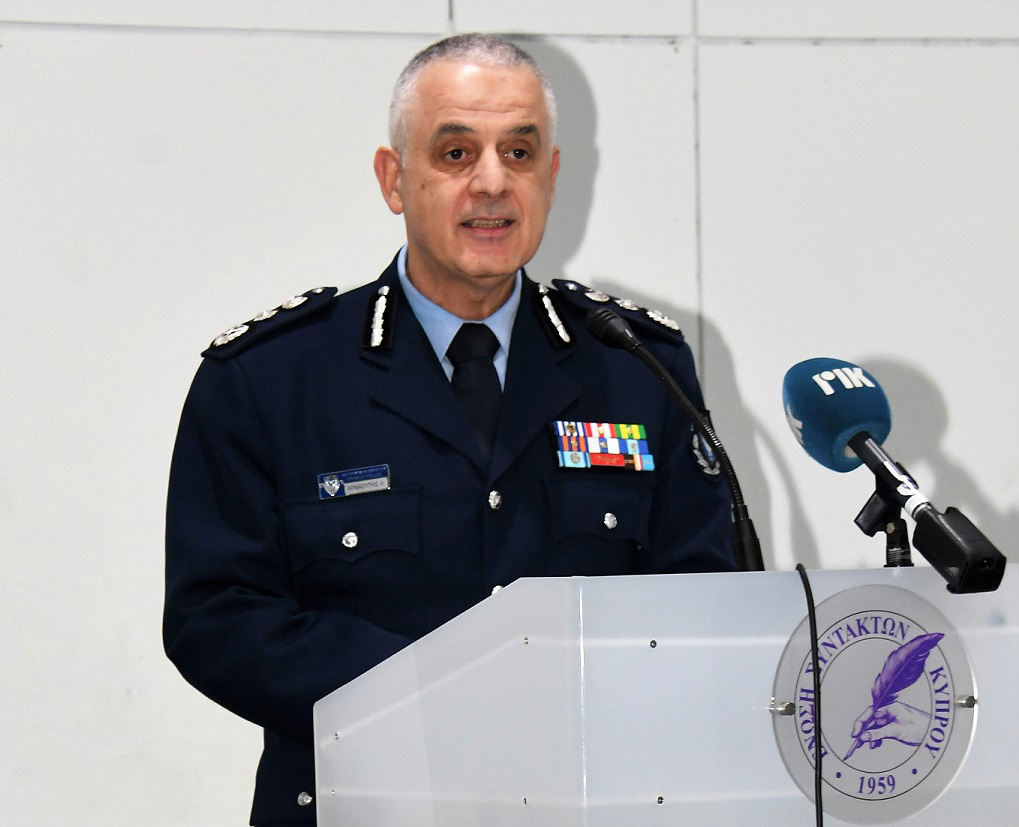
The announcement comes ahead of the International Day Against Drug Abuse on June 26 and was accompanied by a warning from police chief Themistos Arnaoutis that drug trafficking remains one of the main sources of income for organised crime groups worldwide.
“We cannot speak about drugs without speaking about serious and organised crime,” he said.
“The two phenomena are directly linked. One feeds and strengthens the other.”
Arnaoutis said police strategy was increasingly focused not only on intercepting drugs and arresting traffickers but also on dismantling criminal networks and tracing the illicit profits generated by the trade.
He said the seizure figures represented far more than statistics.
“They are substances that never reached our streets, our schools or our neighbourhoods. They represent risks that were prevented and lives that were protected,” he said.
The figures, he added, highlight two realities, that criminal organisations are constantly evolving and seeking new ways to profit, and that Ykan must continually adapt to new forms of trafficking and emerging threats.
According to Ykan chief Christos Andreou, authorities seized 71.5kg of cocaine by June 22, compared with 30.2kg during the corresponding period last year. The figure increased further after officers intercepted four kilograms of liquid cocaine at Larnaca airport on Tuesday hidden inside bottles of cleaning products.
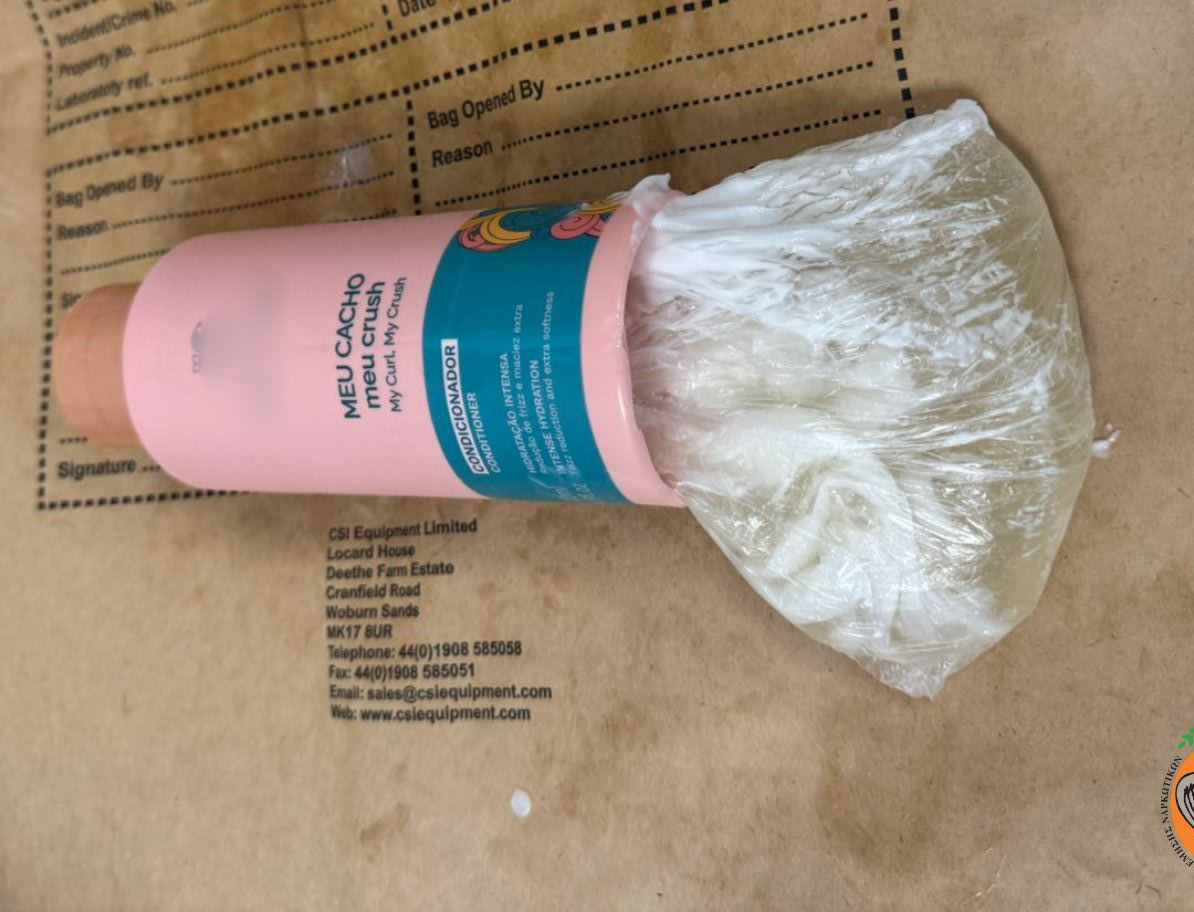
Liquid cocaine seized on Tuesday
Andreou described the seizure as particularly concerning because laboratory tests showed the substance had a purity level of around 97 per cent.
The seizure was made following intelligence received through cooperation with foreign law enforcement agencies, highlighting what police described as the increasingly sophisticated methods being used by traffickers.
Alongside cocaine, police seized significant quantities of cannabis, cannabis resin, methamphetamine and other drugs during the first six months of the year. Authorities also reported the appearance of several new synthetic substances that are becoming increasingly common across Europe and have now begun reaching Cyprus.
Among the drugs seized this year were 1.5kg of paper infused with synthetic cannabinoids, known as “pinaka”, along with 993 treated sheets. Police also confiscated 1,181 Captagon tablets, compared with only 32 tablets seized during the same period last year.
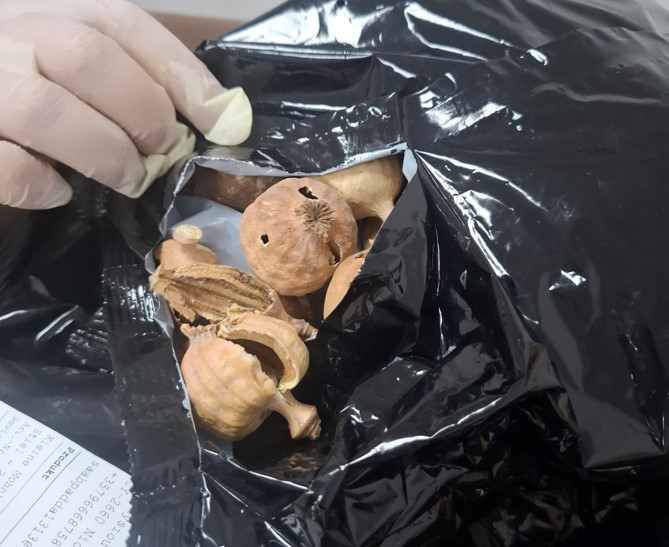
Opium poppies seized by customs
In the past four days alone, officers uncovered 31.5kg of opium poppy products and one kilogramme of Kief, a concentrated cannabis product with a significantly higher THC content than conventional cannabis.
Police are particularly concerned by the growing presence of synthetic drugs, which are often easier to manufacture, more difficult to detect and potentially more harmful than traditional narcotics.
Andreou said officers had observed a clear shift towards stronger substances across European markets, with criminal groups continually modifying products and introducing new compounds.
He revealed that police officers across Cyprus were currently involved in ongoing operations aimed at preventing the new substances from becoming established in the local market.
“Our objective is to stop this phenomenon at the beginning and cut it off at its roots before it spreads more widely,” he said.
Responding to a Cyprus Mail question on whether the sharp increase in seizures reflected larger quantities of drugs entering the country or improved police detection, Andreou said there was no straightforward answer, describing the issue as part of a constantly evolving European and global phenomenon.
“The situation changes continuously,” he said, explaining that Cypriot authorities regularly exchange intelligence with their European counterparts on new trafficking trends, emerging substances and changes in consumption patterns.
What police could say with certainty, he added, was that they were removing increasingly large quantities of dangerous drugs from circulation.
“What we see is, that every time, we try to remove as many drugs as possible from the market, especially these dangerous substances that we have been finding recently,” he said.
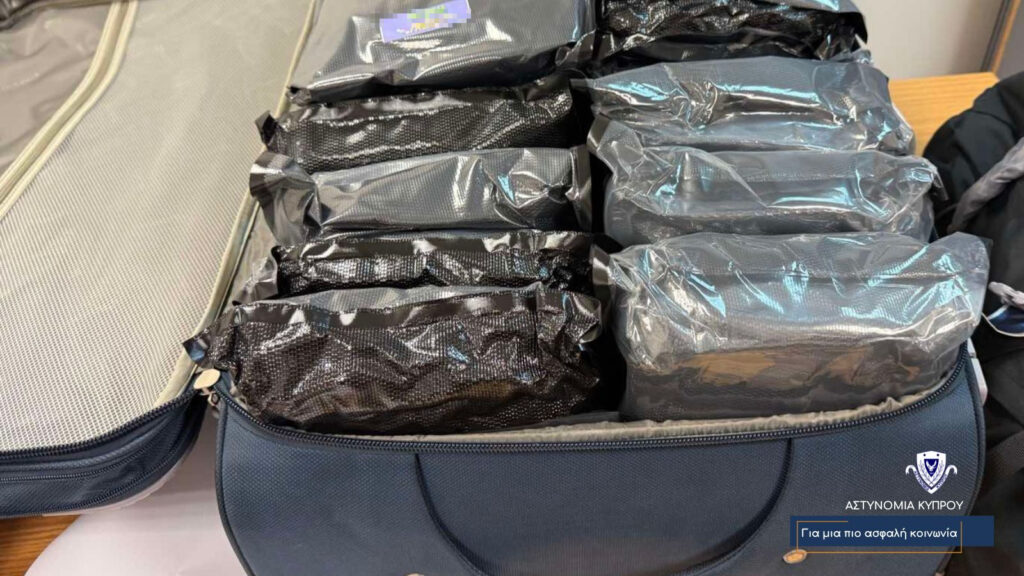
Andreou noted that police had seized around 370kg of drugs of all types so far this year, equivalent to approximately 370,000 individual doses.
Asked by the Cyprus Mail about the role of social media in the promotion and trafficking of drugs, Arnaoutis stated that police increasingly relied on Open Source Intelligence (OSINT) and specialist analysis units to monitor online activity and identify emerging threats.
“You can be sure that our analysis services utilise OSINT and we make use of it,” he said.
He revealed that one of the major investigations currently being pursued by Ykan had begun after officers identified activity on social media platforms, describing it as a clear example of how online monitoring can contribute to significant drug investigations.
Arnaoutis said such operations relied not only on officers conducting searches and arrests but also on analysts working behind the scenes to identify patterns, gather intelligence and assess information from open sources.
Andreou thanked members of the public for providing information through anonymous reporting channels, including the police’s 1498 hotline, social media platforms and email.
“Many of these cases have resulted from information provided by the public,” he said, stressing that tip-offs can be submitted anonymously and that the identity of those providing information remains protected.
Police also highlighted efforts to target the financial proceeds of drug trafficking.
According to Andreou, investigations carried out jointly with the anti-money laundering unit resulted in the identification or freezing of assets worth more than €2.5 million between 2020 and the end of 2025.
Those assets included real estate, vehicles, cash, company shares and funds held in bank accounts.
Authorities said their concerns extended beyond law enforcement to public health, particularly given the growing availability of new psychoactive substances and the risks they pose to young people.
Police said they were working closely with European and international partners to identify emerging threats early and prevent them from becoming entrenched in Cyprus.
“The fight against drugs is not solely a police matter,” Andreou said. “It concerns parents, teachers, local communities and everyone involved in creating a safe environment for our children and young people.”





Click here to change your cookie preferences