
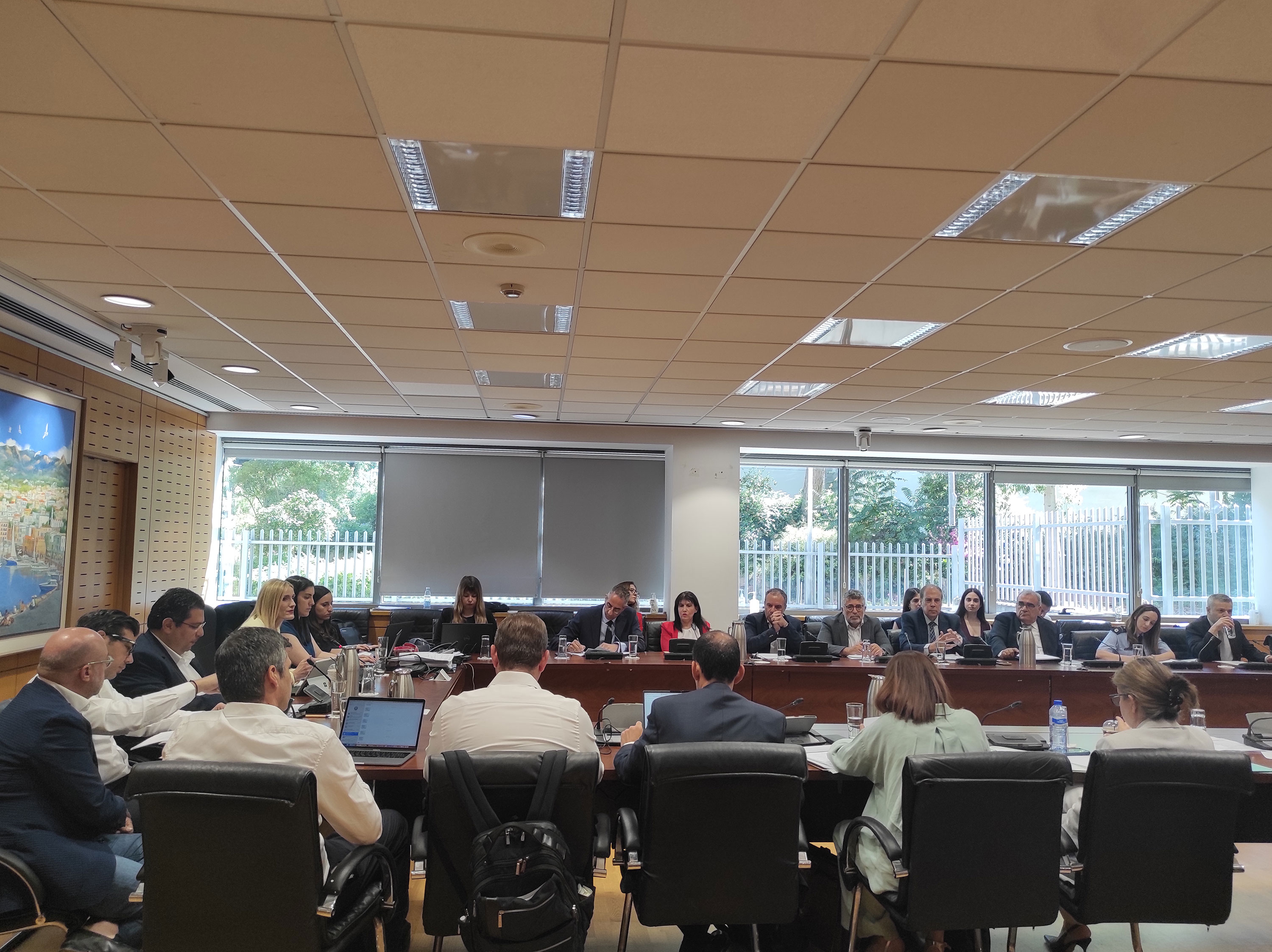
The government intends to table legislation granting investigative powers to the Anti-Corruption Authority, the permanent secretary of the justice ministry, Giorgos Panteli, told parliament’s legal affairs committee on Wednesday, signalling support for a significant overhaul of the authority’s powers.
The announcement came during a discussion on competing legislative proposals submitted by ruling party Disy and the opposition movement Alma, both aimed at enabling the authority to conduct criminal investigations.
The legal service also expressed support for discussing such a reform. Assistant attorney-general Savvas Angelides said the legal service favoured a “positive and constructive” dialogue on the issue and suggested that a comprehensive government bill would be preferable to piecemeal amendments.
The Anti-Corruption Authority itself, through its chairman Haris Poyiatzis, said it was ready to assume investigative powers but warned that its chronic understaffing would need to be addressed.
Following the meeting, legal affairs committee chairwoman and Disy MP Fotini Tsiridou said parliament had given the executive branch until October to submit a draft bill.
“We gave a timeline so that, at least by October, we have before us something that would help improve the functioning of the independent authority,” she said.
The debate centred on two legislative proposals currently before parliament.
The Disy proposal would allow the Anti-Corruption Authority to appoint independent criminal investigators from a list prepared by the Cyprus Bar Association and approved by the attorney-general.
Alma’s proposal would instead allow the authority to appoint criminal investigators directly whenever it identifies possible criminal offences.
Poyiatzis indicated that the authority supported the Alma proposal, arguing that the Disy model would undermine its independence.
“We disagree with the Disy proposal whereby investigators would be selected from a list prepared by the bar association and approved by the attorney-general. This reduces the authority’s independence,” he said.
He also rejected the idea that criminal investigations conducted by the authority should be supervised by the attorney-general.
“If we are to conduct criminal investigations, we want to control them ourselves,” he added.
Poyiatzis revealed that the authority has received 849 complaints to date, of which 580 have been investigated, while 269 remain pending.
He also highlighted the authority’s staffing problems.
“We have 16 people working there. Only the office clerk has permanent employment status,” he said.
The discussion was briefly overshadowed by a procedural dispute after Alma MP Michalis Paraskevas questioned the participation of Angelides in the committee meeting, claiming Angelides had recused himself from matters involving the Anti-Corruption Authority because cases concerning him were pending before it. Angelides however rejected the claim.
The Anti-Corruption Authority was established in 2022 to investigate allegations of corruption and strengthen transparency and accountability in public life. However, critics have repeatedly argued that its lack of independent investigative powers has limited its effectiveness and contributed to lengthy delays in handling cases.





Click here to change your cookie preferences