
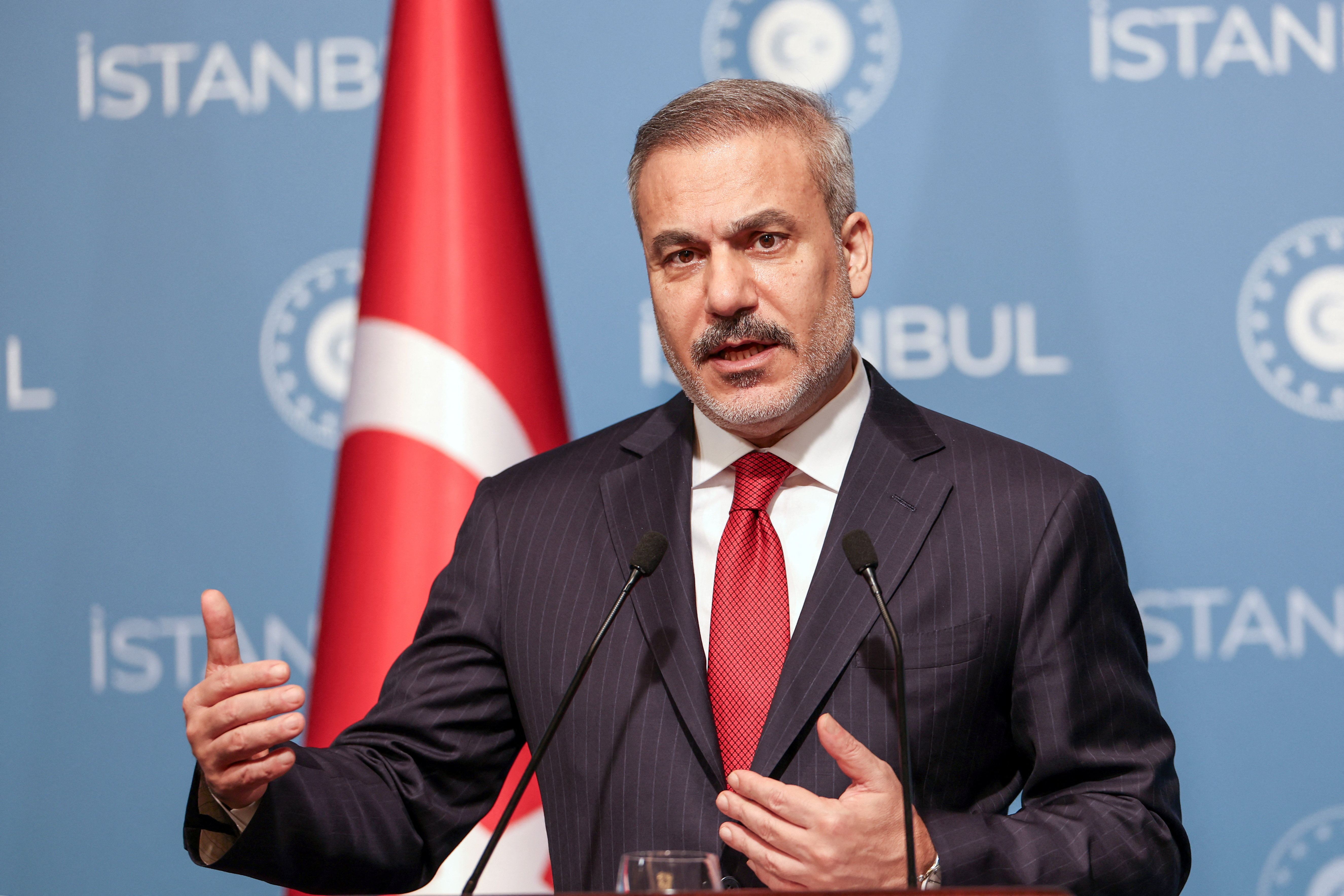
Turkey’s foreign minister Hakan Fidan on Wednesday accused Cyprus of blocking efforts to modernise the customs union between Turkey and the European Union, despite what he described as strong support from the vast majority of EU member states.
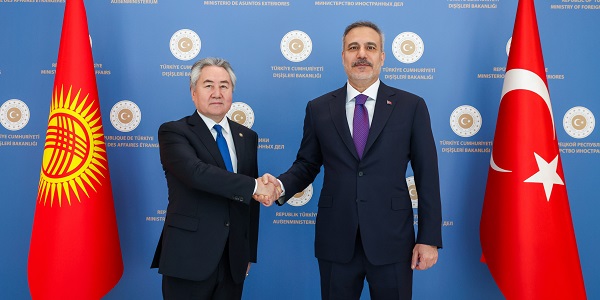
Speaking at a joint press conference in Ankara with Kyrgyz foreign minister Jeenbek Kulubayev following the seventh meeting of the Turkey-Kyrgyzstan Joint Strategic Planning Group, Fidan addressed Turkey’s relations with the EU, the Cyprus issue, the Organisation of Turkic States and the upcoming Nato summit.
Fidan said there was a strong desire on both sides to update the EU-Turkey customs union but claimed that progress was being hindered by the stance of the Republic of Cyprus, which he referred to as the “Greek Cypriot side”.
“Because the Greek Cypriot side is exercising a certain block on this issue, the necessary steps cannot be taken at the desired pace,” he said.
He argued that when one member state does not achieve its objectives on a particular issue, it can block decisions in other areas that are important to the rest of the bloc.
“What we see is that the overwhelming majority of the European Union supports the updating of the customs union,” Fidan said.
During his meeting with his Kyrgyz counterpart, Fidan said the two sides had also discussed efforts to end what he described as the “unjust isolation” of Turkish Cypriots.
He described Turkish Cypriots as “an inseparable part of the Turkic world”, adding that discussions had also focused on the war in Ukraine and the risk of wider regional escalation.
Fidan also referred to the Organisation of Turkic States, describing it as the embodiment of the shared will of the Turkic world and saying that efforts were underway to make the organisation more institutionalised and effective.
Referring to recent meetings in Ankara with the European Union’s High Representative for Foreign Affairs Kaja Kallas, enlargement commissioner Marta Kos and commissioner for internal affairs and migration Magnus Brunner, Fidan described the visit as “an important milestone”.
“Turkey’s full membership of the European Union remains one of our strategic objectives,” he said, adding that President Tayip Erdogan had demonstrated a strong commitment and vision regarding Turkey’s European aspirations.
According to Fidan, relations between Turkey and the EU have recently moved in a more constructive direction, with the resumption of high-level dialogues on issues including trade, migration, security, science and technology.
He added that the European Investment Bank had begun partially resuming activities in Turkey, while Turkish authorities were also pursuing the country’s participation in the Single Euro Payments Area (Sepa).
Fidan said discussions with EU officials had also covered foreign policy, energy, transport, trade, migration and visa liberalisation.
He argued that the EU recognises Turkey’s geographical position and infrastructure capabilities, as well as the country’s potent




Click here to change your cookie preferences