
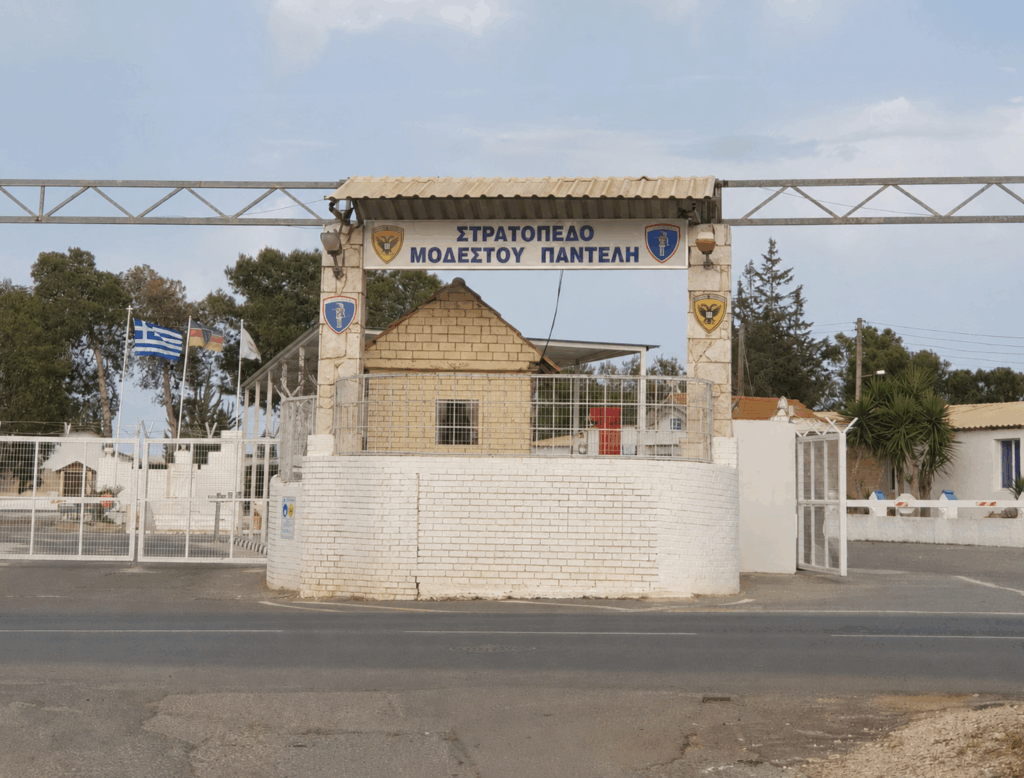
Akel Famagusta has called on Defence Minister Vasilis Palmas to reconsider the location of the “Modestos Panteli” military camp in Liopetri, citing longstanding concerns among residents over its proximity to homes and a primary school.
In a letter sent to the defence minister, the party’s Famagusta district committee said its intervention was prompted by “reasonable concerns” within the local community, as the camp and military storage facilities are located within the residential area and close by Liopetri’s first primary school.
The military camp was established around 1980 on land previously used as a community football ground, the letter said. While the primary school predates the camp, subsequent residential development has transformed the area into a densely populated neighbourhood, leaving the military installation situated “at the centre of a fully developed residential zone”.
Christos Nicolaou, the head of Akel’s Famagusta branch, making the intervention told the Cyprus Mail it is “unheard of, for a military camp to be in the middle of a village never mind next to a school”.
When asked about the concerns he might have, Nicolaou clarified that he “does not expect that the defence ministry would expose what is being kept in the facility” and assumes the camp is not being used to store weapons or explosives. He added however that “if the camp was to change operationally this might be a real issue.”
Nicolaou added that it is a concern when “an armed soldier is on watch whilst children are playing”.
In a statement to the Cyprus Mail defence ministry spokesman said that “the subject has been dealt with in the past and actions were taken for any dangerous equipment to be removed” adding that “there will be a response to the Akel letter and following that further statements will be made.”
Akel states in the letter that military storage facilities are located around the perimeter of the primary school, a situation which, it said, has heightened concerns among residents, particularly parents of children attending the school. The party stressed that the local community should be fully informed about the use of these facilities and the safety measures in place to protect both pupils and residents.
The party emphasised that its position was not directed against the National Guard or its role in defending the Republic, but concerned solely with the suitability of maintaining the military installation in its current location under present-day conditions.
The party argued that the key question was not whether an incident had occurred to date, but whether the continued presence of a military installation adjacent to a school and residential area remained compatible with modern standards of public safety and urban planning.
“The protection of human life and the safety of citizens, particularly children attending the neighbouring primary school, must be the highest priority and cannot be addressed only after an accident has occurred,” the letter stated.





Click here to change your cookie preferences