
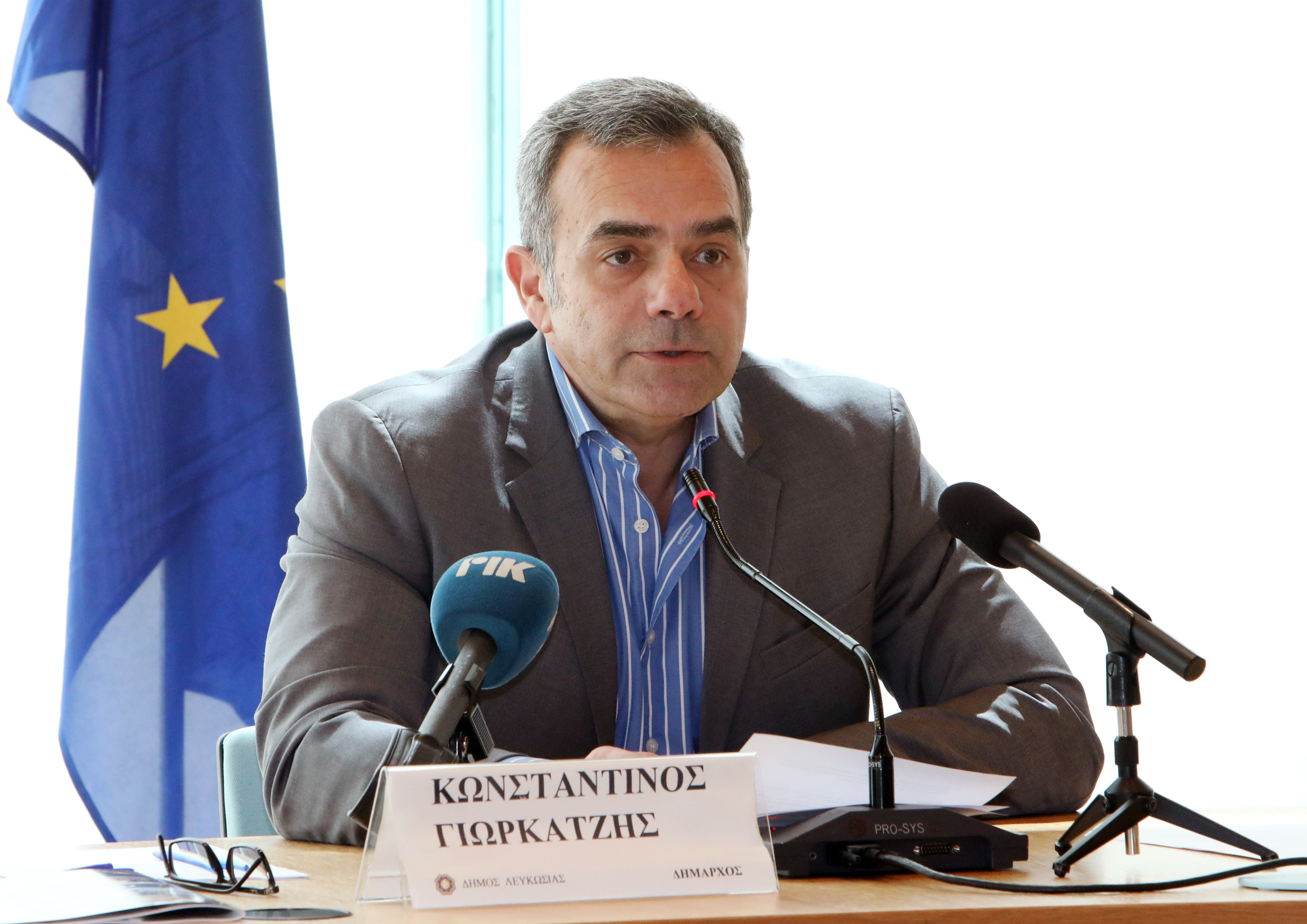
The issue is not whether it will rain next winter, but if Cyprus is ready to adopt a modern, effective and unified management system that will guarantee water adequacy for the coming decades and generations, president of the Nicosia district government organisation (EOA) Constantinos Yiorkadjis said on Thursday.
Yiorkadjis believes the infrastructure and know-how are already there and it is a matter of adopting a comprehensive national strategy for water, which is “not just a natural resource, but a matter of environmental sustainability and national security”.
“It is a foundation for development and social cohesion, and its management demands unified planning, clear responsibilities and a long-term vision,” he said in an article made public on Thursday.
According to Yiorkadjis, adopting this strategy calls for the creation of a unified water management authority, which would have true administrative, financial and operational independence to oversee the water situation, coordinate all involved organisations and draft policy.
The authority would prepare a plan incorporating all reservoirs, desalination units, irrigation networks, recycle water, rainwater, underground resources and an invoicing policy that would protect the average household and vulnerable groups, discouraging unnecessary consumption.
Yiorkadjis says the distinction between the water production and water administration authorities would enhance transparency, accountability and effective decision-making.
Already, 15 EU member states have adopted similar policies to regulate and supervise the water sector, with the latest example being Greece, Yiorkadjis points out.
In Cyprus, he says, despite the significant investments over the past decades, the current model to manage water resources and consumption continues to be fragmented, which makes coordination difficult.
Yiorkadjis points out that every district has its own needs and thus measures should be tailored, not uniform.
Strategic planning, he adds, does not just entail consumption management, but should be extended to infrastructure planning.
“In many cases, future needs are already known, however the necessary investments are proceeding slowly, turning management from preventive to crisis management,” he says.
He says, “the impression is wrongly given that there is not enough water for irrigation,” but in reality there are “significant water resources that remain unused”.
The Nicosia EOA chief mentions sewerage treatment plans, such as the Nicosia ones in Vathia Gonia, Anthoupoli and Mia Milia, which produce approximately 17 million cubic metres of water annually, with only 24 per cent being used for irrigation and 76 per cent ending up in natural water recipients, such as reservoirs and rivers.
Island-wide, approximately 45 million cubic metres of water are produced annually, of which 40 per cent is utilised and 60 per cent flows into natural recipients.
Rainwater, Yiorkadjis says, is one of the most underrated and unexploited resources.





Click here to change your cookie preferences