
After Guterres it’s time for the UN to move from peacekeeping to peace making
When Antonio Guterres crossed the Green Line on July 28, on his first official visit to Cyprus as secretary-general, the question that occurred to me was not what he had come to accomplish. It was why it had taken him almost a decade to appear.
Crans-Montana was not his conference. He inherited it. When he assumed office in January 2017 the negotiations between President Nicos Anastasiades and Turkish Cypriot leader Mustafa Akinci had already reached their most promising stage in years. Guterres entered not at the beginning of a peace process but at its decisive moment, and he personally advanced what became known as the Guterres Framework to bridge the remaining differences.
The conference collapsed. History will continue to debate why. What history will not debate is what followed. For the next nine years Guterres did not visit Cyprus. In fact, no serving secretary-general had set foot on the island since Ban Ki-moon in 2010, a span of 16 years. The United Nations continued to renew one of its oldest peacekeeping mandates, successive envoys came and went, familiar declarations were repeated, and the political process drifted into procedural management. Then, in the closing months of his final term, with the Security Council already beginning the confidential process of selecting his successor, Guterres came to Cyprus.
The timing invites reflection.
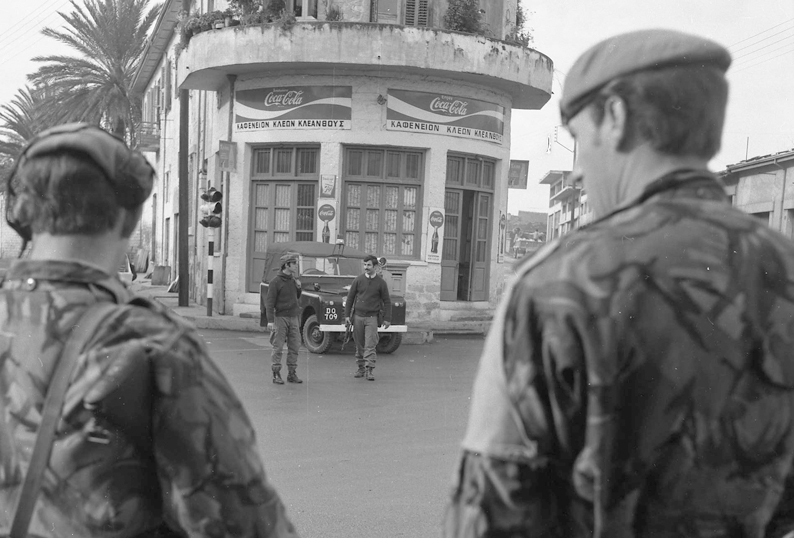
I do not question his sincerity, nor do I underestimate the crises that dominated his tenure: the pandemic, Ukraine, Gaza, Sudan, climate change. No secretary-general could have given equal attention to every conflict. Yet Cyprus is not simply another unresolved dispute. Unficyp has been on the island since 1964 – the year I entered the English School – and is among the oldest peacekeeping operations in the history of the organisation. Like the school’s extension in the Turkish quarter of Nicosia, established that same year, Unficyp was never conceived as a permanent feature of the island’s political landscape. Both were temporary measures, meant to hold the ground while diplomacy produced a settlement.
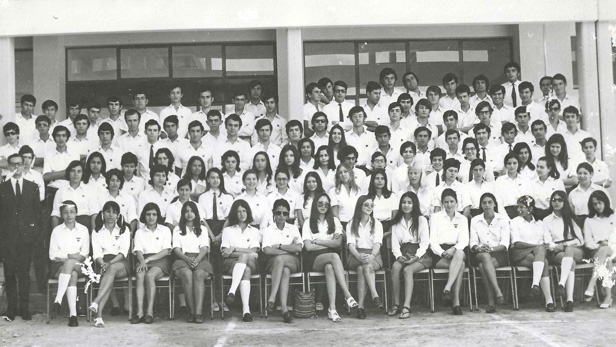
Since Turkish Cypriot pupils could no longer cross to the main school in Strovolos, Hasan Nevzat – a visionary teacher and boarding house master who felt compelled to leave his post – set up an alternative school with a group of colleagues, among them another celebrated teacher, Behzat Gursel, in a rented nine-room house in Koskluciftlik, inside the Nicosia enclave. It opened on January 27, 1964. The desks and chairs came from the pupils’ own homes, including mine. Renamed the English College in 1968, it flourishes today as the Turk Maarif Koleji, of which Tufan Erhurman is an alumnus.
By the time I returned to Strovolos in 1969, as one of the first two Turkish Cypriot pupils to go back, the Unficyp mandate had been renewed 15 times. The early extensions ran in three-month increments; the six-month and one-year intervals followed later. More renewals were crowded into Unficyp’s first five years than into most of the decades that followed.
It is worth reflecting on what can be accomplished elsewhere in the same span of years. At Rice University in September 1962, President Kennedy committed the United States to reaching the moon before the decade was out – choosing to go, as he told the crowd, not because such things are easy, but “because they are hard”. I had the speech pinned above my desk at home. Kennedy had less than seven years, no proven technology, and a deadline entirely of his own making.
On June 10, 1969 the Security Council renewed Unficyp’s mandate. Six weeks later a spidery spacecraft named Eagle settled onto the Sea of Tranquillity. That December the council renewed the mandate again. Kennedy met his deadline with five months to spare. We are 62 years into a deployment originally authorised for 90 days. Whatever else may be said of the Cyprus problem, no one has ever accused it of being easy – only, it seems, of being harder than going to the moon.
The council’s current mandate runs until January 31, 2027, beyond the end of Guterres’ own tenure. The paradox is not that Unficyp remains necessary – in my view it continues to perform an indispensable stabilising function. The paradox is that the justification for its presence was always tied to the expectation of political movement. Stability was never meant to substitute for settlement.
Peacekeeping has succeeded. Peacemaking has not.
As I approach the anniversary of my first opinion piece in the Cyprus Mail, I must confess that I no longer remain optimistic that Cyprus will achieve lasting reunification within the present negotiating framework. This is not because reconciliation has become undesirable, nor because compromise has become impossible. It is because the foundations from which the two sides negotiate continue to diverge.
President Nikos Christodoulides says he remains firmly committed to a bizonal, bicommunal federation, invoking international legality as the foundation of any settlement. Yet international law does not dissolve the need to address why the Turkish Cypriot community continues to regard the intercommunal violence and the years of enclave existence before 1974 as inseparable from its own understanding of political equality and collective security. A durable constitutional order must answer to both legal and historical legitimacy. Erhurman, for his part, has made clear that he does not envisage pursuing a settlement that Turkey would not accept. These are not merely different positions; they proceed from conflicting assumptions.
For decades the international community has responded by refining the process of bridge-building: more technical committees, legal drafting, confidence-building measures and procedural novelties. Each successive initiative has ended in the same place. Perhaps that is the lesson of Crans-Montana – that the principal obstacle is no longer diplomatic but constitutional.
This was the premise of my earlier proposal for Adaptive Federalism. It was not another negotiating formula. It was an attempt to ask a different question: whether Cyprus requires not another conference within the existing constitutional architecture, but a different architecture altogether – one capable of combining parliamentary government, genuine political equality and meaningful constituent autonomy within a federal European state.
As Guterres leaves office, commentators will debate his legacy. Many will wonder whether greater personal engagement in the years after Crans-Montana might have altered the trajectory. Peacekeeping remains indispensable, but it was never intended to become permanence – nor was negotiation ever intended to become ritual. His successor will inherit the same mandate.
If Cyprus is to escape this paradox, it will require more than another conference. It will require a federal constitutional order built to adapt, which is honest about the fact that two peoples will go on being two and beginning with the concession that neither community will surrender its account of 1963 or 1974. A settlement that asks either community to abandon that account will not be signed, and if signed will not last.
The question, then, is not how to reconcile the two accounts. It is what kind of federal state can be built on both at once. In 62 years, that question has never been put to the parties. It is the only one left worth putting.
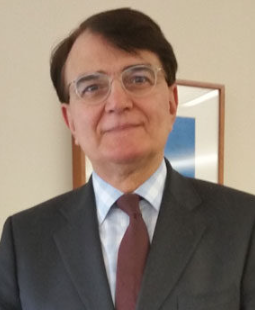
Kerim M Munir is professor of paediatrics and psychiatry at Harvard Medical School, Boston, and a graduate of the English School in Nicosia. This piece is offered as a personal reflection and a civic appeal to bring the two communities together




Click here to change your cookie preferences