
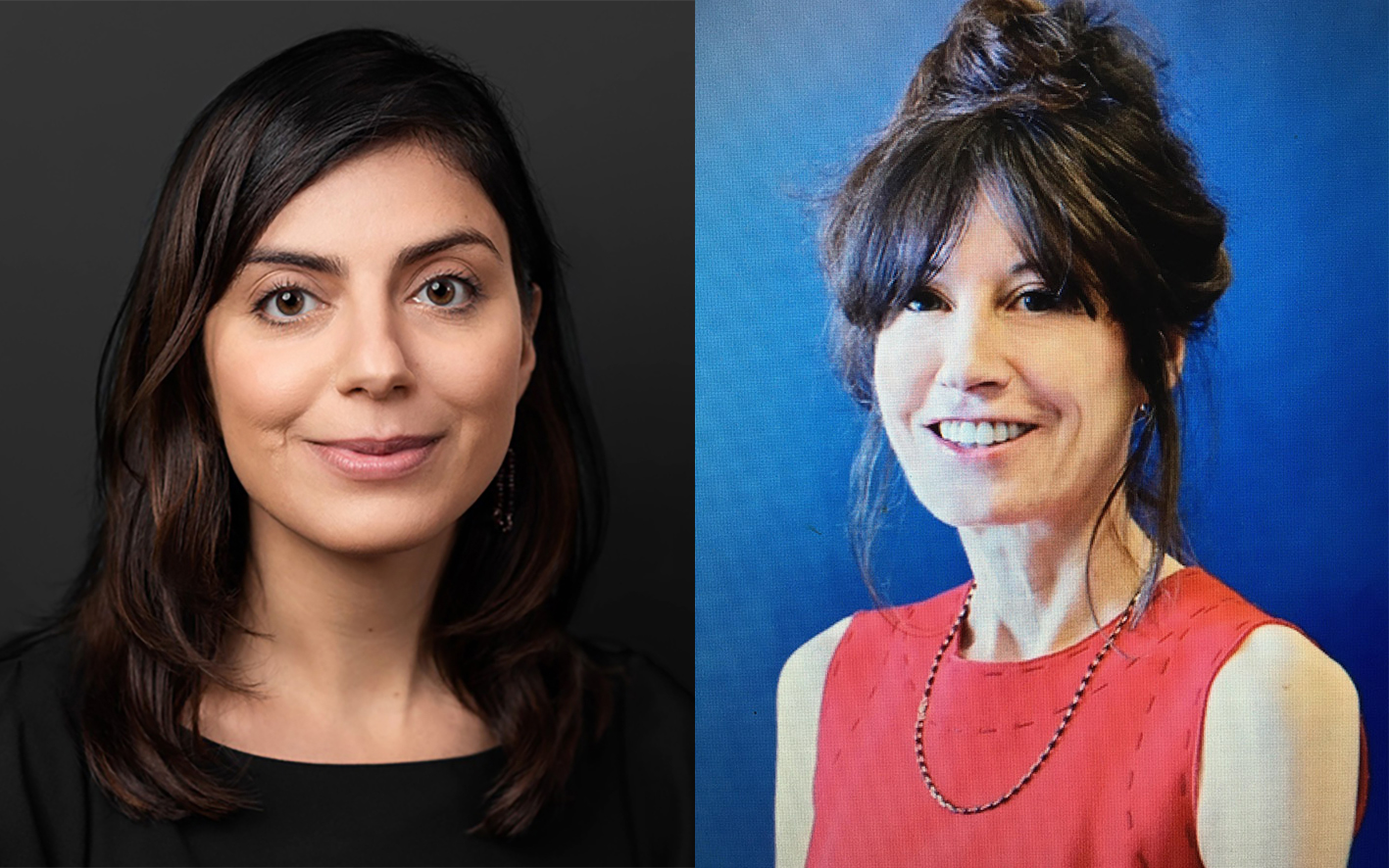
Questions were raised on Tuesday regarding potential links between the lawyer of journalist Makarios Drousiotis, Leto Cariolou, and the investigator appointed by the anti-corruption authority to examine the allegations he had levelled in his book, Australian lawyer Gabrielle McIntyre.
Cariolou represented Drousiotis in a libel case filed against him by Victor Papadopoulos, who had served as deputy government spokesman and presidential press office director under Nicos Anastasiades, and now serves as presidential press office director under incumbent President Nikos Christodoulides.
She also represented him in the Drousiotis v Cyprus case, wherein he took the Republic of Cyprus to the European Court of Human Rights in 2022 after being found liable for defamation by the Supreme Court.
According to news website Sigma Live, in addition to representing Drousiotis, Cariolou had worked as a legal officer for the United Nations’ international residual mechanism for criminal tribunals.
In this capacity, she had worked on international criminal cases including the war crimes trials of Bosnian Serb officer Ratko Mladic, former Republica Srpska president Radovan Karadzic, and the trial of Rwandan politician Augustin Ngirabatware for inciting the Rwandan genocide.
The website reported that McIntyre had served as head legal counsel at the international criminal tribunal for the former Yugoslavia, the ad hoc UN court set up to try Mladic and Karadzic, among others, and of the international residual mechanism for criminal tribunals.
She, too, had therefore worked on the trials of Mladic, Karadzic and Ngirabatware, suggesting that the pair may have had some professional interaction. Ngirabatware was convicted in 2012, Karadzic in 2016, and Mladic in 2019.
McIntyre was appointed by transparency commissioner Harris Poyiadjis to lead the anti-corruption authority’s investigation into allegations made in Drousiotis’ book Mafia State in February 2024.
She was then last year appointed as director of the secretariat of the assembly of states parties to the Rome Statute, the treaty which established the International Criminal Court. The assembly of states parties is the International Criminal Court’s oversight and legislative body.
This appointment was made a few days after Anastasiades had testified before her and her fellow investigators, though on this front, assembly of states parties president Paivi Kaukoranta was keen to stress that due process had been followed in allowing her to undertake both that role and the role in Cyprus at the same time.
She told the Cyprus Mail that McIntyre had first “sought informal authorisation to complete her professional obligations” in Cyprus before accepting the position as director of the secretariat, before then filing a formal request to do so upon assuming her duties at the Hague. This request was accepted eight days after she took the job.
Additionally, she explained that McIntyre had worked on the investigation in Cyprus “outside her regular working hours and during periods of leave” until the report was submitted on April 30 this year.
She also denied reports that McIntyre had received €800 per working day for the investigation, with this figure having been widely reported in Cyprus at the time. Newspaper Phileleftheros, for example, wrote that she was “set to receive” €170,000 in total for her work in Cyprus.
“While permitted under the staff rules, Gabrielle McIntyre did not request authorisation to receive remuneration after taking up her position at the secretariat, and she did not receive remuneration from the Cypriot authorities for any work carried out following the taking up of her duties with the secretariat,” she said.
She then stressed that “McIntyre’s completion of an investigation into allegations of corruption in Cyprus on behalf of the [anti-corruption authority] was assessed as constituting no conflict of interest with her duties with the court”.
Click here to change your cookie preferences