
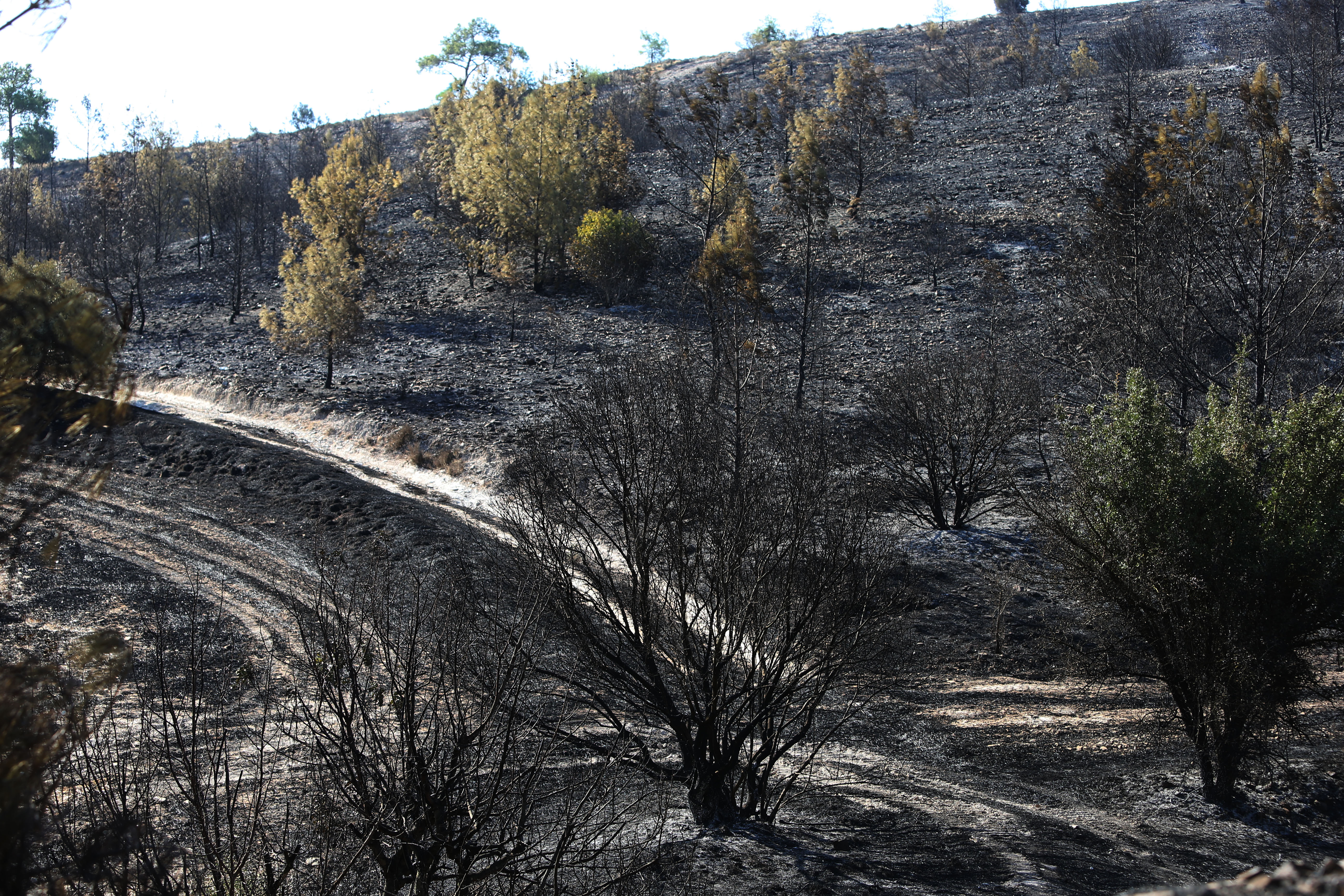
Decisions over possible disciplinary action in connection with last month’s fire sparked by the destruction of munitions at the Kalo Chorio firing range are expected next week, defence ministry sources told the Cyprus Mail on Tuesday.
Meanwhile, the findings of two separate investigations into the fire on July 27, an internal National Guard inquiry conducted by Brigadier Savvas Stefanou and a separate criminal investigation by Cyprus police are nearing completion.
The police investigation has been completed and the case file has already been forwarded to the Legal Service, which will examine whether there is evidence of criminal liability.
The National Guard inquiry, meanwhile, is examining the circumstances surrounding the incident, whether the required safety measures and procedures were followed and where responsibility may lie.
After receiving the National Guard’s disciplinary investigation report into the incident Defence Minister Vasilis Palmas said that those found responsible for the wildfire “will be held accountable in accordance with the law”.
According to sources, if the findings point to conduct falling within the scope of criminal law, the matter would proceed through the criminal justice system.
“What will be examined is whether the measures were followed,” the sources said.
The distinction between the two investigations is significant, they added. While the National Guard inquiry is intended to establish possible disciplinary responsibility within the military, any suspected criminal offence would be dealt with through the police investigation and, ultimately, the courts.
Once the findings of the military inquiry are formally considered, decisions on any disciplinary measures will be taken by National Guard chief Lieutenant General Emmanouel Theodorou. Decisions are expected next week.
Questions have meanwhile been raised in media reports over the internal investigation and whether an officer holding the rank of brigadier can effectively investigate the actions or decisions of officers senior to him, including the National Guard chief.
Defence ministry sources rejected suggestions that the rank of the investigating officer prevents the inquiry from examining the involvement of senior officers.
They explained that everything relevant arising during an investigation must be recorded. If evidence concerning a more senior officer emerges, this too is included as part of the findings and is subject to examination.
The issue has returned to the spotlight as the authorities await the Legal Service’s assessment of the police investigation and questions continue over responsibility for the fire.
Communities affected by the wildfire have renewed calls for the facility to be relocated. The defence ministry also pledged to cover all damage caused by the wildfire.
The fire broke out on July 27 during the destruction of munitions at the Kalo Chorio firing range. It spread rapidly in the dry conditions, burning around 120 hectares and prompting the evacuation of nearby Ayia Anna and Psevdas.
The exercise involved US military personnel alongside members of the National Guard’s Explosive Ordnance Disposal unit.
During the joint training activity, warheads from RPG anti-tank rounds were destroyed through controlled explosions.
The defence ministry has previously said that the activity was carried out by the 70th Engineer Battalion. Questions subsequently centred on why explosive ordnance disposal was taking place during the summer fire-risk period, particularly given restrictions on heavy explosions at firing ranges between May and September.
Should the Legal Service determine that there is sufficient evidence of a criminal offence, any prosecution would proceed through the courts, with any criminal penalty ultimately determined by a judge.
The National Guard, meanwhile, is expected to decide separately whether disciplinary breaches occurred and what action should follow.





Click here to change your cookie preferences