
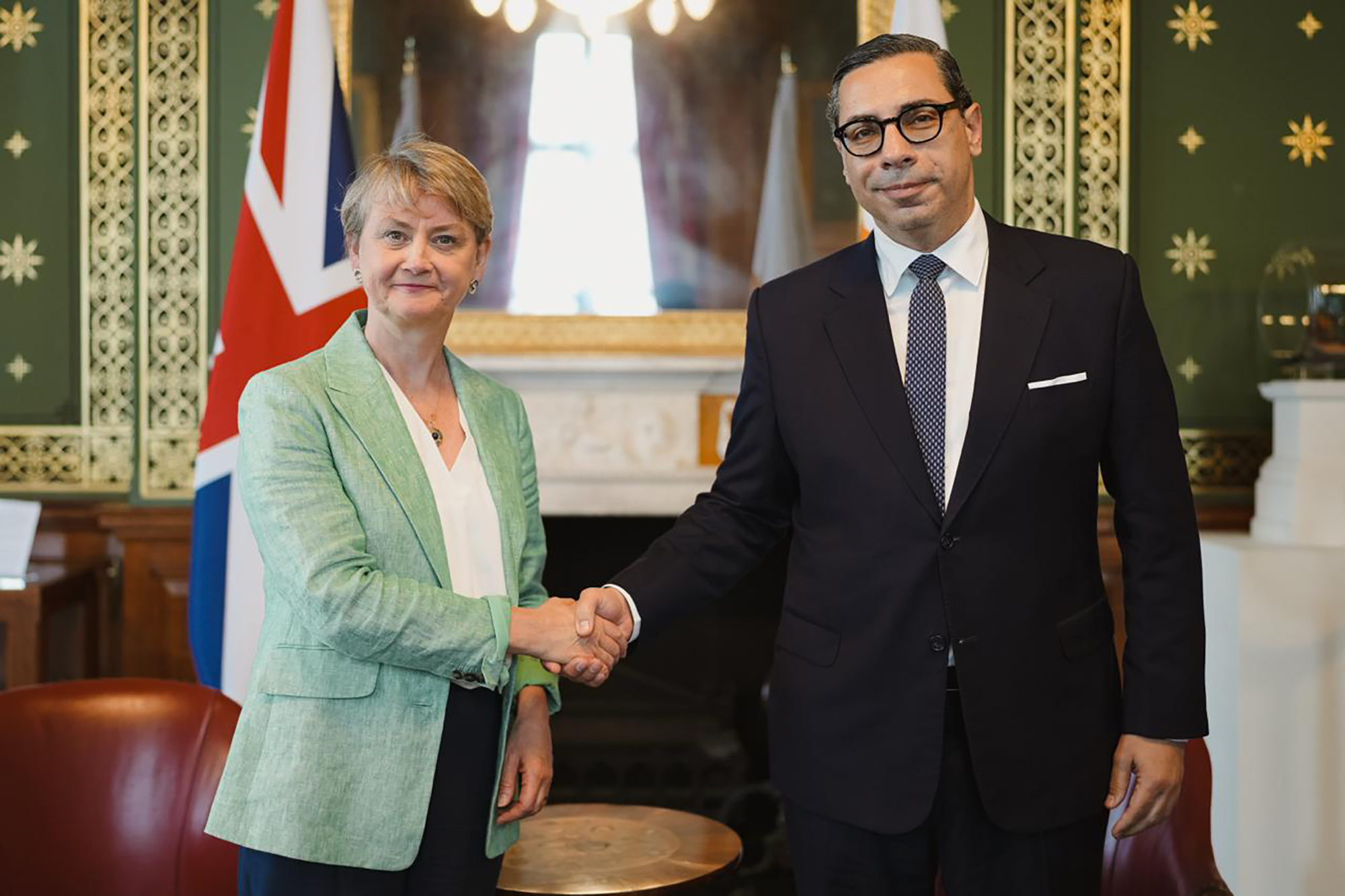
Cyprus and the United Kingdom have agreed to upgrade their strategic dialogue, strengthen cooperation on developments in the Middle East and advance discussions on issues concerning the British bases, Foreign Minister Constantinos Kombos said on Wednesday following an official visit to London.
During the visit, Kombos held meetings with the UK Foreign Secretary Yvette Cooper and Minister for Europe Stephen Doughty, with bilateral relations, regional developments and the Cyprus problem topping the agenda.
Kombos said the two countries agreed that the next round of the Cyprus-UK Strategic Dialogue would be held at ministerial level before the end of the year, following an interim review in the autumn.
The two sides also agreed to establish an annual dialogue on developments in the Middle East and the wider region to strengthen coordination on regional security and stability.
A significant part of the discussions focused on Schengen-related issues concerning the British bases.
Kombos said the two governments had agreed on the basis for advancing the technical and operational arrangements required to fulfil Cyprus’ obligations ahead of its planned accession to the Schengen area.
He added that the Cypriot side also raised a number of issues affecting Republic of Cyprus citizens living within the British bases.
According to Kombos, the matters were categorised according to their complexity and urgency, with both sides agreeing to hold a follow-up meeting in September to establish a mechanism for examining and resolving them.
Among the issues discussed was the planned installation of a new antenna system within the British bases, with Kombos saying Nicosia expects a prompt and positive response from the British authorities.
Talks also covered the latest developments on the Cyprus problem.
Kombos briefed his counterparts on recent efforts to restart negotiations, adding that the United Kingdom, as a guarantor power, had reaffirmed its commitment to a settlement based on the relevant United Nations Security Council resolutions.
Following the meetings, Doughty wrote on X that he had been pleased to meet Kombos and members of the Cypriot community during the two-day visit.
“Cyprus is a long-standing friend and partner of the United Kingdom, and our relationship continues to grow stronger,” he said.
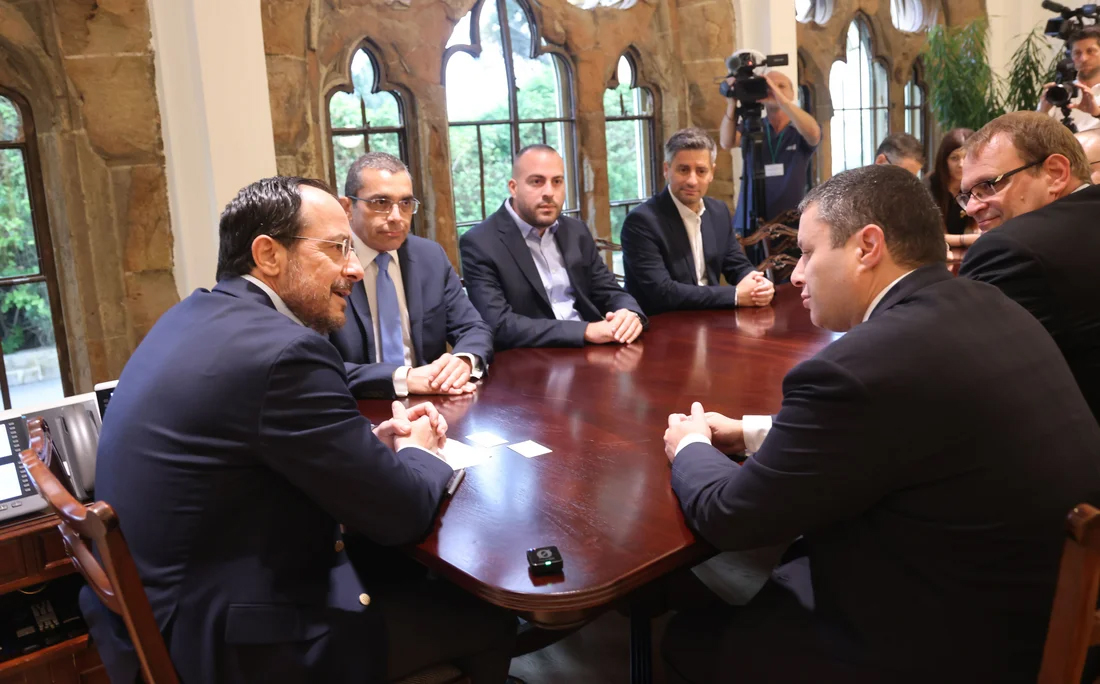
Cypriot government has made extensive efforts in its attempts to bring about a “conversation” regarding a potential future change in their status after the Akrotiri base was hit by an Iranian-made drone in March.
President Nikos Christodoulides, for example, had described the bases as a “colonial remnant”, before going on to promise upon his arrival at a European Council summit that “we are going to have an open and frank discussion with the British government” over them.
Following that summit, the European Council itself declared that it “stands ready to assist” the Cypriot government in discussions regarding the bases’ future and stating that it “acknowledges the intention of Cyprus to initiate a discussion with the UK” on the matter.
Later, deputy government spokesman Yiannis Antoniou said that the government had sought and received legal advice regarding the treaty which established the bases, adding that “the issue of security is complex and will be the subject of discussion with the British side”.
The UK itself had appeared to be in no mood for such a discussion, however, with country’s then parliamentary undersecretary of state for the armed forces Al Carns saying that the bases’ future is “not in question”. Carns then resigned from the government last month, saying that insufficient funds had been allocated to defence.
Nonetheless, since April, the Cypriot government has been less fervent in its pursuit of a conversation regarding the bases’ future.
Only Kourion mayor Pantelis Georgiou continuing to publicly make the case in recent weeks, accusing the bases’ administration of “lying” to his municipality over the placement of communications antennae near Akrotiri.
The current UK government will likely be out of office on Monday, with Prime Minister Sir Keir Starmer set to resign and be replaced by former Manchester mayor Andy Burnham.


Click here to change your cookie preferences