
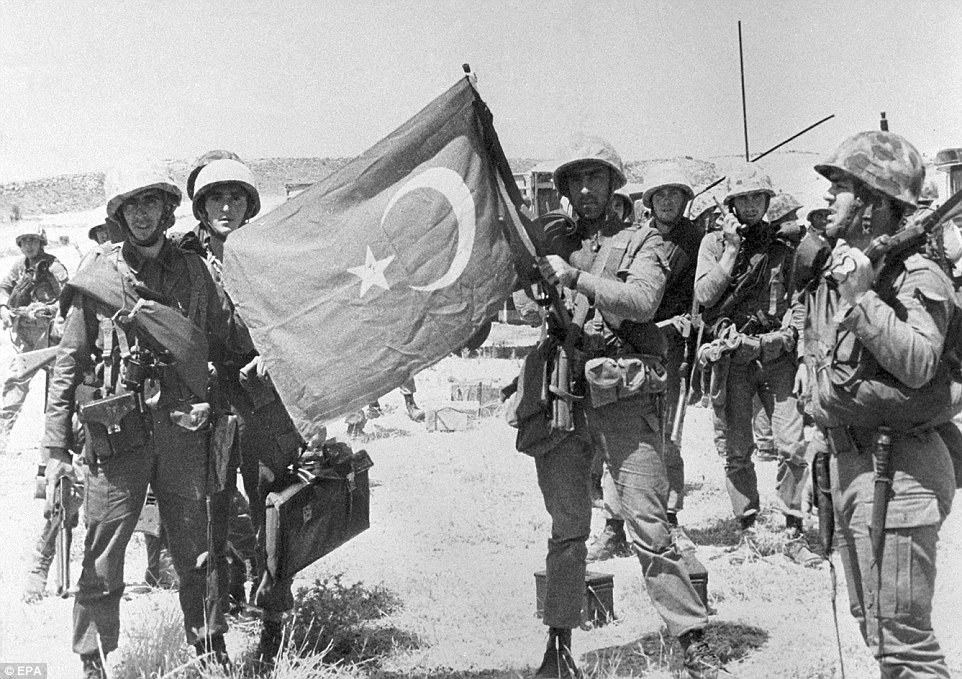
Monday marked exactly 52 years since Turkish troops landed in Cyprus, commencing an invasion which would reshape the map of the island, realign its political and demographic balances, and cause Cyprus’ second mass displacement event in the space of a little over a decade.
The invasion had been triggered by a Greek military junta-backed coup d’état on the island five days earlier, with Turkish prime minister of the day Bulent Ecevit having subsequently travelled to London to appeal to his British counterpart Harold Wilson, in the hope of assembling an international force to reset the Republic of Cyprus’ constitutional order.
However, Wilson refused, and Turkey decided to go alone, landing at the five-mile beach, west of the Kyrenia district village of Ayios Georgios, shortly before dawn on July 20, 1974.
Some 3,000 troops, as well as 12 tanks, 20 armoured personnel carriers, and 12 howitzers made up the landing force, with two Greek Cypriot motor torpedo boats being dispatched from Kyrenia to engage them. Both were sunk, and the first landing at five-mile beach was not contested.
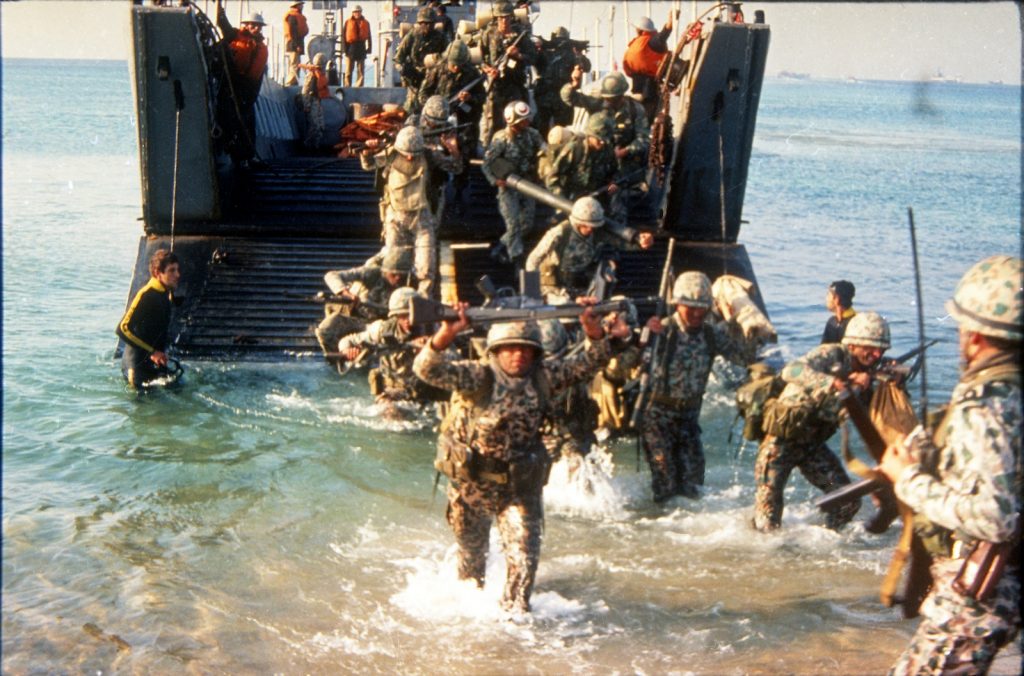
Greek Cypriot forces first engaged the Turkish landing troops at around 10am, but were unsuccessful in halting their advance, while all the while on the other side of the five-finger mountains, Turkish paratroopers were landing on the outskirts of Nicosia.
In response to the first paratroopers’ landings, Greek forces stationed in Cyprus attacked the Turkish Cypriot village of Kioneli, which is located immediately north of Nicosia on the main road towards Kyrenia.
Elsewhere, fighters from the Greek Cypriot paramilitary group Eoka-B attacked the Turkish Cypriot enclave in Limassol, while a Greek landing ship began to shell Turkish Cypriot positions in Paphos, with Turkish Cypriots in Paphos surrendering after nightfall.
The following day began with a second wave of Turkish troops setting off from the port of Mersin for Cyprus, while those already on the island mistakenly sank a Turkish destroyer warship off the coast of Paphos, believing that it was an approaching Greek warship.
Likewise, a Greek airlift of troops from Crete’s Souda airbase was mistakenly engaged by Greek Cypriot anti-aircraft fire at Nicosia airport.
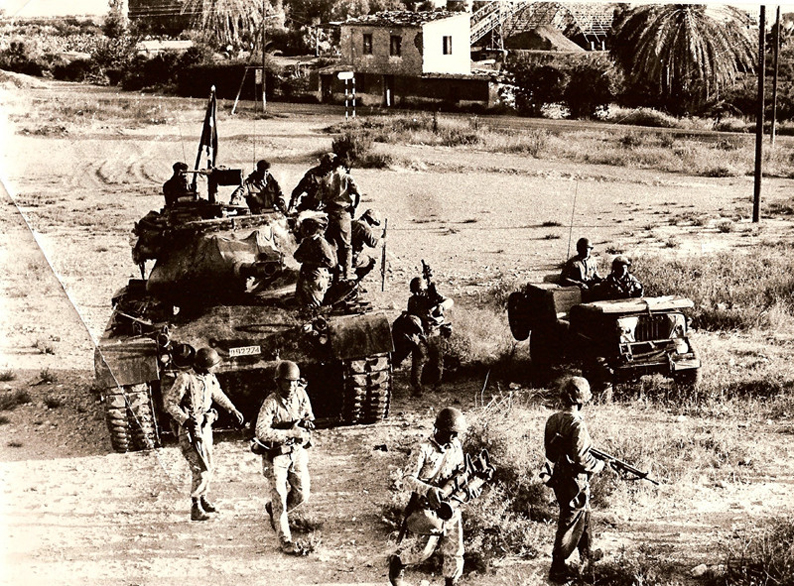
In Kyrenia, Greek Cypriot forces had split to face the town from both the east and west, while one unit had captured the Turkish mountaintop position at Kotza Kaya, near the St Hilarion castle, between the Kyrenia district villages of Agirda and Karmi.
However, their own commanders told them to retreat down the hill, with advancing Turkish forces connecting previously Turkish Cypriot-held positions between Kyrenia and Nicosia.
Fighting also continued in Nicosia, with 386 tourists finding themselves trapped inside the Ledra Palace hotel as it was targeted by heavy mortar fire, while the Turkish Cypriot resistance in Limassol collapsed, and the morning also saw intercommunal fighting in Larnaca and Lefka.
On July 22, the second wave of Turkish forces arrived at five-mile beach, and headed straight for the town of Kyrenia itself. They broke through two lines of Greek Cypriot defence, before splitting into two, with one group heading to take the town’s harbour, so as to provide a second access point for troops arriving from Turkey, and the other heading south towards the village of Bogazi.
The operation ensured that subsequent Turkish troops would have unhindered passage between the port of Kyrenia and Kioneli, and also meant that for the first time in 96 years, one of Cyprus’ major towns was in Turkish hands.
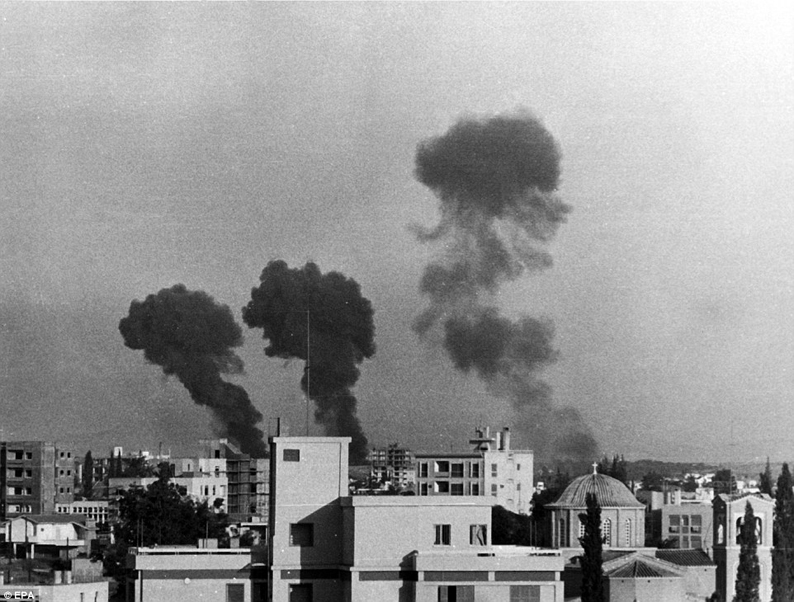
July 23 saw heavy fighting in and around Nicosia airport, with Turkish troops unable to gain control of it, while events in Cyprus had severely weakened the military junta in Greece, with senior military officers withdrawing their support for its strongman, Dimitrios Ioannidis.
Greek President Phaedon Gizikis invited Kostas Karamanlis, who had been in self-imposed exile in Paris since 1963, to return to Greece as prime minister, and he did so the following day, landing in Athens aboard then French president Valery Giscard d’Estaing’s learjet.
Ioannidis’ ouster was followed by Nikos Sampson, the man installed as president during the Cypriot coup d’état, resigning, with Glafcos Clerides becoming acting president while Archbishop Makarios III remained abroad.
After this, the first round of peace talks was held in the Swiss city of Geneva between July 25 and July 30, where it was decided that the Turkish-controlled zone should not be extended, that Turkish Cypriot enclaves elsewhere on the island should immediately be evacuated, and that another conference should be held in Geneva in August.
When the island’s two major communities and guarantor powers reconvened in August, Turkey put forward the idea of a bizonal, bicommunal, federal solution to the Cyprus problem, with population transfers creating a Turkish Cypriot zone in the island’s north and a Greek Cypriot zone in the island’s south.
Clerides asked for time to consult with Athens and with Greek Cypriot leaders on the matter, but this request was denied, with Turkey believing that Makarios and others would use the opportunity to play for more time.
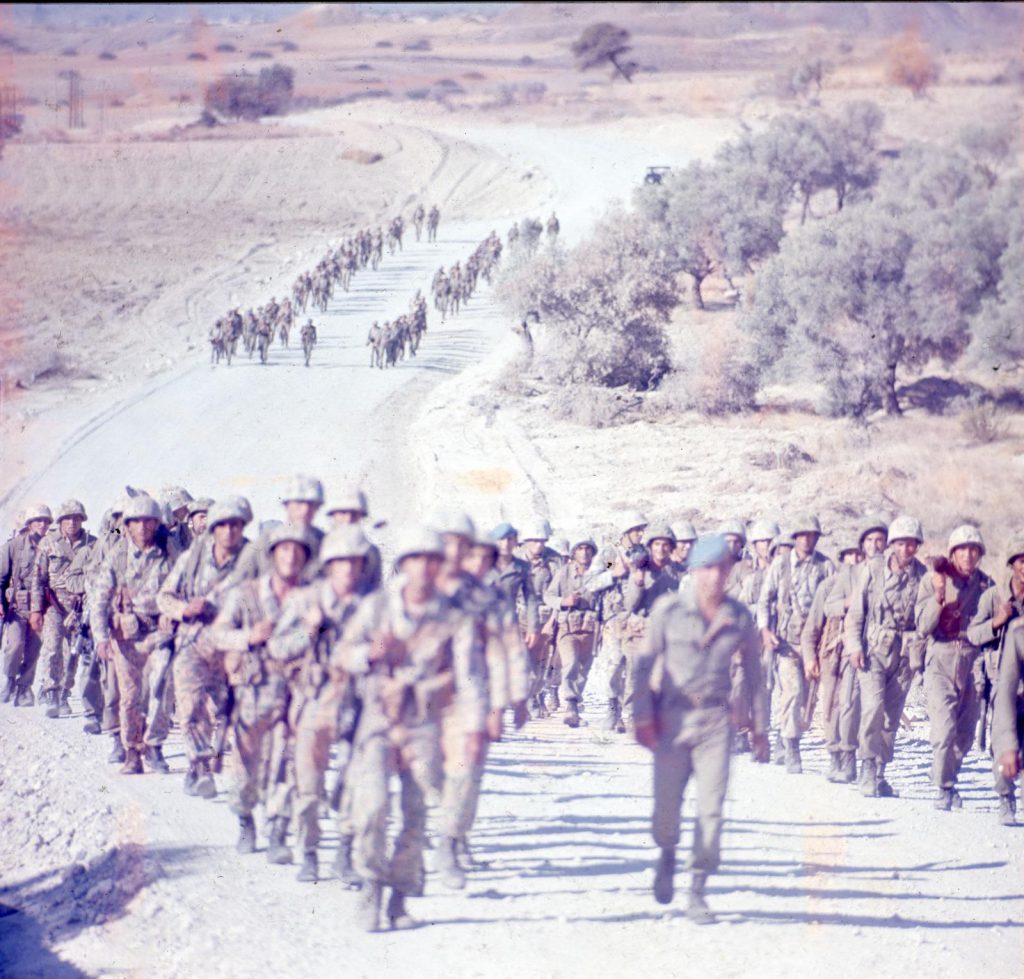
Ecevit and Turkish Foreign Minister Turan Gunes had decided beforehand that should Gunes call Ecevit and say the words “let Ayse go on holiday”, in reference to Gunes’ daughter, a second Turkish offensive in Cyprus should be launched. Hours after the conclusion of the Geneva conference, Gunes made the call.
The second offensive was much faster to advance than the first, with Turkish forces pressing towards Famagusta on August 14 and reaching the town by 2.30pm that day. They entered Famagusta at 5.30pm on August 15, uniting with the Turkish Cypriot militia which had defended an enclave inside its Venetian walls throughout the summer.
In the island’s west, Greek Cypriot forces had largely retreated into the Troodos mountains, with Turkish forces advancing past those who remained to take both Morphou and Limnitis on August 16. Elsewhere, Turkish forces advanced southwards to cut off the road between Nicosia and Larnaca, advancing southwards to the Louroujina salient.
The United Nations instituted a ceasefire at 6pm on August 16, with Turkish forces in control of 37 per cent of the island. The ceasefire line has acted as the effective frontier between the island’s two major communities ever since.
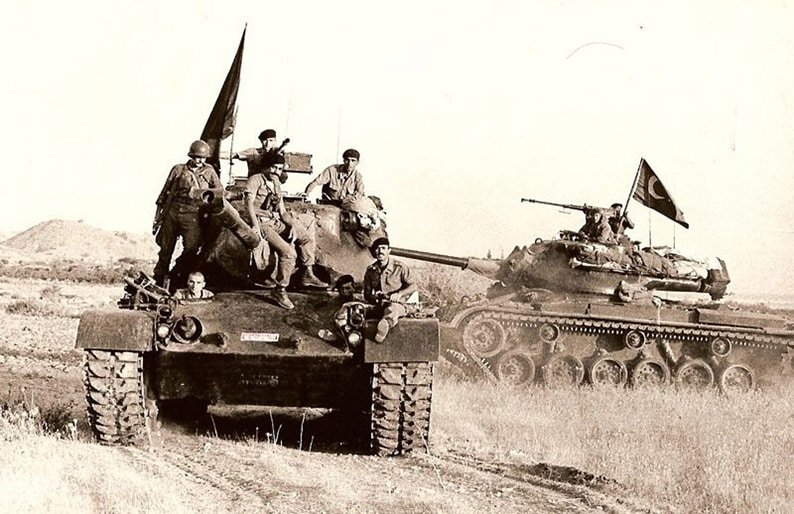
By the time the guns fell silent, the dead numbered in the thousands on both sides.
Clerides remained as acting president until the return of Makarios to the island in December, while in the north, the Turkish Cypriots proclaimed the ‘Turkish federated state of Cyprus’ in February 1975.
During and after the summer of 1974, Greek Cypriots living in the island’s north had fled southwards, while Turkish Cypriots living in the island’s south had likewise fled northwards. The safe passage of those wishing to leave, as well as of Greek Cypriots who wished to remain in the north, was enshrined in an agreement reached by Clerides and Turkish Cypriot leader of the day Rauf Denktash in 1975.
In total, it is believed that around 200,000 Greek Cypriots left the north, while more than 50,000 Turkish Cypriots travelled in the opposite direction.




Click here to change your cookie preferences