
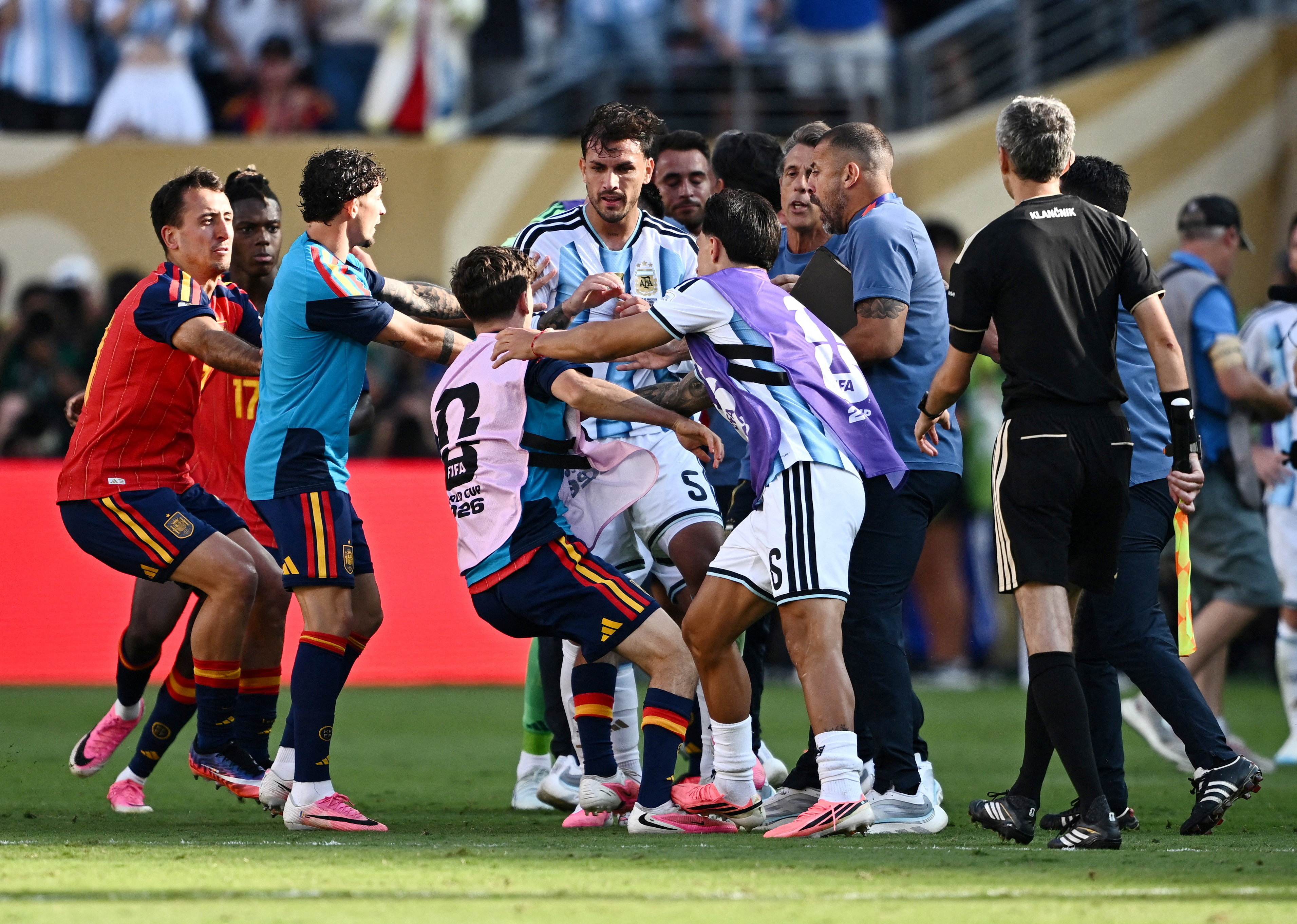
In the end, the eagerly awaited World Cup final, between two footballing powers, turned out to be a very disappointing spectacle thanks to Argentina’s unrelenting negativity and spoiling tactics. It was a display of anti-football, an example of how the beautiful game could turn ugly, with the defending champions’ sole objective being to prevent Spain from playing, in the hope they could take the match to a penalty shoot-out. All neutrals, dejected by the unrelenting gamesmanship, would have cheered Feran Torres’ goal that decided the match in extra time.
The nastiness, however, did not end with the final whistle, which must have been deeply embarrassing for Fifa boss Gianni Infantino, watching the game with President Trump. Argentina players attacked Spanish players on the pitch and showed an abject lack of grace by collectively turning their backs to the presentation ceremony for the champions. This was not the way Fifa would have wanted the showpiece of the 23rd World Cup to end, even though the best team won the final.
It was a terrible send-off for the greatest footballer of all time Lionel Messi, playing in the World Cup for the last time, and ironic considering Argentina featured in some of the most exciting matches of the tournament. This did not stop Fifa from hailing this as the best ever World Cup and declaring the 48-team format a resounding success. In fact, Infantino is now talking about expanding the tournament to a ridiculous 64 teams for the 2034 World Cup in Saudi Arabia.
Although it is unclear whether the World Cup, featuring an unprecedented 104 matches played in three countries, was a success from a footballing point of view, it was certainly a financial triumph for Fifa. CNBC reported that Fifa “is poised to net over $9 billion in revenue for 2026,” which is a 20 per cent increase on the record-setting $7.6 billion generated in Qatar four years ago. This takes the world governing body’s earnings since 2023 to $13 billion. A record number of people (over 6.5 million) attended the matches, despite the very high ticket prices, while the global television audience was estimated at close to two billion.
The 23rd World Cup was the most lucrative sporting event in history. Was it the most exciting and spectacular? There were exciting matches as would have been expected given there were 104 played, but is it possible that players would have been exhausted by the time the final arrived, especially as the tournament came at the end of the domestic seasons? The two finalists played a total of eight matches in less than six weeks and tiredness may have also been a factor for the poor spectacle on Sunday. On a positive note, Spain were worthy champions.





Click here to change your cookie preferences