
Cyprus has renewed its efforts to attract shipowners to its flag, pointing to tax stability, its European Union status and a strong international inspection record as the registry continues to expand.
The Shipping Deputy Ministry said that registering under the Cyprus flag gave owners access to more than a national ship register, particularly as regulatory demands, security concerns and the cost of operating vessels continue to increase.
Shipping Deputy Minister Marina Hadjimanolis recently said “one of the Deputy Ministry’s main priorities is to further strengthen the competitiveness of the Cyprus flag and the country’s shipping sector”.
Addressing a shipping symposium in Limassol in June, Hadjimanolis said the ministry had been simplifying procedures and creating a more service-oriented environment for companies operating in and from Cyprus.
The reminder follows a period of considerable growth. The Cyprus Ship Registry has expanded by 23 per cent in gross tonnage since September 2023, reaching its highest level in 25 years, according to government figures.
Cyprus now has the 11th-largest registered fleet in the world and the third-largest in Europe, giving the island a presence in international shipping that is disproportionate to its size.
Hadjimanolis previously said the country did not intend to enter a simple numbers contest with larger registries. She said Cyprus’ aim was “not to compete against rival flags, but rather to strengthen our registry and promote Cyprus as a reliable partner on the global maritime stage”.
The flag’s standing is also supported by its performance during inspections, rather than relying solely on the government’s description of it as a quality registry.
Cyprus remains on the Paris MoU White List for the period from July 2026 to July 2027. Cyprus-flagged ships underwent 2,155 inspections and recorded 65 detentions between 2023 and 2025, placing the country 22nd among the 40 flags included.
It was also classified as a high-performing flag under the Tokyo MoU, following 1,385 inspections and 56 detentions during the same period.
Hadjimanolis previously said “our top priority is to maintain and improve the exceptionally high quality for which the Cyprus flag is renowned”.
Such rankings matter commercially because a flag’s inspection history forms part of the risk assessment used by port authorities. Ships registered under poorly performing flags can face greater scrutiny, delays and additional costs.
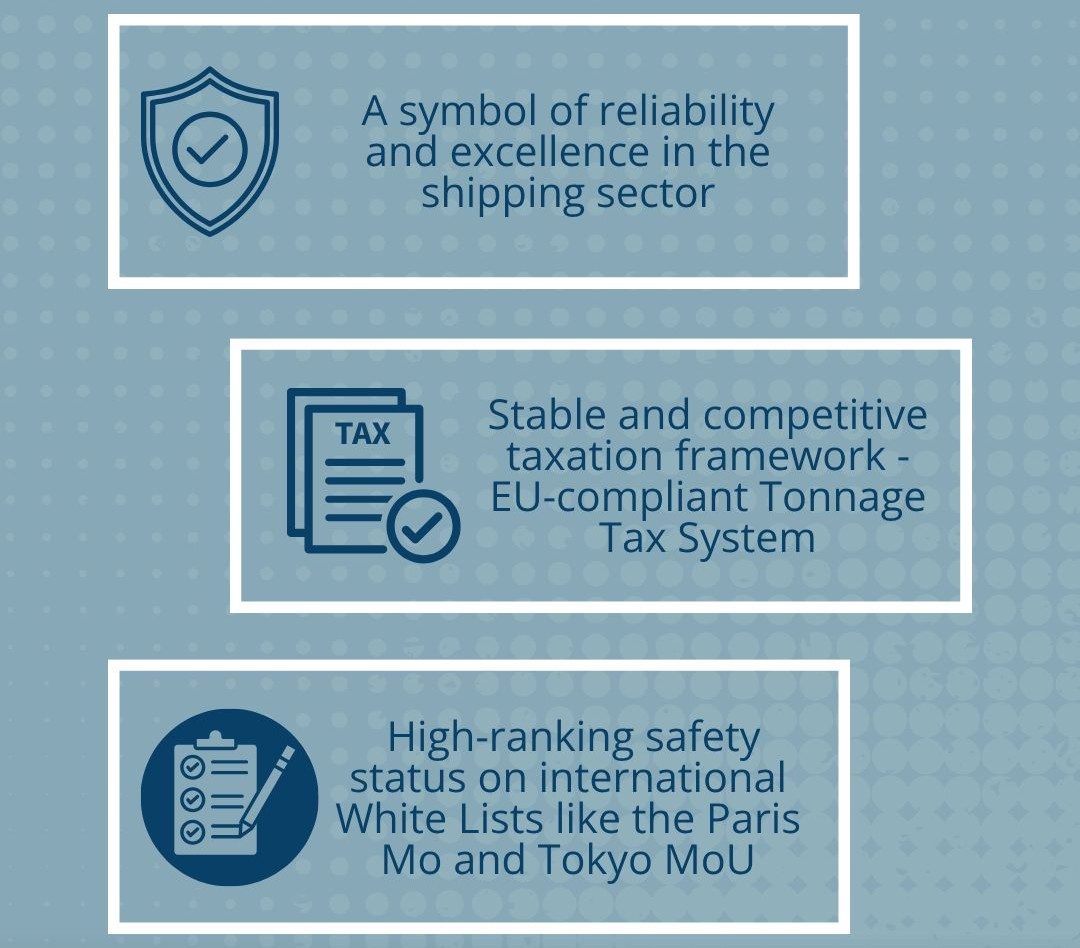
Tax, however, remains one of Cyprus’ clearest attractions. Under the EU-approved Tonnage Tax System, eligible shipowners, charterers and ship managers pay tax according to the net tonnage of the vessels they operate, rather than conventional corporate tax on qualifying shipping income.
The system has been approved until the end of 2029, giving companies greater certainty over future costs. Qualifying owners may also receive exemptions covering profits from operating or selling vessels, certain dividend and interest income, while seafarers working on qualifying Community ships are exempt from income tax under the shipping tax regime.
The number of companies registered under the system increased by 15 per cent over the two years to late 2025, providing another indication that the appeal extends beyond the ships entered directly in the national registry.
Cyprus has also removed government fees for the registration of ships and ship mortgages, according to the ministry’s fees schedule, although annual registry maintenance charges and other applicable dues remain.
Environmental incentives have been added to the tax system, allowing shipowners to secure reductions of up to 30 per cent in annual tonnage tax when vessels meet specified emissions and efficiency criteria.
Hadjimanolis said the measure “clearly offers a financial motivation to invest in sustainable and environmentally friendly technologies and practices”.
Administrative support is another part of Cyprus’ offer. More than 150 maritime specialists across seven countries provide assistance around the clock, while a worldwide network of flag inspectors has operated since 1996.
The overseas presence includes maritime offices in major shipping centres such as Piraeus, London, Rotterdam, Hamburg and New York. This allows inspections, provisional registrations and other urgent matters to be handled without every transaction passing physically through Limassol.
More services are also moving online through the CYSh1P portal, which is being rolled out as a single point for registry transactions, vessel safety and environmental documentation, seafarer certification and tonnage-tax procedures.
The platform began with digital services for seafarer certificates and is intended eventually to replace a wider range of paper, email and in-person procedures. Its value to shipowners will depend on how quickly the remaining services become fully operational and whether the promised faster processing is delivered in practice.
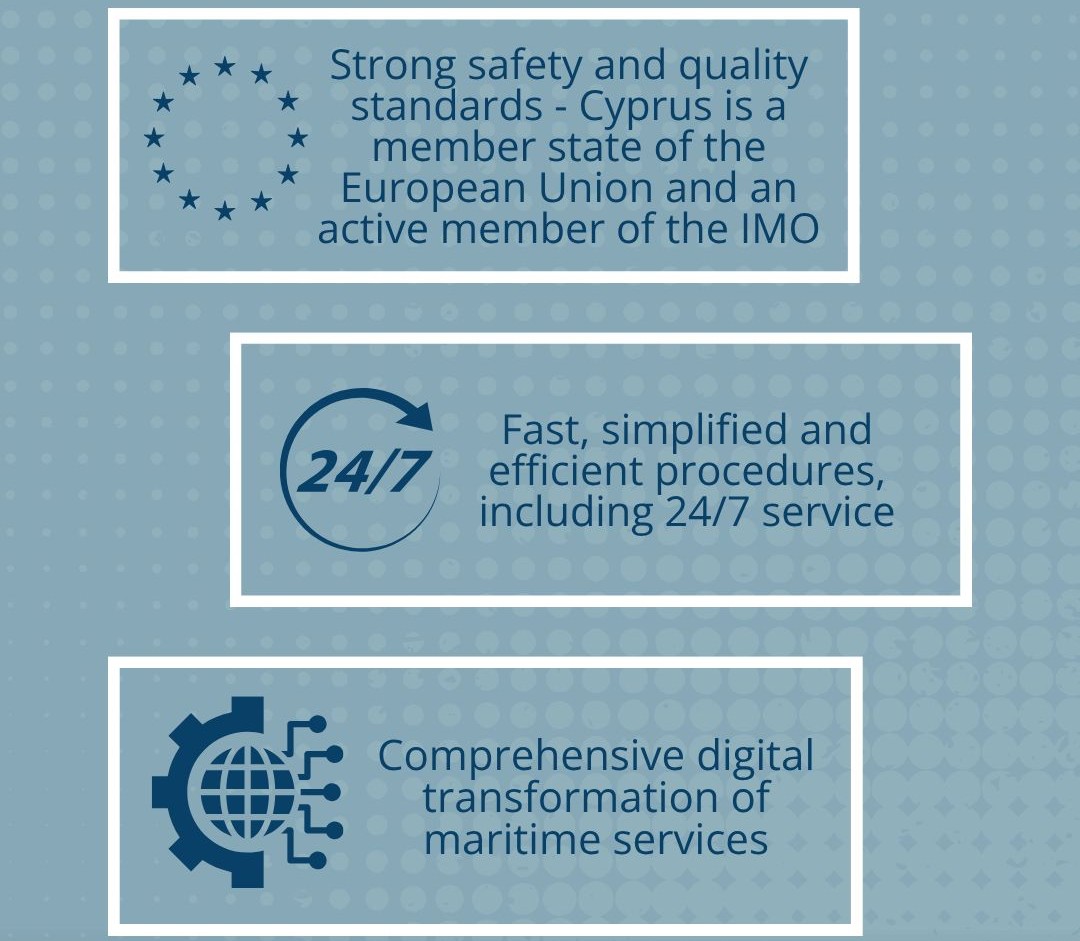
Cyprus also holds a seat on the IMO Council for the 2026–2027 term, having been repeatedly elected to the organisation’s executive body since 1987. The country’s current membership gives it a direct role in discussions covering maritime safety, pollution, seafarer welfare and the regulation of shipping emissions.
Hadjimanolis said Cyprus was working to ensure that the country’s voice remained “active and substantial” in important shipping forums and international decision-making.
For shipowners, the attraction of a flag is ultimately measured beyond registration. Tax costs, inspection treatment, legal protection and the ability to reach the administration when a vessel encounters a problem at sea are what determine whether the promises made on shore hold up in practice.





Click here to change your cookie preferences