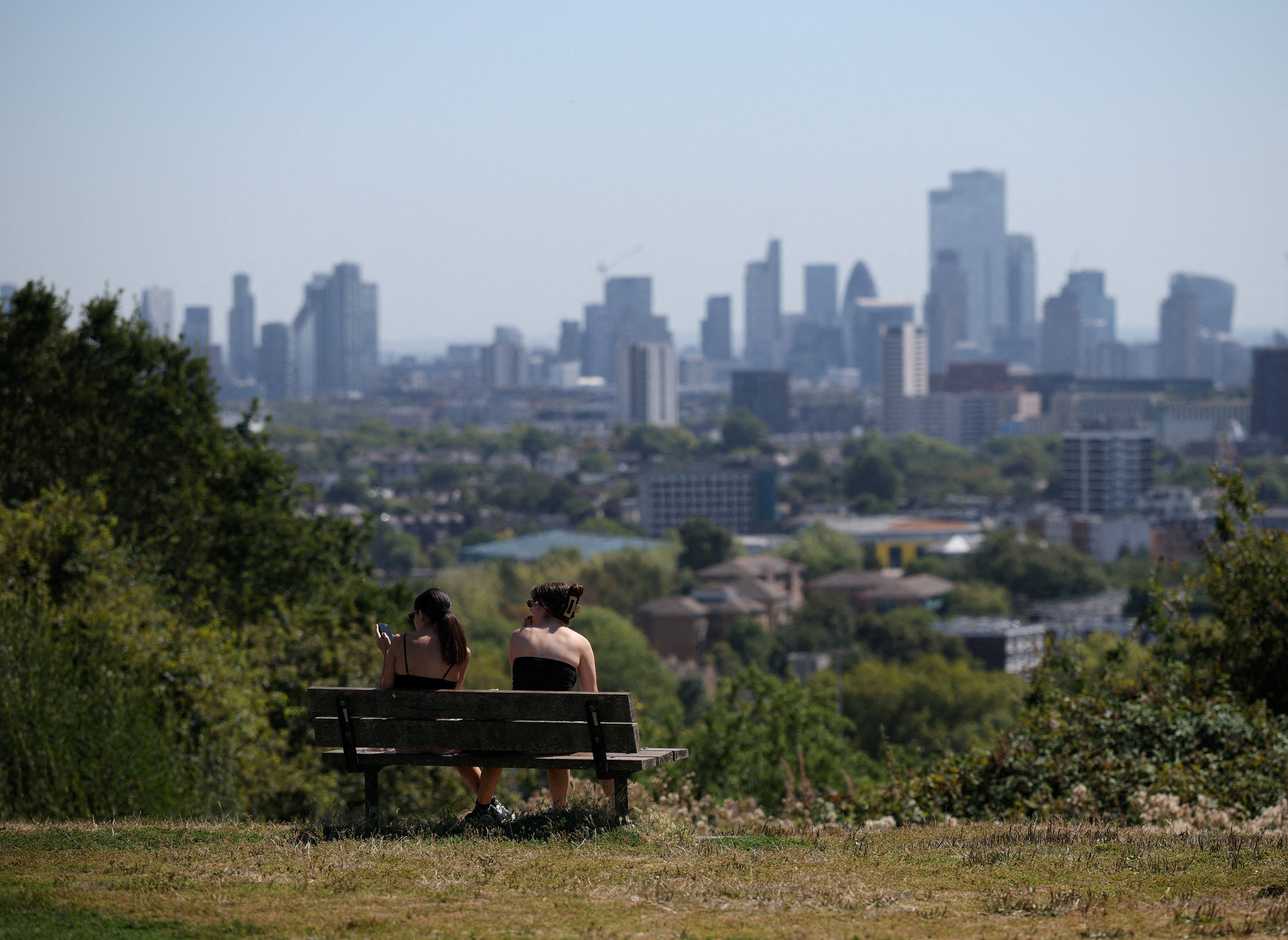
The first hurricane to hit Hawaii in 34 years. The Mediterranean on fire from Spain to Greece. ‘Heat domes’ one after another for months on end in Europe and North America. Thousands of excess deaths. A record ‘El Niño’ piled on top of an average global temperature up from +1.2°C five years ago. Predicted high for this year: +1.7°C.
Surely they’ll get it now, you think, but no, they won’t. It once seemed sensible to think that when the climate damage gets bad enough and the trend line becomes impossible to ignore, ‘they’ (meaning the climate change deniers and their fellow travellers) will finally accept that the threat is real and urgent action is necessary. A few of them will, but most will not.
It is becoming clear that as the old position of flat disbelief in climate science becomes untenable, the preferred response among former deniers is to admit that climate change is big, dangerous and already well underway – but to insist that it is already too late and nothing can be done about it now.
The most dramatic movement in ballet is the ‘grand jeté’, a soaring leap across the stage. In my mind’s eye I can see the deniers in tutus and tights, springing up from the swamp called Denial, soaring gracefully over the cluttered workspaces of real scientists, and alighting happily in the philosophical domain known as Resignation. There goes another one.
Yet it is strange, is it not? They have undergone a complete reversal of beliefs, but somehow they have managed to end up in the only other position from which they could plausibly argue that they don’t have to do anything about their greenhouse gas emissions. “It’s hopeless, we’re doomed, so eat, drink and be merry, because tomorrow….”
What a coincidence! It’s almost as if somebody were deliberately influencing them along a path from one set of beliefs to another, the sole link between those contradictory beliefs being that both the old and the new sets make it seem acceptable to go on burning fossil fuels.
But let’s not succumb to paranoia. Who could possibly want to steer popular beliefs along a path that would ultimately harm the public just because it would serve their personal interest in prolonging the use of a lethal technology? Let’s just concentrate on the accuracy of the claim that it’s too late, without getting into awkward issues about whose interest it serves.
The grand old man of climate nihilism is American writer Jonathan Franzen, who wrote in 2019: “If you care about the planet, and about the people and animals who live on it, there are two ways to think about this. You can keep on hoping that catastrophe is preventable, and feel ever more frustrated or enraged by the world’s inaction. Or you can accept that disaster is coming.”
He accepts the disaster. This kind of defeatist talk always finds a market because it makes the writer seem ‘realistic’, but what is feasible does not depend on people’s emotions. It depends on technical, financial and political possibilities, which are not nearly so negative. Solar and wind power, for example, are now cheaper than fossil fuels almost everywhere.
According to Franzen (whose despair seems more fashionable than deeply held), stopping the growth in greenhouse gases would require “overwhelming numbers of human beings, including millions of government‑hating Americans, to accept high taxes and severe curtailment of their familiar lifestyles without revolting.”
Isn’t that what every major country did in the Second World War? Including the United States, even though it never faced any risk of invasion.
Moreover, Franzen moaned, “every one of the world’s major polluting countries [would need to] institute draconian conservation measures, shut down much of its energy and transportation infrastructure, and completely retool its economy.”
The economies of the developed countries have already been retooled twice since 1945, and alternative energy sources are already taking over. What needs to be done is probably still achievable.
But we have been talking about where the climate deniers are going now that blank disbelief is no longer viable. The more important fact is that three-quarters of the 143,000 people who were interviewed in 140 countries by Gallup last year see climate change as a ‘very serious threat’ or a ‘somewhat serious threat.’
These are the people who matter, and they are just not ready to take the plunge yet. The climate changes are still not frightening enough to make radical responses acceptable. But they probably will be ready soon, and very likely in this decade.
Whether that will be soon enough, nobody knows.
Gwynne Dyer’s new book is ‘Intervention Earth: Life‑Saving Ideas from the World’s Climate Engineers. The previous book, ‘The Shortest History of War, is also still available.



Click here to change your cookie preferences