
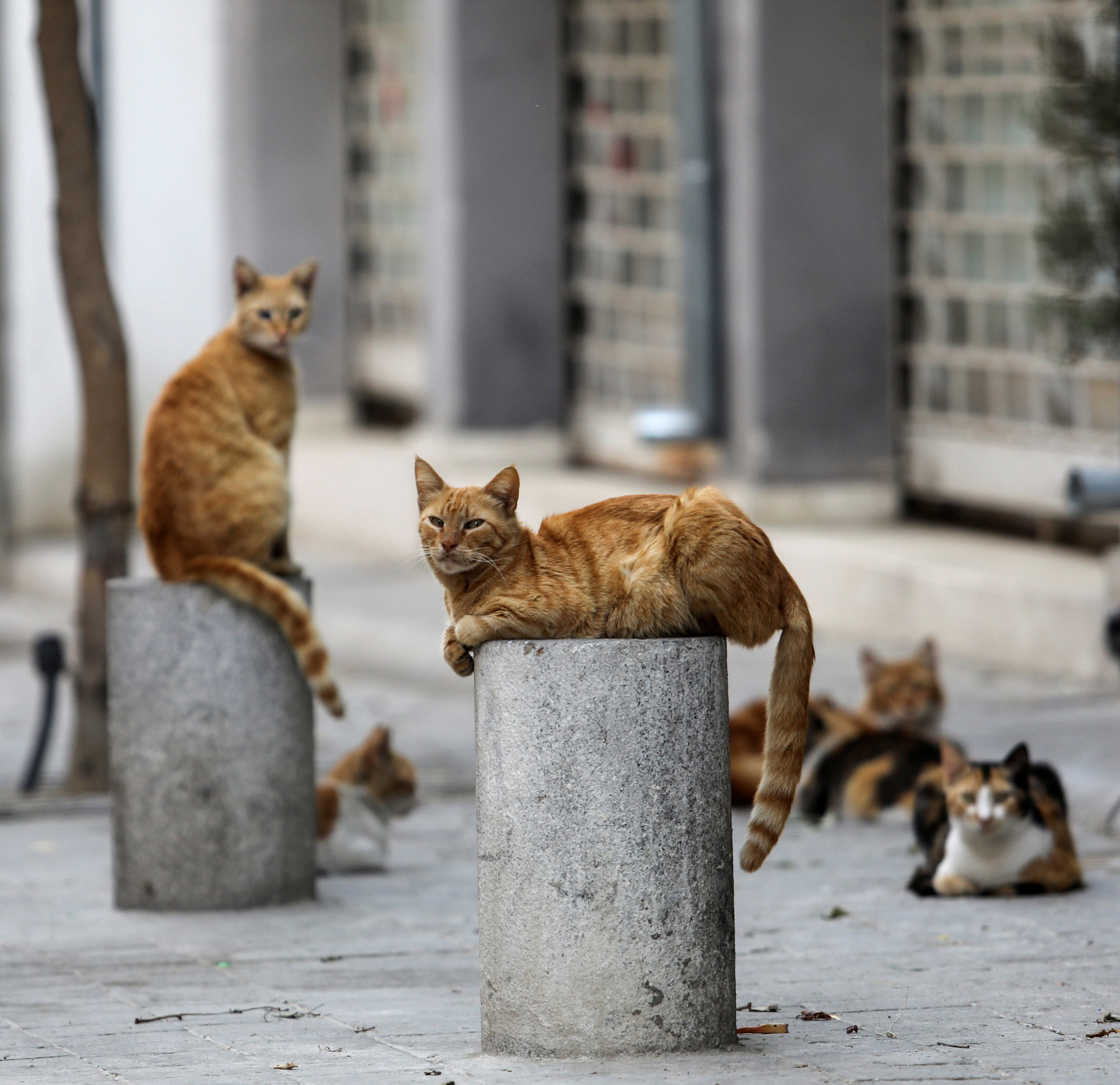
Cats belong in Cyprus like the sea and the sun: it is hard to picture the island without its felines, which some claim outnumber the local human population.
Bars, beaches, taverns or archaeological sites, no matter where you step, a cat – mostly a stray – will be waiting for you.
And while other destinations have long started marketing their image as a cat destination, Cyprus somehow lags behind, offering little more than tote bags and mugs emblazoned with Cyprus cats for sale at local kiosks and tourist shops.
Cats as a tourism identity
“Cyprus’ current positioning as a ‘sunny resort’ competes head-on with destinations that hold a far stronger cosmopolitan brand and consistently loses that comparison,” says volunteer cat rescuer Christina Georgalla.
Drawing on years of experience in cat rescue, she has drafted a tourism development proposal study, suggesting that the island lay a stronger focus on its historical relationship with cats and market it accordingly.
“This is not about dressing up a problem (…) it is about turning an existing management issue into an asset, through the systematic, ethical care that already needs to happen regardless,” she says.
Georgalla describes a gap between “ignoring the problem” and “managing it and telling the story properly” which she says was a matter of communications, arguing that the island should start treating its stray cats as a tourism identity.
Asked about the proposal, the tourism ministry told the Cyprus Mail that it had been received and was currently in the early stages of review.
“We have received the proposal and are currently checking the relevant criteria,” the ministry said.
Other countries have long opened their doors to ‘cat tourism’ As part of her development proposal study, Georgalla lists three destinations that have already established themselves as “cat destinations” and provides an overview of their model and outcome.
One of the destinations she mentions is Aoshima, known as Japan’s “cat island”. According to Georgalla, the island used to count around 120 stray cats – and only 15 residents, a number that has since shrunk to only two couples, as the Guardian reported in 2024.
Georgalla says that while Aoshima enjoyed global recognition, it drew criticism for overcrowding and inadequate neutering programmes until 2018, warning that such programmes are essential for the success of such tourism models.
Another destination mentioned by Georgalla is Houtong in Taiwan. Located in northern Taiwan, the former mining village counts approximately 100 cats – compared to around the same number of inhabitants – and has established itself as a day-trip destination only around 40 kilometres away from Taipei.
In a third example, Georgalla refers to Budva/Kotor in Montenegro. Advertising itself as “The City of Cats”, estimates about the number of felines in the city vary, with rescue organisations saying they have neutered more than 10,000 cats in recent years.
“The model that succeeds is one with active municipal/state support, neutering programmes and integration into a place’s official identity such as Houtong or Kotor,” she says. “Cyprus, with an already-existing network of volunteer stray-welfare groups and institutional experience, starts ahead of both of these examples.”
Cyprus’ historical relationship with cats
Georgalla advocates for Cyprus creating its own category as “The Cat Island”, founded on a long historical association.
She argues that cats are an integral part of Cypriot history, noting that the island’s relationship with cats dates back centuries, continuing until today with some claiming the island has the highest stray cat ratio in the world.
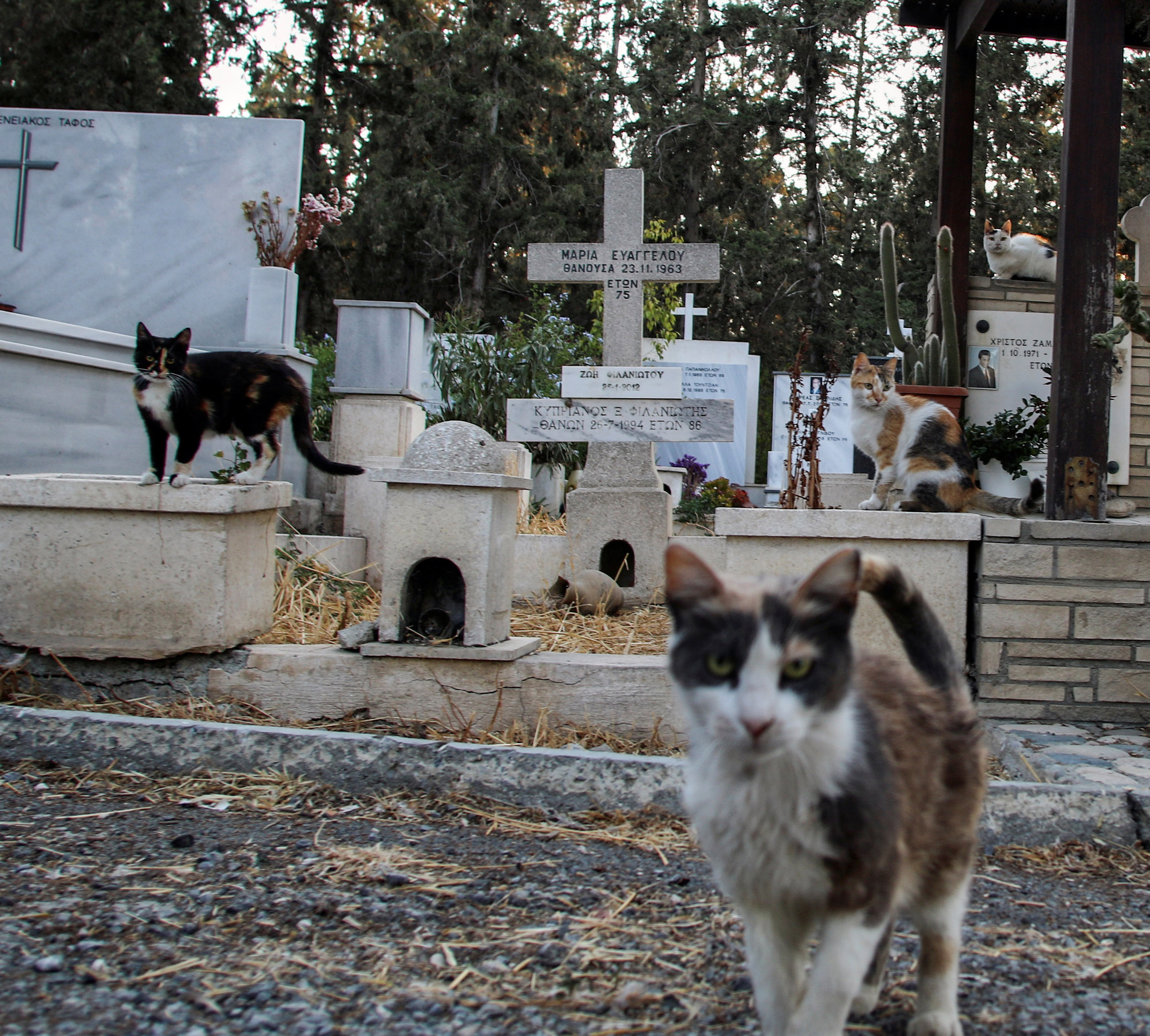
Indeed, Cyprus has long been believed to be the site of the earliest recorded human-cat relationship, with researchers in 2004 discovering a joint human-cat burial at Shillourokambos near Limassol, dating back to around 7,500 BC. The cat specimen is large and closely resembles the African wildcat, rather than present-day domestic cats.
The date of the burial far precedes ancient Egyptian civilisation, a society that famously revered cats, immortalising them in art and preserving them as mummies.
While research suggests that cat domestication did indeed happen in the north African region, an article in the BBC reported recently they reached mainland Europe only around 2,000 years ago primarily as pest controllers and ship cats.
“That relationship we have with cats now only gets started about 3,500 or 4,000 years ago, rather than 10,000 years ago,” the BBC quotes University of Oxford professor Greger Larson as saying.
All of which makes the 9,500-year-old grave in Cyprus even more mysterious.
And there is another ancient link between Cyprus and cats.
“At Akrotiri, south of Limassol, stands one of the oldest monasteries in Cyprus, the Monastery of St Nicholas of the Cats, with a tradition dating it to the 4th century AD,” says Georgalla.
Legends say that the cats were brought to the monastery by Saint Helen from north Africa to rid the area of venomous snakes that had become prevalent due to a prolonged drought.
“The monastery still operates today, actively housing cats under the care of Orthodox nuns, and already stands (…) as a natural anchor site for any cat-themed tourist trail, combining religious tourism, history and animal-welfare appeal in a single location,” she says.
It is already a popular place to visit for those tourists who know about the monastery already, as are some of the animal shelters scattered around the island.
Cats as a cheap tourist campaign?
“The core economic argument of this proposal is that it requires no new infrastructure, no new cat population, and no new monument,” says Georgalla.
According to her proposal, a potential tourism strategy would draw on three existing core foundations: the historical aspect, the existing monastery and the stray cat population, with the only new cost being coordination.
The latter, she adds, would include a working group at the deputy ministry of tourism, the corresponding municipalities, as well as volunteer organisations and promotional materials.
“The already-announced increase in state neutering spending, tripling to €300,000 annually, is a public-health expense that would occur regardless,” she says.
“This proposal simply adds the communications dimension to spending that would happen anyway, maximising its return rather than creating a new budget line from scratch.”
Georgalla’s proposal envisages Cyprus reorienting its approach to tourism. The thousands of stray cats already living on the island could play an important role in this, provided that animal welfare is prioritised over marketing.
The full proposal can be found here.





Click here to change your cookie preferences