
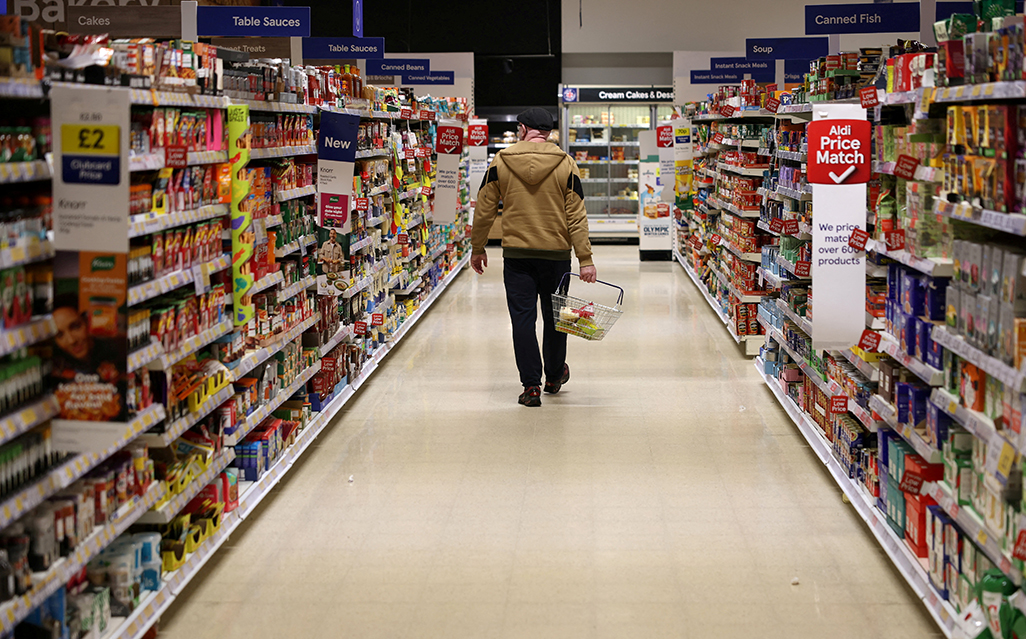
British grocery price inflation eased to its lowest level since October 2024 in August, market researcher Worldpanel by Numerator said on Tuesday, offering more respite to households grappling with elevated living costs.
Like-for-like grocery inflation was 2.1 per cent in the four weeks to August 9, according to Worldpanel, versus 2.6 per cent in last month’s report and 3 per cent in the one before that.
The Worldpanel data is the most up-to-date snapshot of UK consumer behaviour and provides an early indication of food pricing pressures in August.
Official inflation data for July will be published on Wednesday.
UK food inflation has not hit the levels that were forecast earlier in the year, due to fierce supermarket competition, consumers’ resistance to further price rises and better hedging by suppliers.
Britain’s new Prime Minister Andy Burnham has made tackling the cost of living a priority.
The data showed UK grocery sales increased 2.5 per cent over the four weeks year-on-year, with 31.3 per cent of sales including a deal.
The hot weather drove a 58.4 per cent jump in sales of sun cream, with ice cream/sorbet sales up 26.1 per cent.
Worldpanel said that over the 12 weeks to August 9, industry leader Tesco’s sales rose 1.8 per cent year-on-year, but its market share edged lower for the third report in a row. Sales at number-two player Sainsbury’s rose 3.5 per cent.
While Marks & Spencer isn’t fully included in the Worldpanel data set, it remained the UK’s fastest-growing food retailer with a 15.9 per cent rise in sales of groceries.
Online supermarket Ocado was the second fastest growing with a 13.1 per cent increase, followed by discounter Lidl with growth of 8.5 per cent.
While sales at number-three player Asda fell 0.2 per cent, this was its best performance since March 2024.





Click here to change your cookie preferences