
Cyprus faces a combination of geopolitical, economic and institutional vulnerabilities that cannot be addressed through diplomacy and external partnerships alone
States in the international system operate in an environment of unyielding anarchy. No supreme arbiter protects a sovereign state when an existential crisis arrives. When a small state sits directly underneath the coastline of an aspiring regional hegemon, its margin for strategic miscalculation is effectively zero.
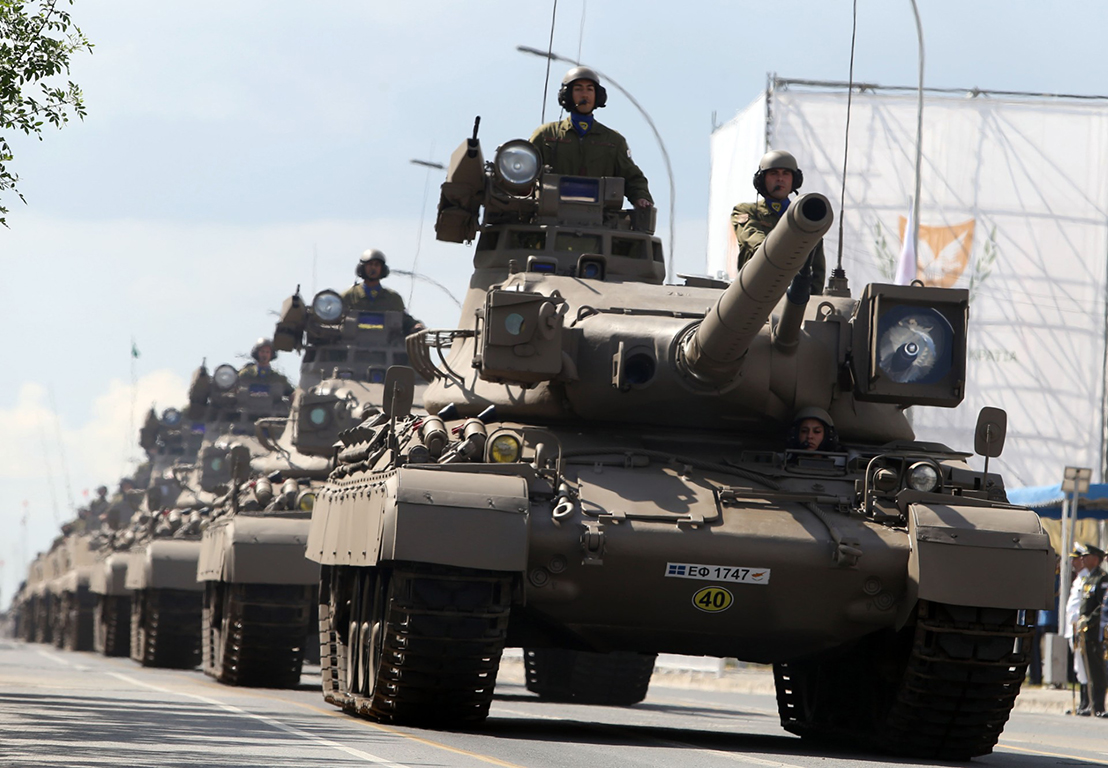
Yet on this past Independence Day, one sees the Republic of Cyprus’ elite acting under the fatal conceit that liberal norms, European solidarity, and legalistic treaties can insulate it from power politics. The exhaustion of the post-1974 political order is reflected in the electoral fragmentation and an unrepresentative parliament from the May 2026 election, when more than 60 per cent of eligible voters either didn’t vote or didn’t register. This is the predictable consequence of an establishment that has spent half a century substituting domestic political theatre for hard grand strategy.
The territorial realities of partition
Nicosia’s decision makers have made a foundational error: they refuse to understand the structural mechanics of the security dilemma. Following the collapse of the 2017 Crans-Montana talks, the Cypriot political leadership embraced the fiction that it could comfortably manage an open-ended, risk-free status quo. While paying lip service to a bizonal, bicommunal federation, it deliberately rejected its structural prerequisites – refusing Turkish Cypriot political equality and a single positive vote under the moralising banner of an idealised ‘normal EU state’.
This stance ignores how territorial conflicts conclude. Wars produce hard physical and geographic facts, and the 1974 war was no exception. In an anarchic world, bizonality is not a concession. It is the minimal structural baseline required to balance communal security fears, facilitate an eventual drawdown of Turkish military forces and prevent outright partition. By pursuing an unviable unitary state, Nicosia plays directly into Ankara’s hands.
Reckless alignment and the deterrence illusion
Even more dangerous than its diplomatic posturing is Nicosia’s recent embrace of external balancing. Caught in an asymmetrical relationship with an overbearing regional heavyweight, the Cypriot government has attempted to manufacture deterrence by aligning with distant extra-regional powers. It has signed the 2024–2029 US Defence Roadmap, entered the 2026 French Status of Forces Agreement (SOFA), and concluded trilateral pacts with Greece and Israel.
This posture creates a dangerous illusion of deterrence. These arrangements do not constitute a formal, binding collective defence alliance. There is no Nato Article 5 commitment to protect Cyprus. Instead, Nicosia is integrating sovereign military infrastructure – the Mari naval facility, Andreas Papandreou air base, and the Mount Troodos radar and signals complex – into Western kinetic networks, turning the island into an operational outpost without securing an enforceable defence umbrella.
International history demonstrates the catastrophic risk of this approach. At the 2008 Bucharest Summit, Western powers signalled security integration to Ukraine and Georgia without extending a credible security guarantee, needlessly baiting a regional power sensitive to hostile forward bases along its perimeter.
Cyprus is walking into the same trap. It courts provocation while possessing zero strategic depth. Predictably, Ankara has countered by hardening the north into an offensive military platform, expanding strike-drone hubs at Lefkoniko, and stationing naval combatants at Bogazi. National defence budgets have reached historic highs, yet the island’s territorial vulnerability has only intensified.
The death of neoliberalism
This grand strategic incoherence matches the predatory mechanics of the domestic economy. The ruling elites celebrate headline GDP growth and sovereign-rating upgrades, but these vanity metrics conceal an economy hollowed out by financial extractivism. The post-2013 bank restructuring eliminated more than €44 billion in domestic wealth – more than double the country’s 2013 gross domestic product. Concurrently, over €20 billion in non-performing domestic loans were offloaded to foreign credit acquiring companies at a fraction of their value. These foreign entities now extract capital directly from domestic households, exporting liquid assets offshore.
Aggregate growth metrics obscure this vulnerability: the structural gap between Gross Domestic Product (GDP), which measures output produced in the economy, and Gross National Income (GNI), which measures what is retained by residents, reached 11 per cent of GDP by 2025. At the same time, real national income per worker has grown at less than 1 per cent annually in recent years and drops to near zero after taxes.
Energy as strategic exposure
This strategic fragility is equally evident across the national energy grid. Energy generation is not a speculative playground for domestic rentiers; it is vital to state survival. Under an inefficient ‘avoidance cost’ regulatory framework, the Electricity Authority of Cyprus has been blocked from deploying utility-scale solar generation, allowing private operators to collect windfall rents of up to €0.20 per kilowatt-hour while Cypriot consumers paid more than €1.2 billion in EU carbon penalties between 2018 and mid-2025.
Instead of building hardened domestic power reserves, the political elite has committed to the €2.5 billion Great Sea Interconnector (GSI). This project forces an isolated microgrid of fewer than one million residents to shoulder 63 per cent of the capital cost for a subsea cable running through maritime zones where Turkey commands local naval superiority.
It repeats the exact failure of the stalled €500 million Vassilikos LNG terminal, now paralysed by international arbitration and European Public Prosecutor’s Office fraud investigations. Exposing a vulnerable state’s vital energy supply to the discretion of an adjacent naval power is geopolitical negligence. Cyprus does not need disputed subsea interconnections; it needs hardened domestic energy assets and domestic battery energy storage systems to secure independent power reserves.
Domestic decay under geopolitical strain
The state’s underlying institutional decay reflects this wider strategic detachment. Operating under a 60-year distortion of the ‘Doctrine of Necessity’, the Cypriot constitution concentrates executive authority in an unrestrained presidency. The attorney-general operates simultaneously as the president’s personal legal counsel and an unreviewable public prosecutor under Article 113, free to quash investigations without external oversight. When internal accountability mechanisms assert their statutory roles – seen in the coordinated dismissal of the auditor-general – the political apparatus acts to defend its patronage networks. The republic maintains the legalistic exterior of a Western democracy while operating with the internal vulnerabilities of an oligarchy.
The current trajectory offers no stability; it accelerates strategic decline. Continuing along this line invites permanent partition, economic exhaustion and forward military vulnerability, while foreign powers will not intervene when a crisis erupts. To survive in an unforgiving regional order, Cyprus must cast aside its liberal conceits and rebuild its latent strength.
Stability cannot be preserved by the very actors whose rent-seeking created this vulnerability. It requires an institutional break.




Click here to change your cookie preferences