
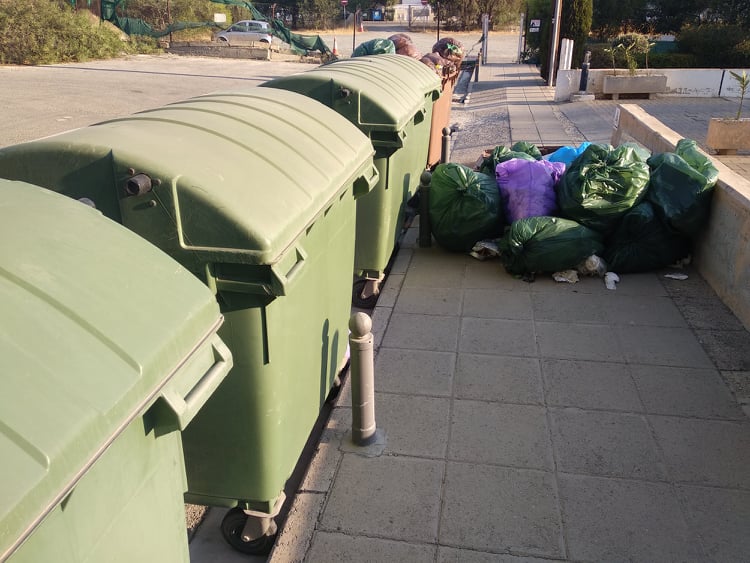
While Cyprus is preparing to introduce its ‘pay as you throw system’, wherein people are forced to pay for special issue rubbish bags to have their rubbish collected, early next year, municipalities are demanding clarity on funding and infrastructure before they commit to a rollout which has already missed two EU deadlines.
Under the system, households will be charged according to the volume of mixed waste they produce rather than a flat rate – an approach the environment department regards as the most effective way to cut the amount of rubbish sent to landfill.
Separate collection of organic waste from households, a legal requirement since January 2024, will not begin at the same time.
Officials say it will instead be introduced gradually, starting with large producers such as hotels, restaurants, hospitals and military camps during the next year, with regulations still to define which businesses qualify and whether municipalities or licensed private operators will handle their collection.
Municipalities union chairman and Larnaca mayor Andreas Vyras has warned that he will not implement the scheme unless these outstanding issues are resolved.
Local authorities are seeking guidance on organic waste processing sites and costs, funding for equipment, the recruitment of inspectors and the licensing of the packaging waste system.
They also want annual state grants to municipalities raised from €117 million to €170m, arguing that inflation and rising operational demands have outstripped current support.
Speaking to newspaper Politis, Costas Constantinou, permanent secretary of the environment directorate at the agriculture ministry, said the logic behind the charging model was straightforward.
“The most important thing is to create an incentive to reduce waste,” he said, for households generating less mixed rubbish would in turn pay less.
Even without organic separation at the outset, he said, higher recycling rates are expected for materials such as plastic packaging, metal packaging, and drinking cartons – known as PMD packaging, paper, glass and textiles collected through the green point schemes and run by Green Dot.
He acknowledged that source separation of household organics could not be delivered immediately.
“It is utopian to say we will have source separation of organics by 1 January,” he said.
The government has allocated €25m through the European Union co-funded Thaleia programme to help municipalities buy bins, locking systems, prepaid bags and refuse lorries.
A separate €35m EU smart cities project will fund a national smart waste platform and smart lighting.

A proposal to raise a further €4m a year for waste reduction projects through a landfill tax was rejected by parliament, leaving that funding gap unresolved.
Former agriculture minister Maria Panayiotou had informed parliament that households can expect to pay between €150 and €250 a year, depending on viability studies carried out by each local authority.
Opposition politicians have pointed out persistent issues in Aglandjia, where the pilot scheme is already running.
MPs cited a forty-per-cent rise in waste dumped in neighbouring municipalities, which they attribute to residents avoiding charges by disposing of rubbish outside the scheme’s geographical boundaries.
The environment department counters that the scheme has in fact demonstrated that it can reduce mixed waste, increase recycling participation and lower landfill disposal, and that the complaints reflect difficulties adjusting to new habits rather than any failure of the system itself.
Former ecologist MP Charalambos Theopemptou said many municipalities still lack the basic infrastructure required.
“They will need new specialised trucks, designated brown bins, and proper sites for organic waste processing, the infrastructure simply does not exist in several areas,” he told the Cyprus Mail.
He also raised concerns about rural areas, which will “not be able to be serviced in the same way as cities, which must be reflected in planning and funding,” he said.
In regard to blocks of flats, he explained that “we don’t know who is recycling and who isn’t. That anonymity makes pay as you throw harder to apply fairly.”
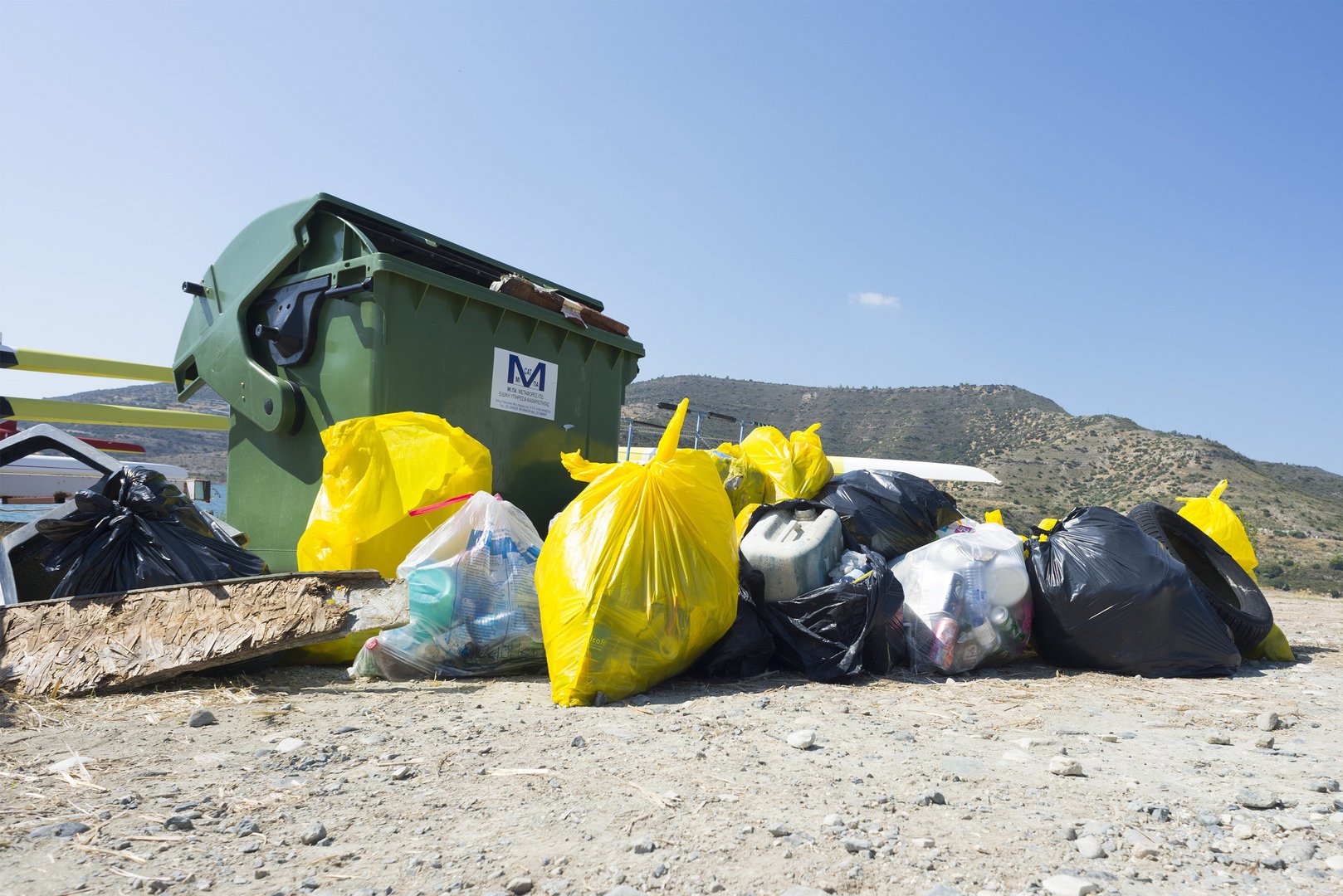
Some 65 per cent of the country’s waste still goes to landfill, and the treatment facilities such as Pentakomo require an estimated €162m in interim upgrades.
Rehabilitation of the Kotsiatis and Vati landfill sites has been prolonged, and irregularities in the construction of the Pentakomo plant have further undermined compliance efforts.
A further €20m has been earmarked from EU funds for a new organic waste treatment plant, though its location has not been decided.
The department’s own studies have suggested existing private facilities, currently handling livestock waste, have spare capacity to serve major producers in all districts except for Famagusta which has no equivalent facility.
Organic waste accounts for some 40 per cent of household rubbish, the largest single component of waste.
Theopemptou said the timeframe for compliance with EU organic waste rules was running out.
“We only have about eight years left for the remaining waste directives, but for organic waste the deadline is effectively just two years. We cannot afford more delays,” he said.
He said that a redistribution of surplus food from supermarkets, bakeries and the hospitality sector as a measure could significantly cut organic waste, though he did note that regulatory gaps were holding back private initiatives ready to act.


Click here to change your cookie preferences