
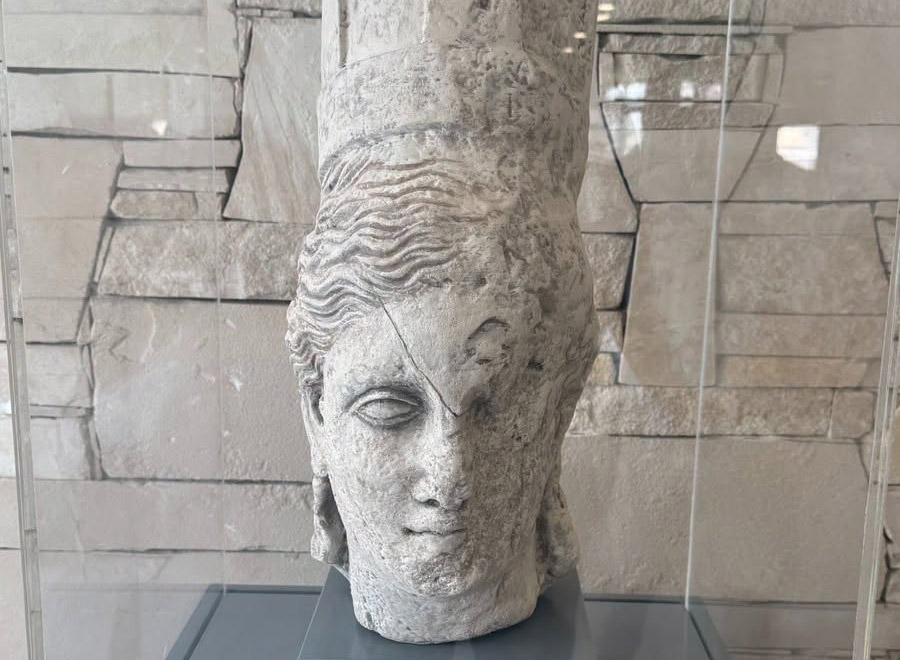
A scientifically accurate replica of the monumental head of Aphrodite of Lefkolla has been installed at the Paralimni-Dherynia town hall in a specially constructed museum showcase.
The exhibition display case and pedestal were built, designed and installed by Manolis Kamasas, a specialist in museum and exhibition design.
Mayor George Nicolettos expressed his appreciation of Kamasas’ work, noting the care taken to properly present what he described as one of the most significant artefacts documenting the ancient history of the area.
The Aphrodite of Lefkolla is the most significant archaeological discovery to date in the wider area of present-day Protaras Paralimni, associated with ancient Lefkolla.
Discovered in the 19th century, the monument is among the top creations of Cypriot sculpture of the 4th century BC, bearing characteristics of the Greek style of the late Classical period.
The bust was carved from local limestone and was part of a statue of supernatural size, which is estimated to have been part of a wider sculptural ensemble of an ancient sanctuary.
A distinctive feature of the statue is its imposing, wall-like crown. This symbolises the goddess as the protector of the city and its prosperity. It demonstrates the important role played by the cult of Aphrodite in ancient Lefkolla.
The original work is currently on display at the Neues museum in Berlin, Germany
The copy was created in cooperation with the department of archaeology of Humboldt University Berlin, at the request of the Paralimni-Dherynia municipality, marking the symbolic return of the Aphrodite of Lefkolla to the place where it was discovered.


Click here to change your cookie preferences