
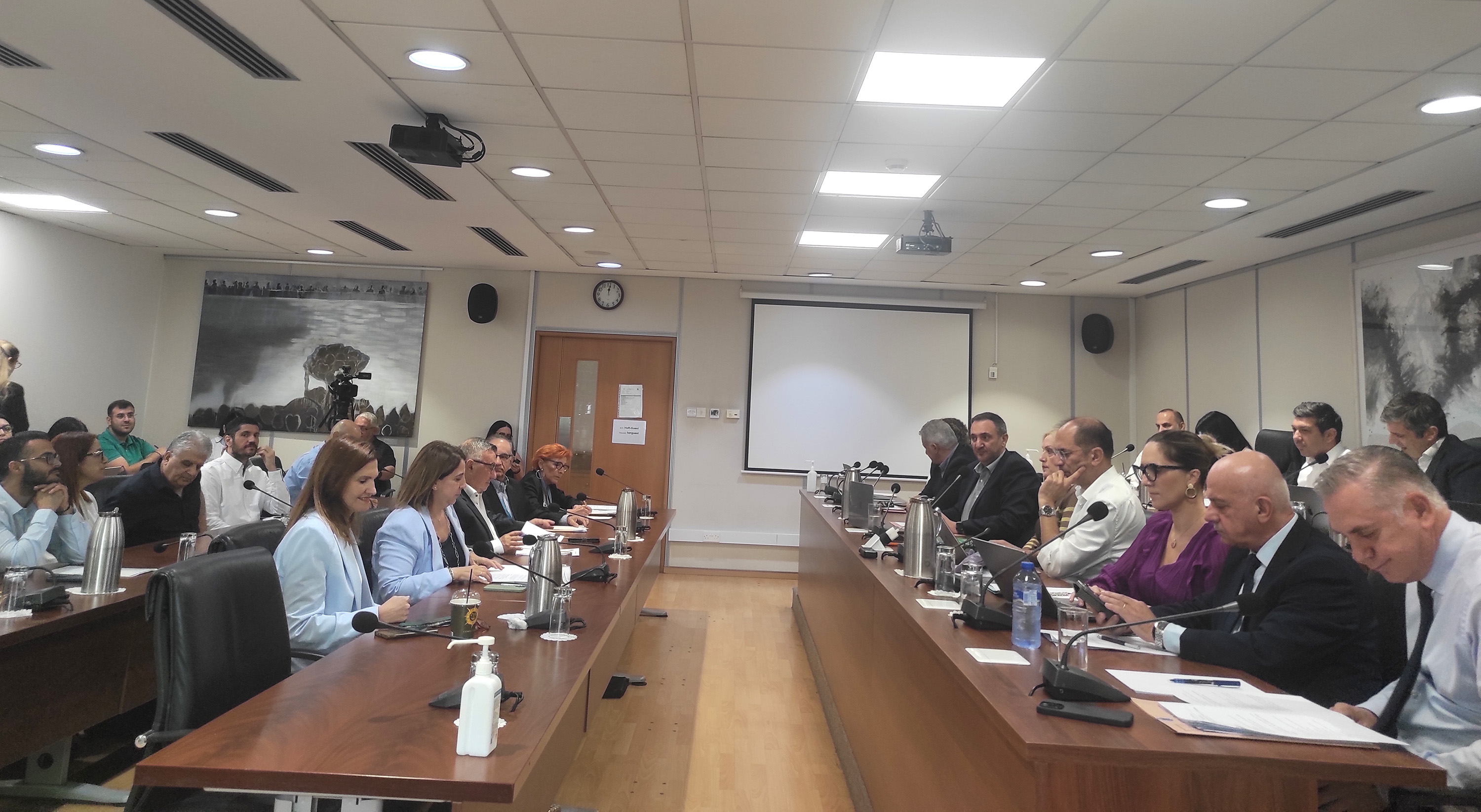
MPs pressed the government on Wednesday over some 21 appointments to semi-state organisation boards made outside the recommendations of an advisory council set up to vet such candidates.
Committee chairman and Disy MP Demetris Demetriou informed the House institutions committee that 73 of 94 positions filled in the latest round were given to people included in the council’s recommendations, leaving 21 appointments, outside that list.
Deputy minister to the president Irene Piki, representing the government, said the council’s role is purely advisory, and its recommendations are not binding, though she stressed the vast majority of appointments had followed them.
She said the relevant decisions and justifications had been made public, and confirmed the International Monetary Fund (IMF) would provide technical assistance to improve governance of public entities.
Akel MP Constantinos Constantinou said the central question was whether the government’s own rules, set by the cabinet, had been respected.
Advisory council chairman Giorgos Aresti told the committee the body evaluates candidates, and said its decisions have always been unanimous, based on the individuals’ integrity and their relevant qualifications.
He said the council had in some cases recommended fewer than three candidates for a position where it judged others unsuitable, and that of its recommendations for chairs, only two had been rejected by the cabinet, against ten accepted.
Piki confirmed that 1,282 people had expressed interest in the latest round covering 12 organisations, around 19 per cent more than the previous round.
Akel MP Anastasia Hasikou and Alma MP Irene Charalambides both lambasted the absence of published justification for the appointments made outside the council’s list, with Charalambides saying the government “fell below the bar that it itself set”.
Advisory council member Eleni Mouzala questioned the appointment process at the state broadcaster.
“When I see four people entering CyBC who did not apply, and only one who did, isn’t that a problem?” she asked.
Piki said afterwards that the process now allows any member of the public to express interest regardless of party affiliation, a reform a previous model of “party proposals and party observers”.
She said the council itself is not a recruitment body and does not rank candidates, since ultimate responsibility for appointments rests constitutionally with the cabinet.
Aresti confirmed the council had known from the outset that the cabinet could depart from its recommendations.
Demetriou said afterwards that appointments made outside the council’s advice, remained “a point of criticism” given the lack of adequate justification, and suggested the government could instead have encouraged the 21 appointees to apply through the council.
Konstantinou said the government’s commitment to justify such departures had not been met and that the council chairman had effectively conceded he had no grounds for complaint since final authority lies with the cabinet regardless.
In a statement issued after the session, Constantinou said the council “cannot become an alibi for government choices”, remarking that a differing view had emerged from within the council itself, where one member complained that in one organisation, half the appointed board members fell outside its recommendations.
He acknowledged that the council’s work deserved respect but cautioned that the body risked being used as cover for predetermined appointments.
The fallout from the semi state appointments follows the cabinet appointing around 85 members to the boards of 11 semi state organisations and public bodies on Thursday, including the EAC, Cyta, CyBC, Thoc, the University of Cyprus and Tepak.
Pavlos Pavlou was appointed chairman of CyBC, Maria Tsiakka was reappointed as Cyta chairwoman and Loizos Loizou was appointed chairman of the EAC.
The appointments also exposed tensions within the governing coalition, with Diko having emerged as the main beneficiary while coalition partners Dipa and Edek have expressed dissatisfaction over their representation.
Diko is understood to have secured most of its preferred nominees following consultations between coalition parties ahead of the appointments.
Dipa is reported to have secured representation on boards including Cyta, Thoc, CyBC, the symphony orchestra as well as the licensing authority, but party officials have expressed disappointment over the overall outcome.
The appointments gave Diko significant influence in the energy sector, with the party now holding senior positions across the energy ministry, the natural gas corporation, the energy regulatory authority as well as the electricity authority (EAC).




Click here to change your cookie preferences