
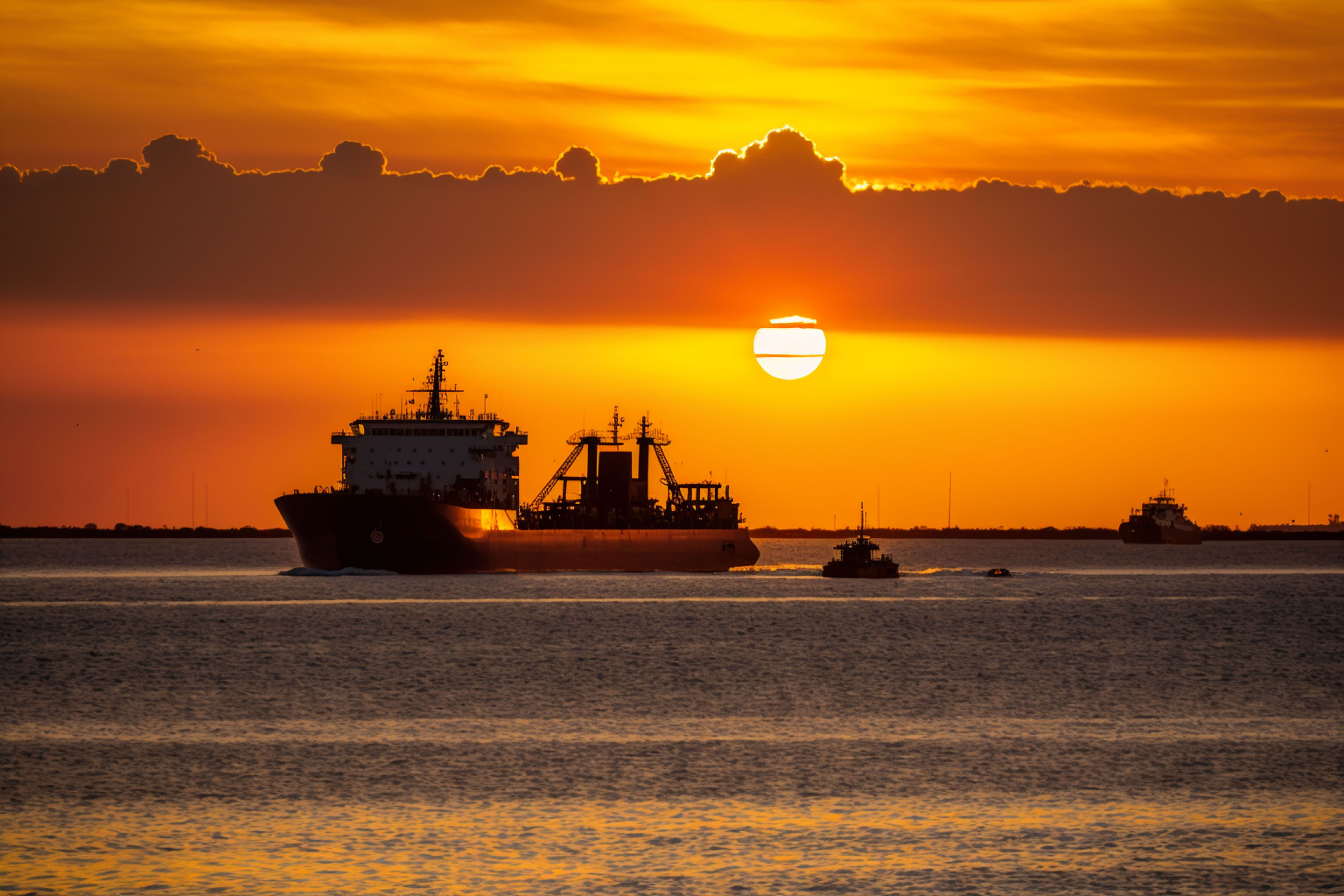
Shipping risks at two of the Middle East’s key maritime passages returned to focus on Wednesday after an unexplained explosion near Iran’s Qeshm Island, while the Houthis claimed to have downed a Saudi drone close to Bab el-Mandeb.
There was no indication that the two incidents were connected. Together, however, they add to the pressure on two waterways already facing disruption from the wider conflict, leaving shipowners, energy traders and governments watching developments particularly closely.
Iran’s official IRNA news agency said the sound of an explosion had been reported near Qeshm, in the southern province of Hormozgan, and appeared to have come from the direction of the sea, according to reports citing the agency.
No rocket or missile was reported to have struck the island and there were no immediate reports of damage. Local authorities had not given an explanation for the blast by Wednesday morning.
The incident comes as commercial traffic through Hormuz has fallen to a fraction of its normal level.
Only two commodity vessels crossed the strait on Monday, down from 10 the previous day, according to Reuters shipping data. Before the conflict began on February 28, about 125 large commercial vessels a day typically used the waterway, including tankers, gas carriers, bulk carriers and container ships.
The figures do not include ships which may be travelling with their Automatic Identification System transponders switched off, something vessels can do to reduce the risk of detection.
The dangers are not theoretical.
Reuters also reported that two vessels were attacked in separate incidents while crossing Hormuz. The Isle of Man-flagged crude tanker LR Stephanie was hit by an unidentified projectile, leaving two crew members with minor injuries, while the Liberia-flagged LPG carrier Al Maryah was struck as it was leaving the strait. Both were able to continue without being towed.
The International Maritime Organisation (IMO) said last week that it had verified 80 attacks on merchant vessels in and around Hormuz since February 28, resulting in at least 22 seafarer deaths and injuries to many others.
IMO secretary-general Arsenio Dominguez called on governments not to allow wider conflicts to become a pretext for attacks on merchant ships and crews, telling member states to “stop attacking merchant ships and seafarers”.
The disruption has also forced oil producers to find increasingly complicated ways of keeping exports moving.
Saudi Arabia restarted its East-West oil pipeline this week after a September 11 drone attack damaged three pumping stations, Reuters reported. The line allows Saudi crude to travel across the kingdom to the Red Sea port of Yanbu, bypassing Hormuz.
Pumping has resumed at a reduced rate, although restoring the pipeline’s full 7 million barrels-per-day capacity could take six to eight weeks. The route has become considerably more important as normal Gulf shipping has been disrupted.
Attention is now also shifting sharply to the other side of the Arabian Peninsula.
Houthi military spokesman Yahya Saree said the group had shot down a Chinese-built Wing Loong II armed reconnaissance drone, which he claimed belonged to Saudi Arabia, while it was operating over Mocha in western Yemen.
According to Saree, the aircraft was carrying out “hostile missions” when it was hit with an unspecified weapon. His statement was carried by media citing Iran’s IRNA and Houthi-run Al-Masirah. There was no immediate Saudi confirmation of the claim.
Mocha lies on Yemen’s Red Sea coast, close to Bab el-Mandeb, the narrow passage connecting the Gulf of Aden with the Red Sea and, farther north, the Suez Canal.
The latest claim comes after a rapid Houthi advance along Yemen’s western coastline. Four Yemeni government sources told Reuters earlier this month that Houthi forces had reached Perim Island, which sits directly in the Bab el-Mandeb, while government sources also said the group had taken the coastal town of Dhubab.
Unlike Hormuz, traffic through Bab el-Mandeb has not collapsed. The same Reuters shipping data showed 26 commodity vessels crossed on Monday, broadly maintaining recent levels.
The concern is instead over what happens if security deteriorates further.
Bab el-Mandeb is only around 29 kilometres wide at its narrowest point and carries goods moving between Asia and Europe through the Suez Canal. Petroleum volumes passing through it represented about 7 per cent of global oil production in June.
The risk has already moved higher up the diplomatic agenda.
Russian president Vladimir Putin and Saudi Crown Prince Mohammed bin Salman on Tuesday stressed the need for safe and unimpeded passage through both Hormuz and Bab el-Mandeb, according to the Kremlin after a telephone call between the two leaders. They also called for an end to the renewed fighting in Yemen and a return to political and diplomatic efforts.
Europe is also being pressed to strengthen its response.
EU foreign policy chief Kaja Kallas said the bloc’s Aspides operation in the Red Sea would need more than 10 warships to deal with the higher threat level, while diplomats said only six were currently operating.
“When Aspides was put in place, then the indication was that it needs at least 10 ships. The situation, I think, is even more grave right now,” Kallas told reporters on the sidelines of the UN General Assembly.
She had also written to EU member states asking them to provide more naval and air assets, warning that the worsening security situation was already affecting European interests and supply chains.
Greece has a particularly direct role in that effort.
Italian Defence Minister Guido Crosetto told Reuters last week that a stronger naval presence was needed to protect merchant shipping in the Red Sea as the security situation around Bab el-Mandeb deteriorated.
Crosetto said Italy and Greece were providing particularly strong support to European maritime security efforts in the region, while Rome was also preparing its own deployment as it pushed for a faster European response.
The implications for Cyprus and Greece have also been raised by shipping security specialists.
Alketas Drosos, Maritime Commercial Manager and Country Representative for Greece and Cyprus at EOS Risk Group, told the Cyprus Mail in June that simultaneous instability in the Red Sea and Hormuz created “an environment of double pressure”, affecting container and product flows through Suez as well as energy flows from the Persian Gulf.
Rerouting vessels around the Cape of Good Hope, he said, brings longer journey times, greater fuel consumption, higher operating and insurance costs, delivery delays and pressure on freight rates.
The Cyprus Union of Shipowners (CUS) has also been following developments at both waterways. In its September 14 report, the Union said the escalation around Hormuz had “heightened concerns regarding the safety and freedom of navigation”, while also examining the Houthi expansion around Bab el-Mandeb.




Click here to change your cookie preferences