
The head of the UN’s shipping agency has urged governments to prevent geopolitical conflicts from becoming a pretext for attacks on merchant vessels, after 80 verified attacks around the Strait of Hormuz left at least 22 seafarers dead.
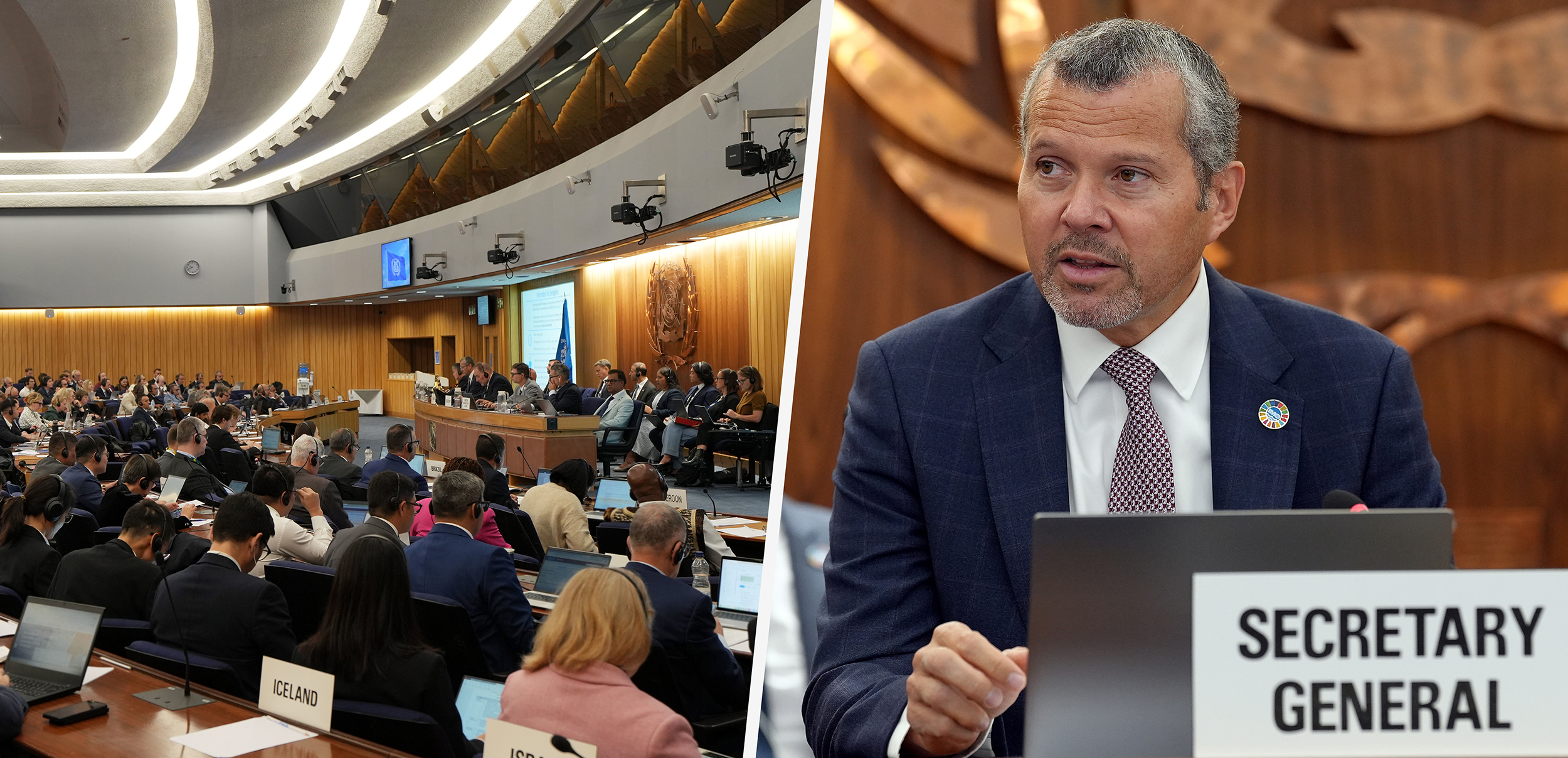
International Maritime Organisation (IMO) Secretary-General Arsenio Dominguez issued the warning while addressing the organisation’s Sub-Committee on Carriage of Cargoes and Containers in London, saying the human cost of the continuing violence was becoming increasingly difficult to ignore.
“We are reaching a point where these conflicts are being used as a pretext to attack merchant vessels and innocent seafarers. Do not use these conflicts to attack innocent seafarers,” Dominguez said.
According to the IMO, 80 attacks on international shipping in and around the Strait of Hormuz have been verified since the current Middle East conflict began on February 28, killing at least 22 seafarers and injuring many more.
The organisation’s latest incident register, updated to September 15, shows attacks continuing well into September, including damage to several vessels and further deaths and disappearances among crew members.
The warning follows months of growing concern across the shipping industry over the safety of crews operating through the region.
In July, International Chamber of Shipping (ICS) secretary-general Thomas Kazakos called for an immediate end to attacks on commercial vessels in Hormuz, warning that seafarers were again paying the price for a conflict in which they had no involvement.
The ICS has since stepped up its campaign for the preservation of freedom of navigation through the strait, most recently pressing for merchant vessels to be allowed to pass safely and without compulsory tolls or controls.
The danger is not confined to the Gulf.
The IMO said dozens of fatalities had been reported following attacks on international shipping in the Black Sea and Sea of Azov in recent months, although it said precise numbers remained difficult to verify.
Violence has also returned to the Red Sea, where four fatalities were confirmed following the latest Houthi attack on a merchant vessel on August 11.
Dominguez condemned that deadly attack at the time, as renewed strikes on commercial vessels again raised concerns over the safety of crews using one of the world’s busiest shipping routes.
Addressing the wider pattern of attacks this week, he stressed that responsibility across the different conflict zones could not be attributed to a single actor.
“In the Strait of Hormuz, it is not only one country attacking merchant vessels. In the Black Sea and Sea of Azov, it is not only one country attacking merchant vessels,” he said.
While the IMO does not have a mandate to resolve the underlying geopolitical disputes, Dominguez said their consequences were increasingly being felt across international shipping.
Disruption to merchant vessels reaches well beyond shipping companies themselves, affecting global supply chains, national economies and the movement of energy and goods, he said.
That pressure has already forced changes to established shipping patterns, with exporters increasingly looking to pipelines, alternative ports and longer tanker routes as attacks around Hormuz and the Red Sea reshape traditional oil movements.
Dominguez urged IMO delegates to take the consequences of the attacks back to their governments and raise them through the appropriate international bodies.
“I call on you to share these impacts with the relevant bodies in your countries so that this can be dealt with within the United Nations, as appropriate. It falls to you and your capitals, and relevant bodies of the United Nations, to address the root causes and find solutions,” he said.
The IMO Secretariat said it remained ready to help develop practical measures at technical and operational level to protect shipping and seafarers.
Dominguez made the remarks during the 12th session of the Sub-Committee on Carriage of Cargoes and Containers, which is meeting at IMO headquarters in London from September 14 to 18.




Click here to change your cookie preferences