
‘The result is a given. The death of the child is a given. The tragedy is a given’
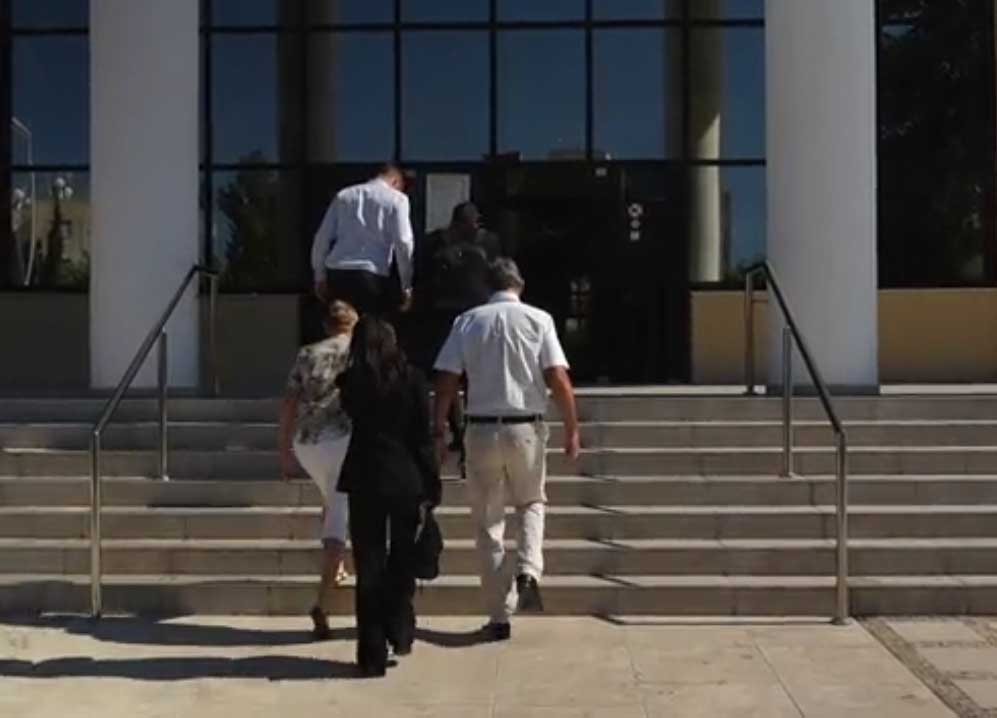
The British father who pleaded guilty to negligence after the fatal fall of his three-year-old son from a Paphos hotel will learn his sentence on October 16, Paphos district court ruled on Tuesday after an emotional hearing during which the final moments of the child’s life were recounted.
The 38-year-old father cried as the case was heard, while his parents, who have remained by his side throughout the proceedings, were also visibly moved and in tears.
The prosecution, represented by Chryso Perganti, first set out the agreed facts of the case and the findings of the police investigation, before defence lawyer Alexandros Alexandrou delivered an extensive mitigation plea.
The three-year-old died after falling from a fourth-floor window at a hotel in Chlorakas on July 12, the first day of the family’s holiday in Cyprus.
The court heard that police and an ambulance were called to the hotel following the fall and that the child was taken to Paphos general hospital, where efforts to save him were unsuccessful.
The court heard that the father and other members of the family had earlier been around the hotel pool and later returned to their rooms to prepare before going back downstairs.
The father left the room with his son and the child’s grandfather and they headed towards the lift; the father was carrying the boy in his arms and playing with him as they walked. While waiting for the lift, the father lifted the child as part of their play near the large window.
‘The tragedy is a given’
The prosecution’s account was that the father believed there was glass in front of him and did not realise that part of the window was open; the child fell through the opening.
The father’s blood alcohol levels were checked, and the prosecution said at the time of the fall they were 0.124mg although it was not alleging drunkenness.
The defence said it was not asking the court to disregard the presence of alcohol, but argued there was no evidence that it had affected the father’s judgement.
Defence lawyer Alexandros Alexandrou pointed to the father’s actions immediately after the fall, including running to his son and accompanying him in the ambulance, stressing that no witness had described the father as being affected by alcohol or raised concerns about his state of mind.
Alexandrou urged the court to distinguish between the devastating consequence of the initial mistake and the degree of negligence involved in the father’s conduct.
“The result is a given. The death of the child is a given. The tragedy is a given,” Alexandrou told a tense and visibly moved court room.
What the court is required to assess for sentencing purposes, he argued, is “the person and the specific conduct” that produced that result.
The defence said there was a danger in a case of such overwhelming tragedy that the outcome itself could overshadow the assessment of the conduct which led to it.
Alexandrou argued that the case had to be examined from the perspective of what the father knew at the precise moment of the incident, rather than with the benefit of knowing afterwards that the window was open.
Today, he said, everyone knows there was an opening and a fall was possible. His client, however, did not have that knowledge at the time.
An ordinary family holiday
The defence described what happened as a moment during an otherwise ordinary family holiday, they walked towards the elevator happy, the child wanted to see the waterpark outside the window and the father lifted him up when in a split second tragedy struck.
The father, having to relive the July 12 events once more, was moved to tears throughout the defence’s narration of events.
“We are not saying the act was safe,” he told the court, nor was the defence arguing that the father had not made a mistake, he added.
After the fall, the father was initially held in police custody meaning he was not present for his wife and surviving child, a five-year-old daughter, dealing with the immediate aftermath of the tragedy. He cooperated with the authorities and admitted the charge against him.
The defence argued that his guilty plea, cooperation with police, lack of previous convictions and personal circumstances should all weigh in his favour.
It also pointed out the father works as an auditor in the UK and is expected to face disciplinary proceedings as a result of the case, with the possibility that he could lose his job. Alexandrou asked the court to take those consequences into account when determining sentence.
Concluding his mitigation, Alexandrou asked the court to impose a sentence that was “just and proportionate”.
Speaking afterwards outside court, Alexandrou said the fatal incident had unfolded within seconds while the father was playing with his son as they waited for the lift.
He stressed there is no suggestion a mistake had not been made but that the father had not recognised the danger posed by the window. Exactly how the child moved at the window could not be established, he added, as everything had happened so suddenly.
Regardless of any sentence, Alexandrou said the greatest consequence of the accident was one it could not match.
“It is a tragedy which does not end with the imposition of a sentence, however many years,” he said. “It is a sentence he will carry for a lifetime – the loss of his child.”
The court will deliver sentence on October 16.

Click here to change your cookie preferences