
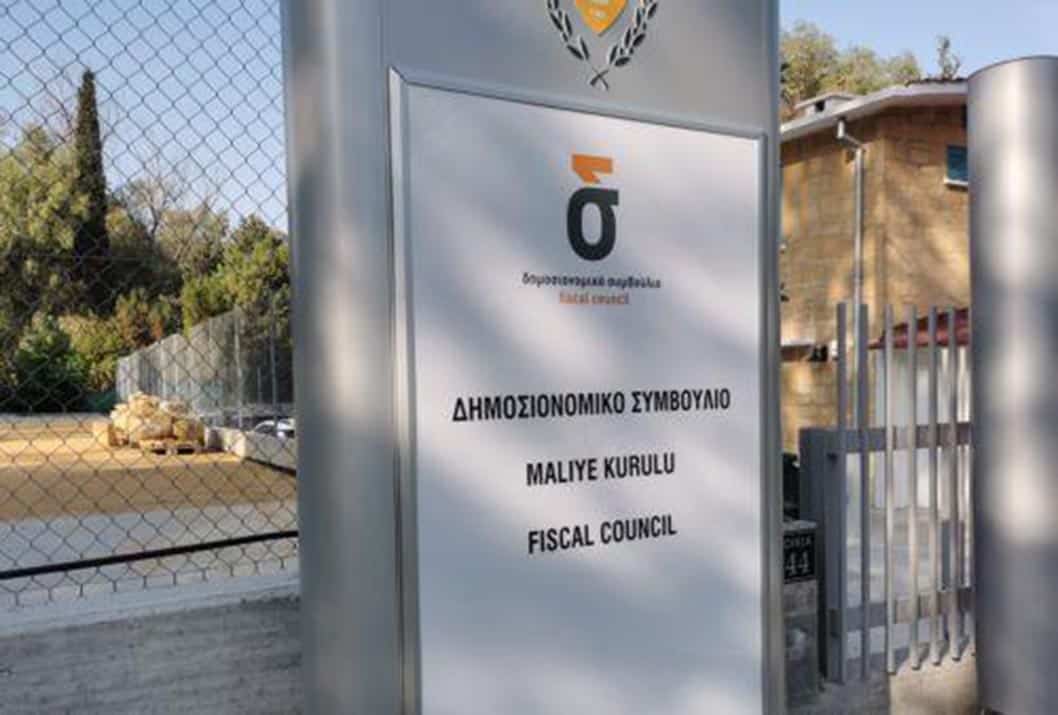
The Fiscal Council has warned that Cyprus’s public wage bill remains one of the clearest strains on the state budget, even as it described the economy as broadly resilient.
Presenting the council’s yearly interim report, its chairman, Andreas Charalambous, said government expenditure continued to run above EU limits, with the cost of employing public sector staff a central driver.
Compensation for public employees is projected to have reached around €4.1 billion last year, up from €3.9 billion in 2024, equivalent to close to 12 per cent of GDP.
General government payroll expenditure has risen from €3.17 billion in 2022, a cumulative increase of roughly 38 per cent in three years, while the workforce itself grew from 66,287 employees to 71,675 over the same period.
Local authorities saw an even sharper rise, with staff numbers up 17.6 per cent.
Speaking to the Cyprus Mail, economist Ioannis Tirkides said the public sector wage bill had “re-emerged as a major fiscal risk, threatening budget flexibility in the medium term and the economy’s wider competitiveness”.
He said the bill now absorbed “more than 12 per cent of GDP and close to 30 per cent of government expenditure”, well above EU averages, and was steadily crowding out investment in infrastructure and the green transition.
Rather than overstaffing, Tirkides said the pressure was driven mainly by a “substantial wage premium enjoyed by public sector employees over their private sector counterparts”.
Much of the increase stems from automatic mechanisms built into the payroll. Chief among them is the cost-of-living allowance (CoLA), which has climbed towards 80 per cent restoration under a deal struck between the state and unions, and is due to rise further to 90 per cent from July next year.
CoLA payments alone grew from €42 million in 2022 to €199 million last year, taking their share of basic salaries from 3.5 to 15.3 per cent.
Tirkides said CoLA, together with unconditional seniority increments, was “expanding the wage bill faster than nominal GDP, detached from any corresponding gain in productivity”.
He warned that if left unchecked, this rigidity “risked destabilising public accounts during future economic downturns, leaving the state exposed to sudden deficits”.
Charalambous said the way the allowance is calculated – as a flat percentage of salary – meant it delivered disproportionately large sums to higher earners while adding rigidity to the wage bill.
The council is not proposing CoLA be scrapped, but recommended it be paid as a capped fixed amount instead, with further pay rises linked to productivity.
“For the Fiscal Council, it is important that expenditures keep pace with economic growth,” Charalambous said, adding that strong state revenues had so far masked the true scale of the pressure.
Tirkides went further on this point, arguing that recent headline surpluses masked “underlying fragility in the public finances”.
He said the surpluses relied heavily on social security balances, an unusually high exposure to indirect taxation compared with other EU states, and windfall revenues from carbon emission allowances, none of which he considered a stable long-term foundation.
Charalmbous said Cyprus’s current fiscal strength gave the country room to address the size and rigidity of the payroll and the low rate of public investment, rather than treating the good picture as grounds for complacency.
Development budget implementation reached only 25 per cent in the first half of this year, which he said reflected “limited administrative capacity” and weak project planning.
Local government reform also came under criticism as spending on council employees rose from €144 million to €205 million between 2022 and 2025, leading the council to conclude the reform “did not lead to the rationalisation of expenditure as announced.”
It called for the reform to be reassessed, including the number of municipalities and deputy mayoralties.
The council linked the payroll pressure to Cyprus’s standing under new EU fiscal rules.
Net primary expenditure exceeded its agreed trajectory by 3.4 percentage points in 2025, and a further 2.4 points in 2026, with the finance ministry putting the cumulative deviation at €403 million.
While the government attributes much of this to accounting factors, the council said genuine excess spending of 1.2 percentage points remained.
Charalambous also pointed to Cyprus’ ageing population, warning the ratio of workers to pensioners could fall from four to one to two to one, and said future growth would need to rely more on productivity than on employment growth, an area in which “the state has not performed particularly well to date.”
The report cautioned against loosening fiscal policy as the next presidential election approaches.
“Maintaining fiscal discipline becomes particularly important during periods of increased electoral pressure,” it said, citing research suggesting pre-election spending does not improve an incumbent’s chances of re-election.
The council called for a binding three-year fiscal framework, tighter evaluation of public investment and restrained recruitment based on documented operational need rather than automatic replacement of departing staff.





Click here to change your cookie preferences