
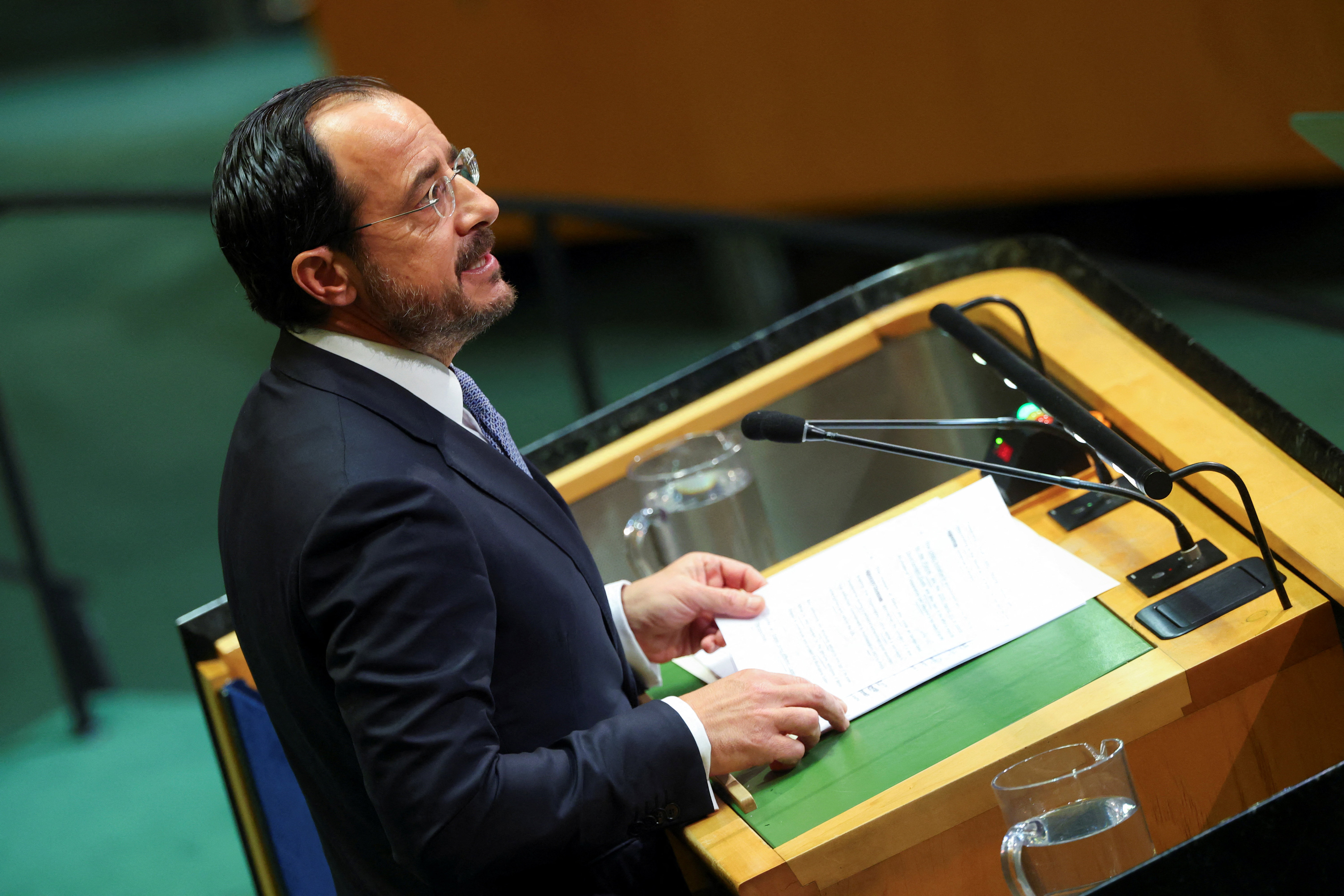
For senior citizens, who have followed politics over the years, President Nikos Christodoulides’ speech at the UN General Assembly was a trip down memory lane. It was the type of indignant, self-righteous, point-scoring speech that reminded us of the late Spyros Kyprianou, who was president in the period (1978-1988) immediately after the invasion, when the pain and suffering was still fresh and people needed to hear fighting talk from their leader, although it achieved nothing tangible.
In later years, speeches were less confrontational, although every so often a president would go on the offensive. We must bear in mind that for most presidents the speech at the UN General Assembly every September was not directed at foreign governments, which already had their respective positions on the Cyprus issue and had no intention of changing them. In recent years most countries’ representatives do not even extend the Cyprus Republic the courtesy of staying in the auditorium when the president speaks.
The target audience of the UN speech was always in Cyprus, the president of the day usually using the General Assembly podium to earn public praise and positive press write-ups back home, for taking a tough stance against Turkey and defending Cyprus’ national interest. Nothing of substance has ever been achieved by the Cyprus president’s speech other than to remind the world that the Cyprus problem remains and that Turkey was exclusively to blame.
President Christodoulides’ speech on Tuesday could have been a rehash of a Kyprianou speech at the General Assembly from 1982. It was delivered from the familiar, moral high and Christodoulides accused Turkey’s President Tayyip Erdogan, who had spoken earlier, of “hypocrisy of the highest form.” In his speech, Erdogan referred to international law, illegal occupation, respect for the sovereignty and territorial integrity of all states among other things. He was guilty of hypocrisy and double standards, but what had the Cyprus Republic gained by Christodoulides pointing this out and accusing Turkey of an “ongoing, flagrant violation of international law”?
Would the exposure of Erdogan’s hypocrisy at the UN facilitate the resumption of talks, which is Christodoulides’ number one priority? In the same speech, he called on Erdogan “to give the green light for substantive negotiations within the UN-agreed framework,” but if there was a tiny probability of him heeding this call it must have been extinguished after he was publicly accused of being a hypocrite of the highest order, by Christodoulides.
Perhaps we are missing something, but on the surface, it seems rather unwise to publicly insult the man who holds the key to the resumption of the talks, which Christodoulides is desperately seeking. Although the president had a 20-year career as a diplomat, no diplomatic skills were evident in Tuesday’s speech, which seemed designed to close rather than open doors to negotiations.





Click here to change your cookie preferences