
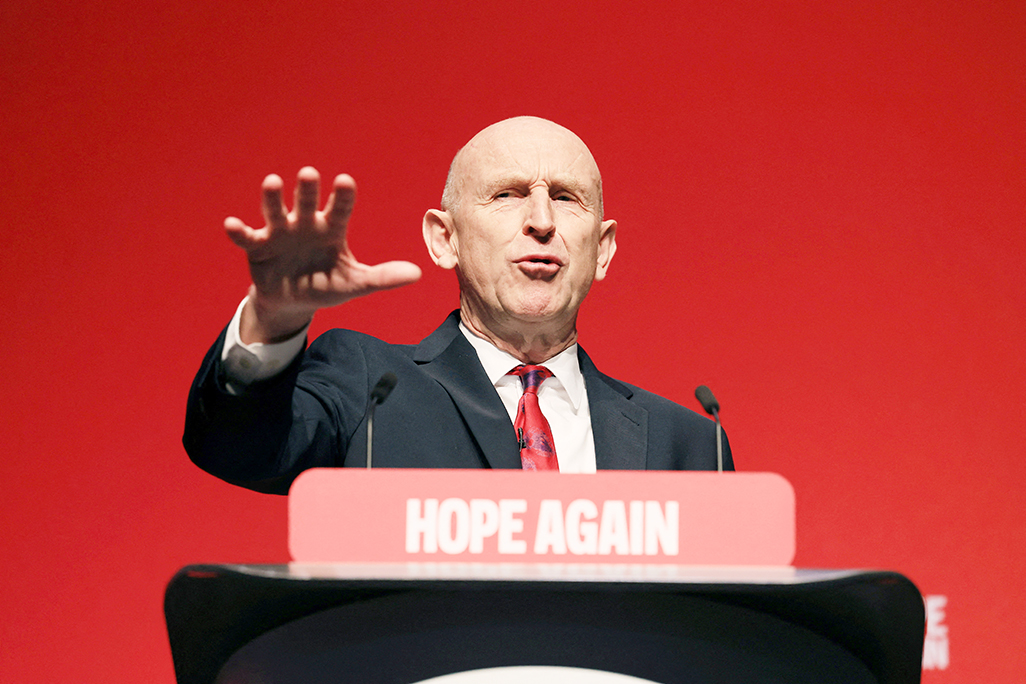
Finance minister John Healey pledged on Monday to “get Britain working again”, vowing to create more jobs while bringing down borrowing and sticking to the government’s fiscal rules.
In a speech heavy on optimism but light on detail ahead of next month’s budget, Healey said Britain was entering a “new age of industrialisation” driven by technology and defence as the government seeks to revive sluggish economic growth.
Yet, he also seemed to caution the governing Labour Party at its annual conference in the northwestern city of Liverpool that the government’s room for manoeuvre was limited by high debt-servicing costs and strained public finances.
That appeared to set the tone for his October 28 budget, which officials have signalled will prioritise reassuring bond markets, with long-term borrowing costs at their highest levels since the 1990s.
HEALEY OFFERS HOPE, NEW JOBS
“I will bring fresh hope to Britain built on the rock of fiscal discipline, built on the growing economy and good work,” Healey told delegates.
“When I was first elected, I had as my first top three priorities jobs, jobs, jobs. And now, as then, I still have that burning determination. Good work, good jobs, Britain working again.”
Healey focused on the roughly one million young people not in work in Britain and said expanding jobs and apprenticeships would be central to the government’s plans.
The push forms part of Prime Minister Andy Burnham’s effort to curb a welfare bill that reached a record £324 billion in real terms in the last financial year, equivalent to 11% of economic output.
Healey also backed investment in defence and technology as drivers of growth, arguing economic progress should be measured not just in statistics but in families being able to afford holidays and businesses hiring more workers.
But he offered few clues about next month’s budget beyond a firm commitment to fiscal discipline, including a pledge to balance day-to-day spending with revenue by the end of the decade.
Instead, his first conference speech as finance minister appeared aimed as much at lifting party morale as setting out policy, after Labour’s recent improvement in opinion polls following Burnham’s replacement of Keir Starmer as prime minister in July.
“The speech felt it was very much like it was a holding statement and we should check in a few months,” said one business executive on condition of anonymity. “I thought it was really disappointing.





Click here to change your cookie preferences