
Local universities join Plug and Play as Cyprus expands innovation ecosystem
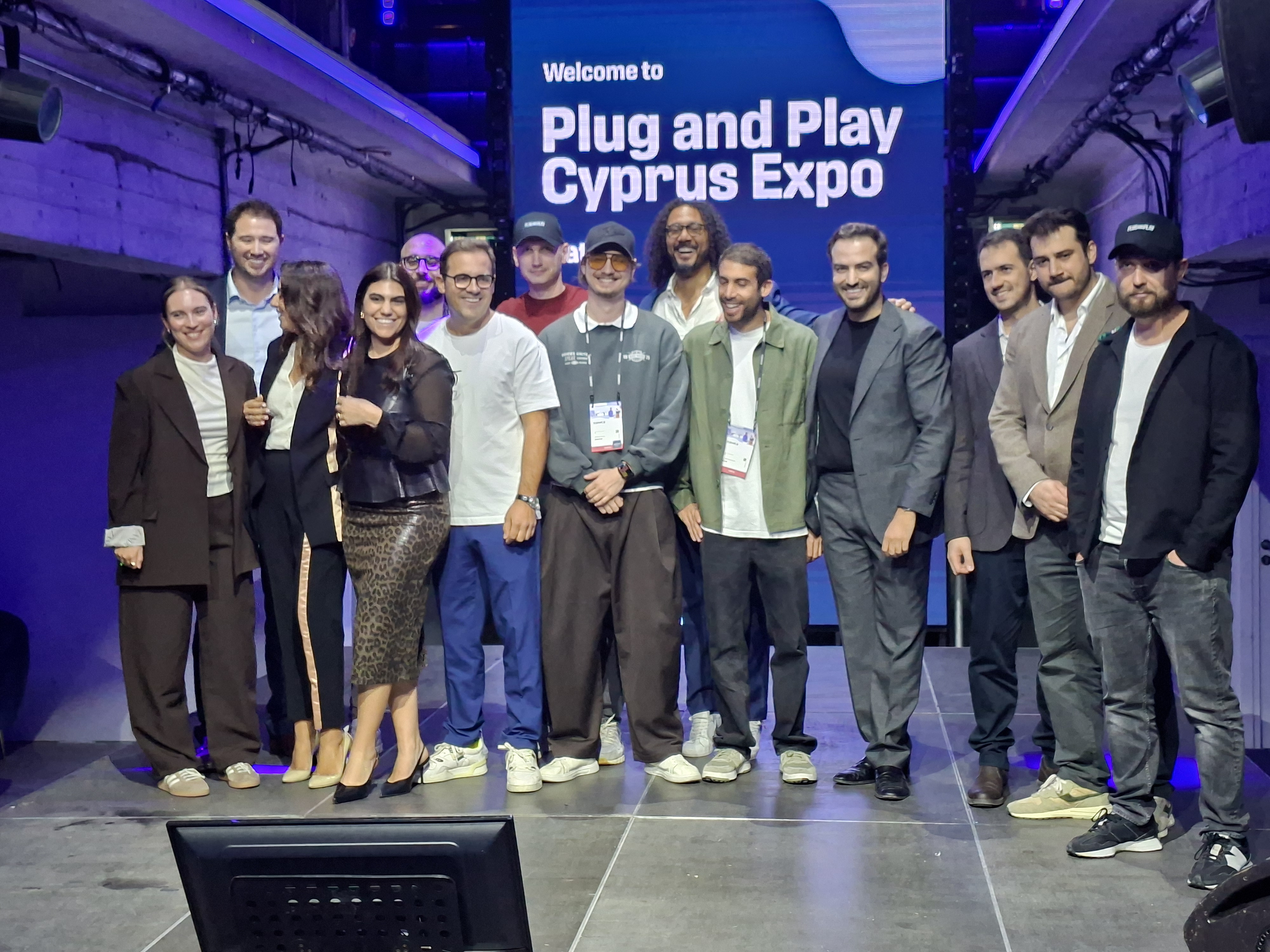
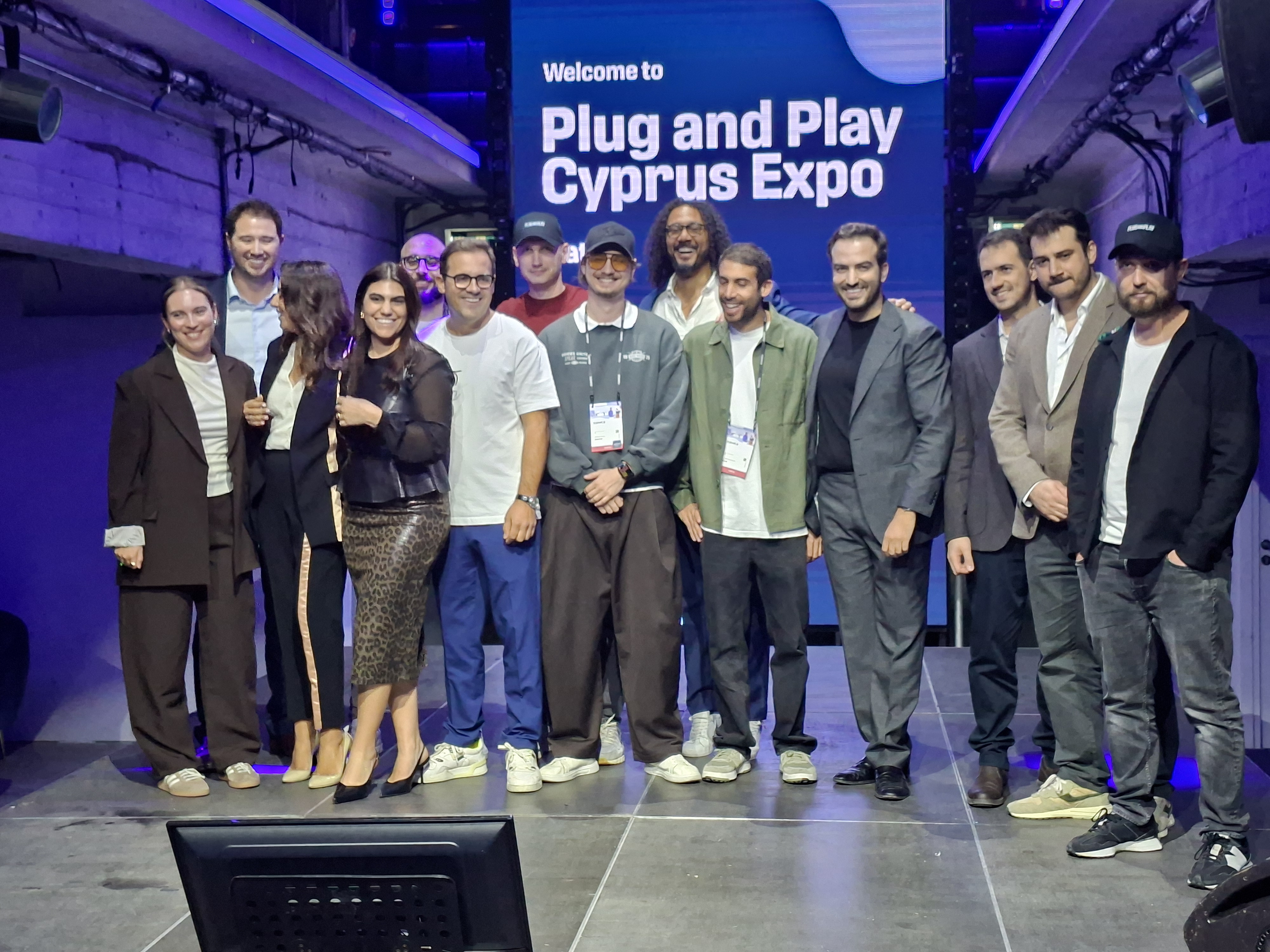
Plug and Play Cyprus brought together government officials, investors, universities, technology companies and entrepreneurs in Limassol on Wednesday, as the innovation platform celebrated the completion of its first startup acceleration programme and outlined plans to expand its activities on the island.
The first-ever Plug and Play Cyprus Innovation Expo, held at ETKO and covered by the Cyprus Mail, offered a snapshot of an ecosystem that is becoming increasingly diverse, commercially ambitious and internationally connected, with ten startups presenting their progress after three months of acceleration, alongside discussions on investment, fintech and the future of technology.
The evening also brought two significant developments for Cyprus’ innovation landscape, with AUB Mediterraneo and the University of Nicosia (UNIC) signing collaboration agreements with Plug and Play, while the organisation announced that its second startup cohort will focus on the gaming industry, with applications officially opening.
There was a clear sense of enthusiasm throughout the event about the direction in which Cyprus is heading, with speakers highlighting the growing number of technology businesses, the availability of investment and expertise, and the potential to turn the island into a recognised international destination for startups.
The first cohort attracted more than 100 applications, with ten companies ultimately selected to participate. They received more than 250 hours of in-person mentoring from 17 international mentors representing more than ten countries, alongside 27 introductions to investors and corporate partners.
Four of the participating companies have already raised almost $4.5 million collectively, providing an early indication of the programme’s ability to connect local entrepreneurs with international capital and commercial opportunities.
The discussions also highlighted a broader ambition to build an innovation ecosystem that extends beyond individual accelerator programmes, bringing together universities, government, investors and established businesses to help new companies develop, secure customers and expand internationally.



Government sees growing momentum in Cyprus’ innovation ecosystem
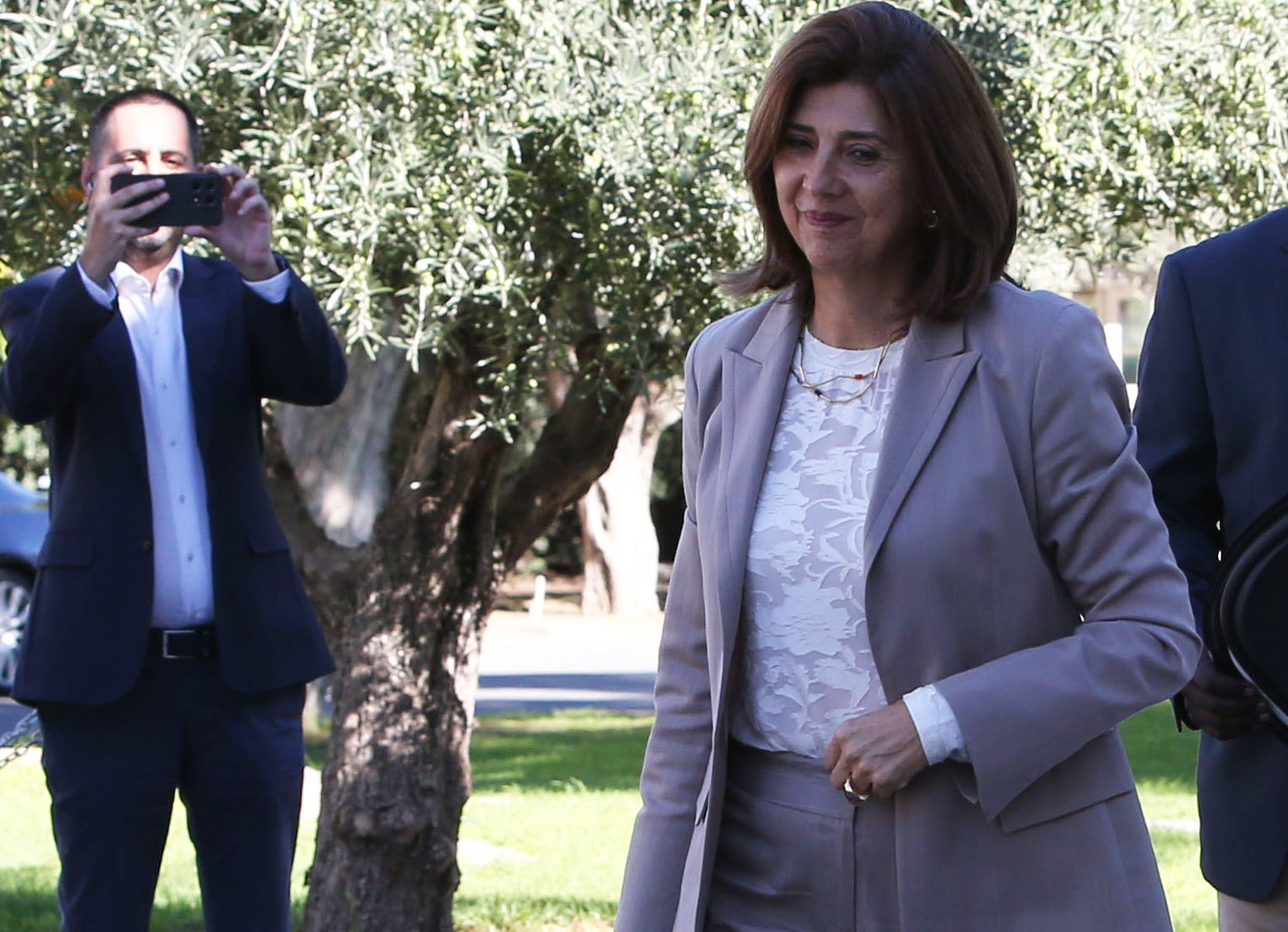
Opening the event, Irene Piki, Deputy Minister to the President of the Republic of Cyprus, described the expo as an important milestone in the development of the country’s innovation environment, arguing that the ecosystem had gained considerable depth, capability and confidence over the past 15 years.
She pointed to Cyprus’ position in the StartupBlink index as Europe’s fastest-growing startup ecosystem, attributing the progress to its research base, increasingly active startup community and rising investment activity.
Piki also highlighted the wider economic conditions supporting this development, saying Cyprus’ economy had grown by approximately 18.5 per cent over the previous three years, while public debt had fallen below 50 per cent and unemployment at around 4 per cent.
She traced Plug and Play’s arrival on the island to President Nikos Christodoulides’ visit to the United States in April 2025, when he met Saeed Amidi, founder and chief executive of Plug and Play.
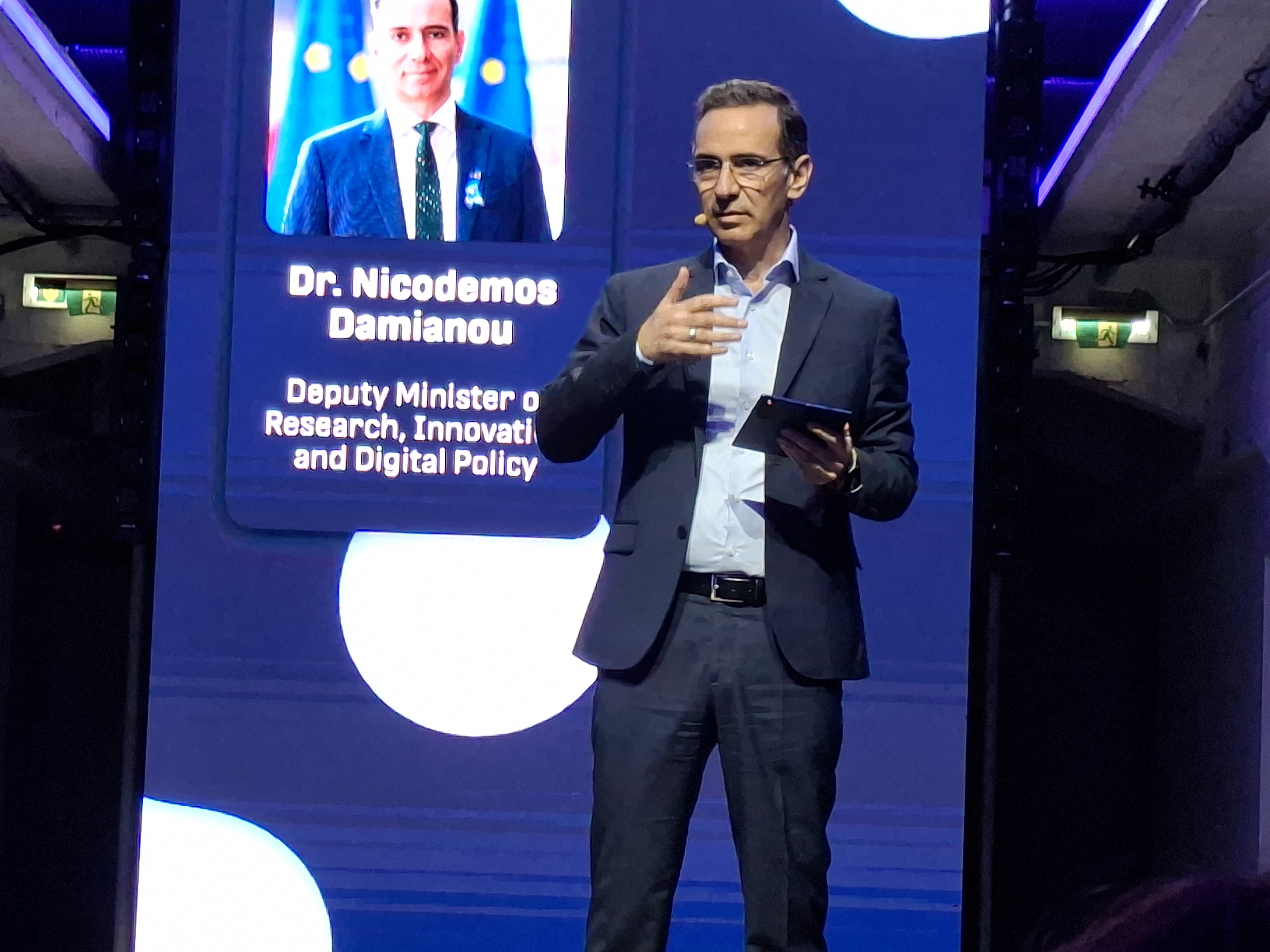
The process of establishing the platform in Cyprus took approximately a year, with Piki crediting the Research and Innovation Foundation (RIF), particularly its Director General Theodoros Loukaidis, and Deputy Minister of Research, Innovation and Digital Policy Nicodemos Damianou for helping bring the initiative to fruition.
She said the government’s objective was to translate international engagement into investment, knowledge, partnerships and high-quality jobs, while strengthening the links between research, commercialisation and innovative businesses.
Piki also referred to the government’s Minds in Cyprus initiative, which aims to attract Cypriot talent back to the island and strengthen connections with professionals living abroad.
An international accelerator, she suggested, provided another argument for talented Cypriots to consider returning, given the opportunities available through its global network.
Addressing the participating founders, she urged them to use Cyprus as a starting point without restricting their ambitions to the domestic market.
“Use Cyprus as your base, but don’t limit your dreams,” she said, encouraging entrepreneurs to make full use of the platform’s international connections to find customers, investors and opportunities.
Damianou subsequently highlighted the scale of interest in the inaugural programme, with 119 startups competing for ten places.
He said the programme had delivered more than 250 hours of mentoring, 27 introductions to investors and corporates, and participation from 17 international mentors representing over ten countries.
Four companies raising almost $4.5 million between them was another encouraging early result, he added.
Damianou said his recent visit to San Francisco had reinforced his conviction that access to an international platform with such a broad network of investors, industry sectors and corporate partners was invaluable to startups.
He also revealed that discussions had already begun with Plug and Play founder Saeed Amidi and his team about the platform’s next steps in Cyprus.
The government’s ambition, he explained, was to establish what he called an EU Startup Nation, where research develops into products, products become companies, and companies create employment and economic growth.
“The key goal now is to make it sustainable,” Damianou said, stressing that the ecosystem should not depend on one programme, one cohort or one funding round.
He said the long-term objective was to generate new founders every year, encourage investors to return and help companies remain rooted in Cyprus while expanding into international markets.




Plug and Play outlines its international ambitions for Cyprus
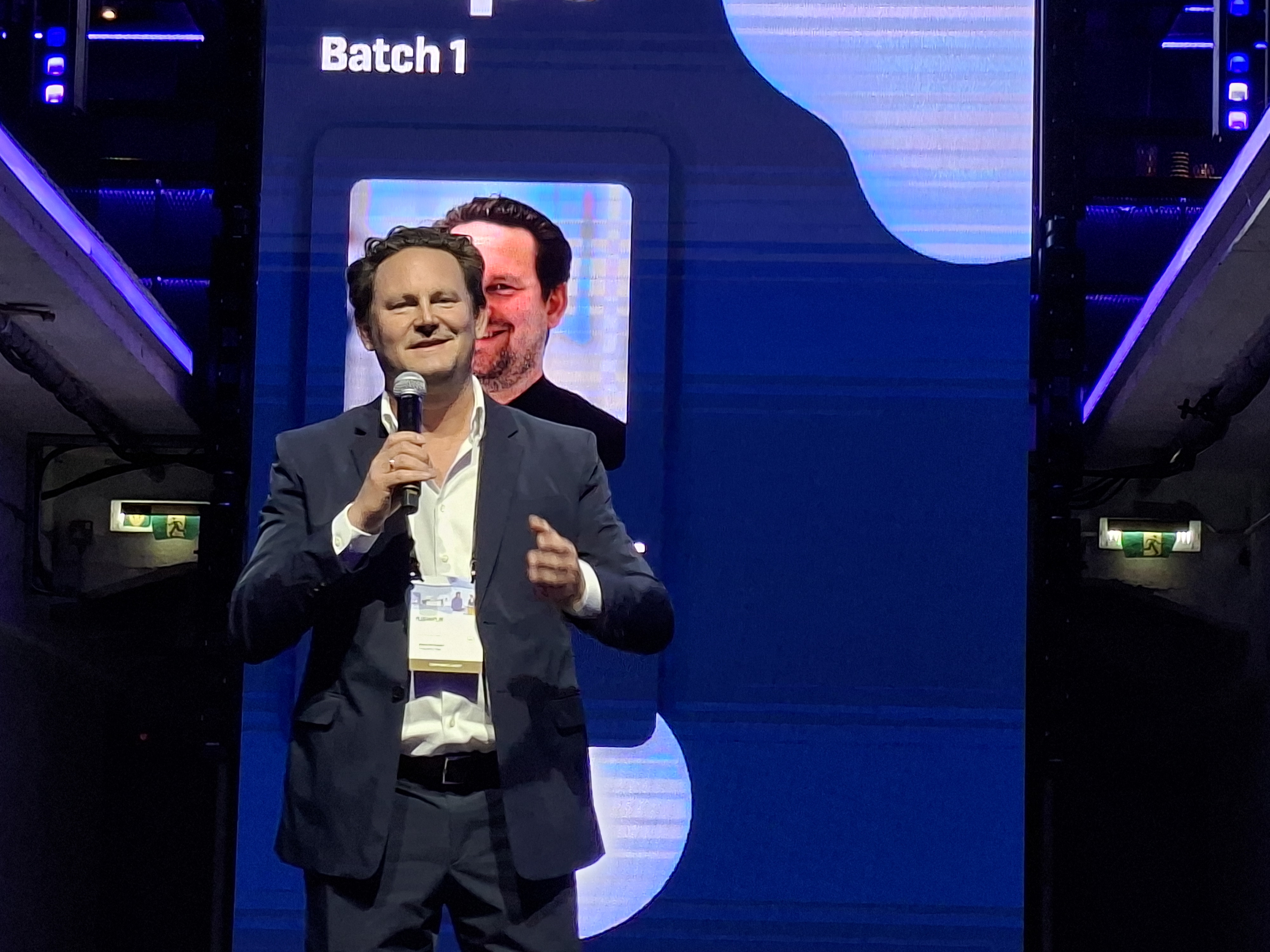
Plug and Play partner Sascha Karimpour provided an overview of the organisation’s international operations and its plans to develop Cyprus as a destination for technology companies.
Celebrating its 20th anniversary, the Silicon Valley-based organisation traces its beginnings to an office in Palo Alto, where founder Saeed Amidi rented space to Google and PayPal, eventually becoming an investor in the latter.
Karimpour said the experience demonstrated the potential of combining property, investment and access to entrepreneurs, prompting the organisation to develop a broader platform connecting startups with investors and major corporations.
Today, Plug and Play accelerates more than 2,500 startups annually, has approximately 2,500 companies in its investment portfolio and around 40 unicorns.
Its activities centre on three areas, namely startup acceleration, corporate innovation and venture capital, with the aim of helping companies secure investment while also finding customers and commercial partners.
Karimpour stressed that identifying promising technology was not enough, as startups also needed help putting their products into practice and securing corporate adoption.
He cited the organisation’s automotive and mobility programme in Stuttgart as an example, where it has completed more than 500 projects over the past decade, with approximately one-third progressing to implementation.
The ambition in Cyprus, he said, was to develop similar cooperation between startups and established businesses, while attracting companies from Eastern Europe, the Middle East and other markets.
Potential areas of specialisation include maritime technology, fintech, gaming and energy, although the exact focus areas are still being developed.
Karimpour said the ultimate objective was to make Cyprus one of Europe’s most attractive destinations for startups and an international landing point for companies seeking to expand.
Public funding and private investment seen as complementary
A central discussion during the event examined how government funding, venture capital and corporate investment can work together to help startups move from promising ideas to commercially viable businesses.
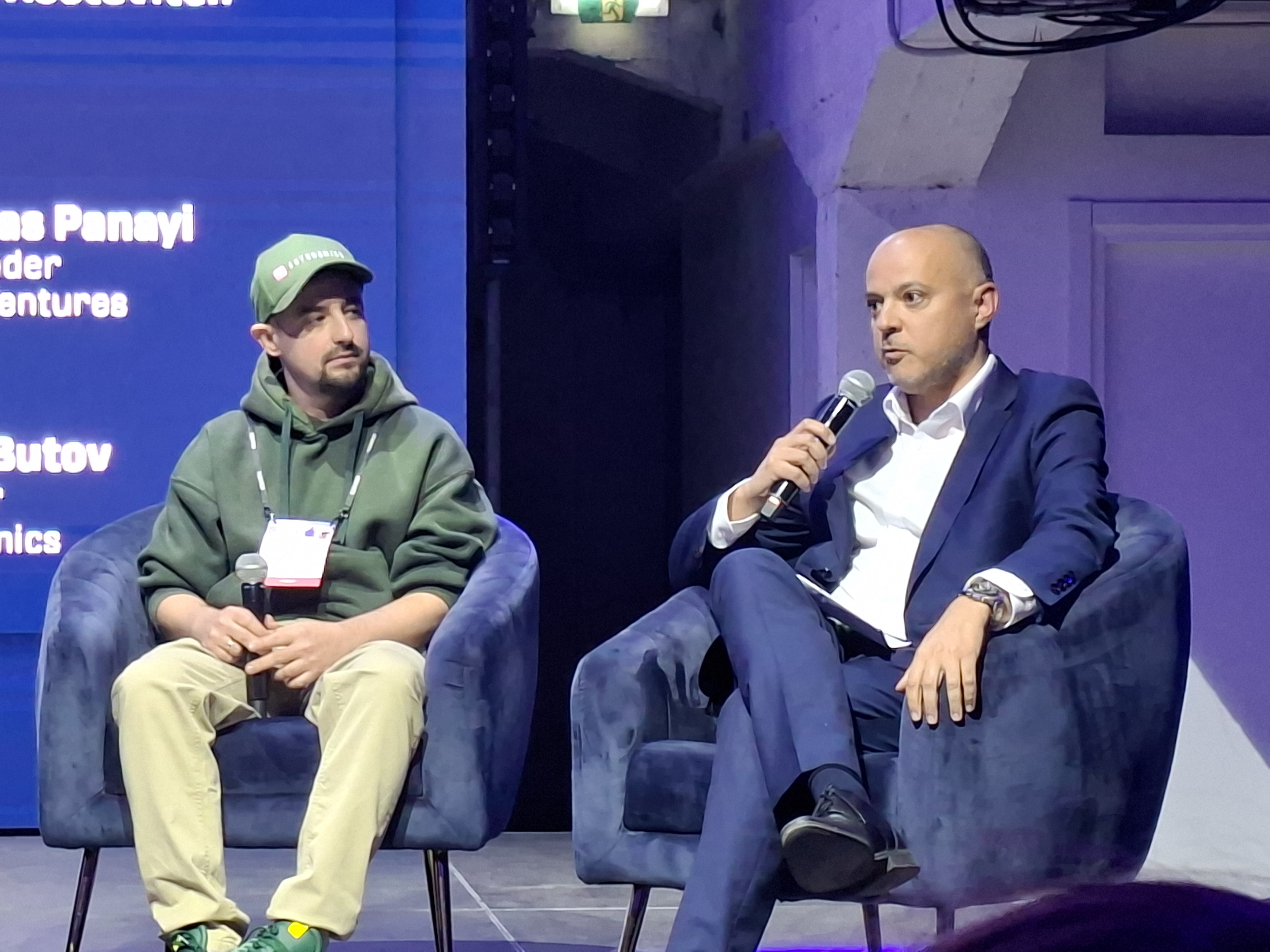
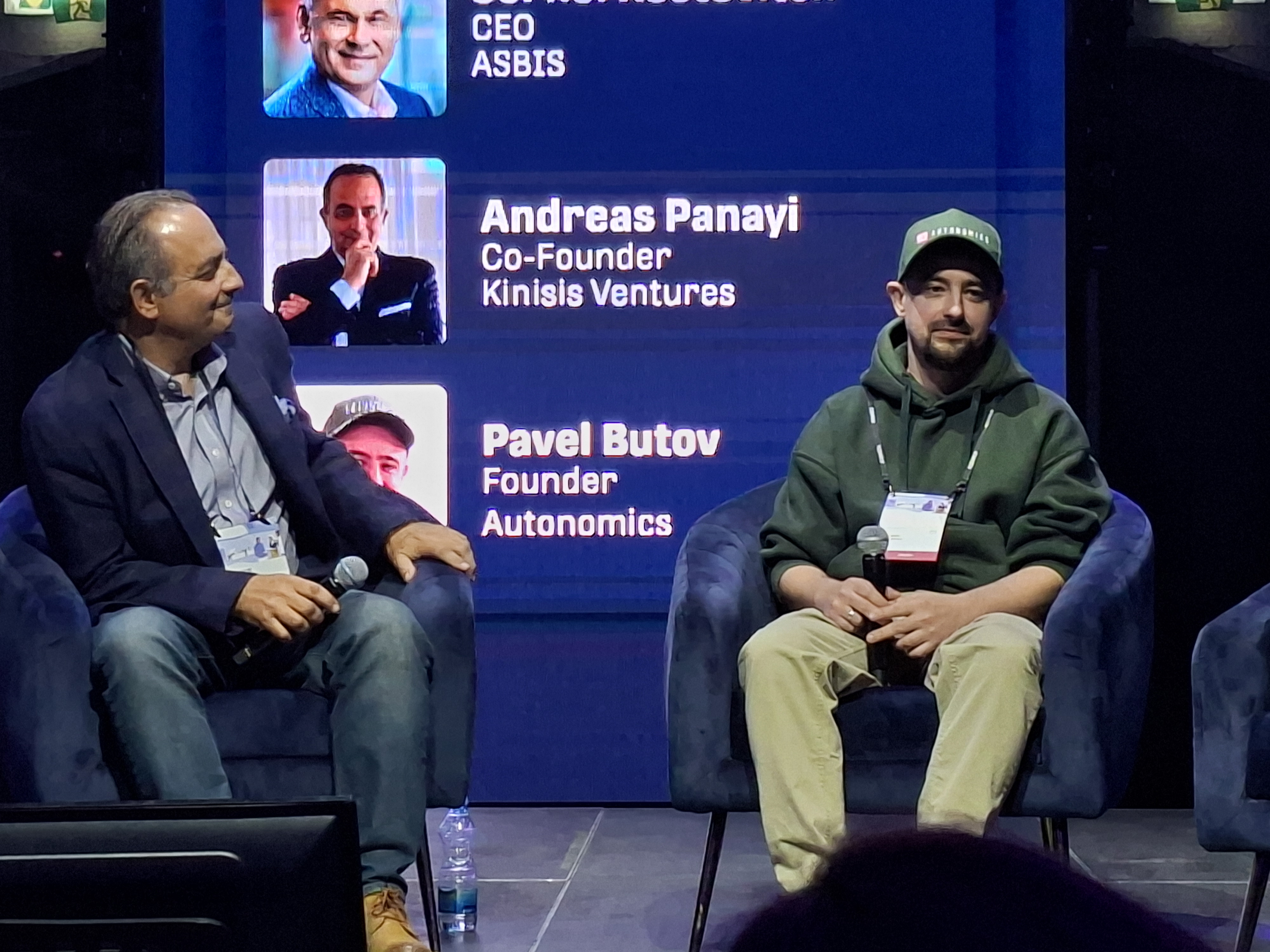
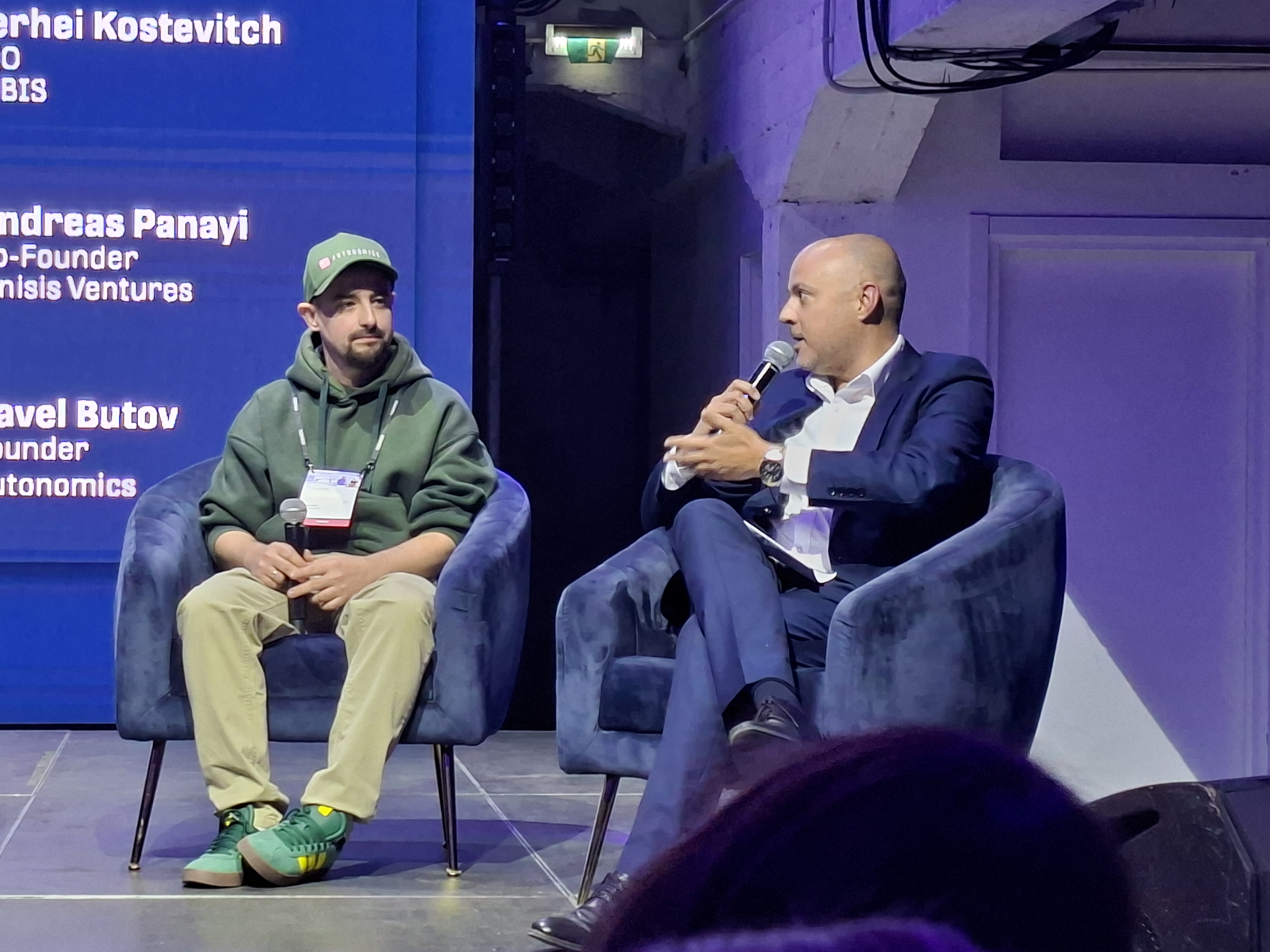
The panel, titled From Grant to Growth, was moderated by Theodoros Loukaidis, Director General of the Research and Innovation Foundation, and featured Pavel Butov, founder of robotics startup Autonomics, Serhei Kostevitch, chief executive, president and founder of ASBIS Group, and Andreas Panayi, co-founder of Kinisis Ventures.
Using Autonomics as an example, Loukaidis explained how the company had secured backing from both ASBIS and Kinisis Ventures before receiving support through RIF’s BOOST blended finance programme.
Butov said his ambition was to transform the global commercial cleaning industry through robotics and artificial intelligence, addressing labour shortages in a sector that remained relatively conservative.
He argued that access to an ecosystem was as important as access to money, explaining that ASBIS provided commercial, marketing and logistics expertise, Kinisis offered an understanding of venture capital, while RIF helped validate the company’s technology and business model.
“When you gather these three components together, that is the exact secret sauce that makes us move forward much faster than we could alone,” Butov said.
Kostevitch explained that ASBIS had been investing in startups for years but had encountered difficulties dedicating sufficient time and expertise to the growing number of companies approaching it.
Plug and Play’s international network and specialist knowledge addressed that gap, making its establishment in Cyprus beneficial not only for ASBIS but also for entrepreneurs and the wider economy.
Panayi, meanwhile, said a connected ecosystem improved the quality of investment opportunities because relationships between investors and corporate partners created greater trust.
He described venture capital’s principal challenges as securing a reliable flow of investment opportunities and raising funds, arguing that established relationships could make both processes more effective.
Loukaidis revealed that RIF’s blended finance programmes had deployed around €12 million in government funding, mobilising a further €16.5 million in private investment through their DISRUPT and BOOST schemes.
He said the programmes, introduced in early 2023, required applicants to have equity-based investment secured, helping reduce risk for private investors while limiting dilution for founders.
The panel also addressed the balance between grants and commercial discipline.
Panayi said government support was valuable for improving cash flow but warned against allowing startups to become overly dependent on grants rather than developing sustainable revenue.
Kostevitch said ASBIS preferred to invest in companies that had already developed tangible products and received some initial screening from investors, accelerators or funding organisations.
Butov said local startups needed greater visibility, both within Cyprus and internationally, arguing that companies sometimes remained unaware of what others on the island were developing.
Offering advice to the graduating founders, Kostevitch urged them to be transparent and prepared for due diligence, while Panayi said they should expect to pivot several times during their development.
Butov encouraged entrepreneurs to look beyond their offices and laboratories, arguing that Cyprus’ concentration of international businesses, investment funds and angel investors offered opportunities that were often within easy reach.


Ten startups showcase solutions across multiple industries
The ten companies presented during the expo reflected the breadth of Cyprus’ emerging technology sector, with solutions addressing challenges in real estate, energy, hospitality, recruitment, payments, environmental monitoring, digital entertainment and parenting.
The presentations were divided into two groups, but collectively demonstrated how startups are developing products for both local and international markets, with several already reporting paying customers, commercial partnerships and expansion plans.
Real estate, energy and artificial intelligence
QubeHub, presented by co-founder and chief executive Ivan Kozheurov, is developing an integrated platform for property developers that combines sales, marketing, operations, reporting and websites.
Describing it as “Shopify for real estate developers”, Kozheurov said the platform was designed to replace the multiple databases, customer relationship management systems and messaging applications that developers often use to manage projects and sales.
Demetris Papadopoulos, co-founder and chief executive of Limassol-based developer Square One, explained how his company had replaced four separate systems with QubeHub, creating a centralised database connected to its sales teams, agents and property buyers.
Square One, which has more than 40 projects and over 500 units to sell, said the system had made it easier to launch new developments and scale operations.
QubeHub said it was already operating in three markets, with more than 15 developers signed up and over 2,000 users, while seeking strategic partners and investors to support further international expansion.
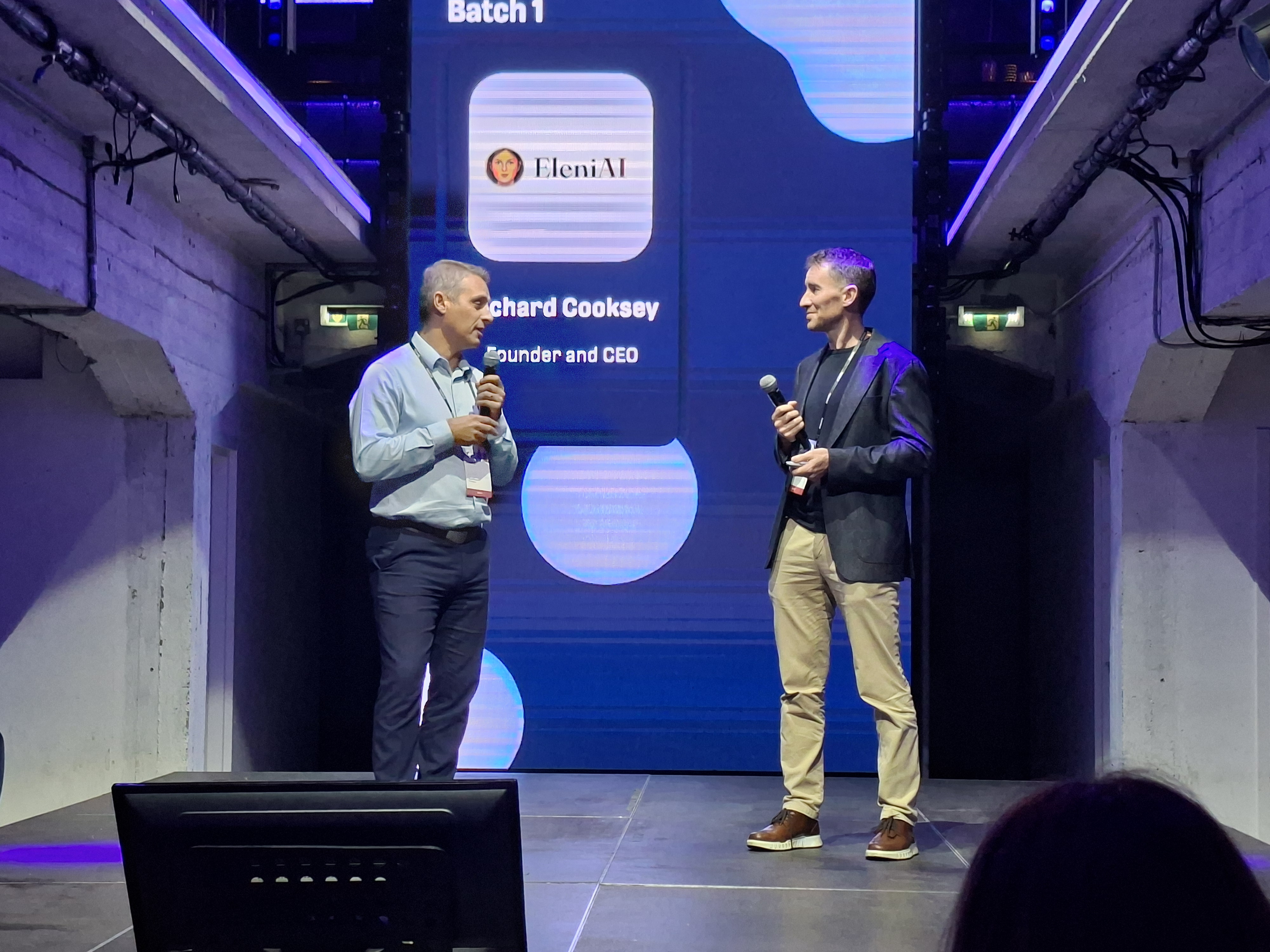
EleniAI, founded by Richard Cooksey, is addressing missed sales opportunities in the property sector through an artificial intelligence-powered conversational agent that responds to prospective buyers outside normal working hours.
Cooksey described an experiment in which he contacted 20 estate agencies in Paphos on a Friday evening with an enquiry about a €600,000 property.
He received no responses that evening, while only two of the six agencies that eventually replied on Saturday properly engaged with his enquiry.
By Monday, 12 agencies had still not responded.
Cooksey said industry data indicated that 41 per cent of property enquiries arrive outside office hours, creating considerable opportunities for agencies that can respond immediately.
He added that the system had improved database management and follow-ups, while the agency’s six-month sales pipeline was significantly higher.
Cooksey pinted out that EleniAI had handled a great number of conversations in recent months and was already operating in Paphos, Limassol and Larnaca, while onboarding customers in certain overseas locations as well.
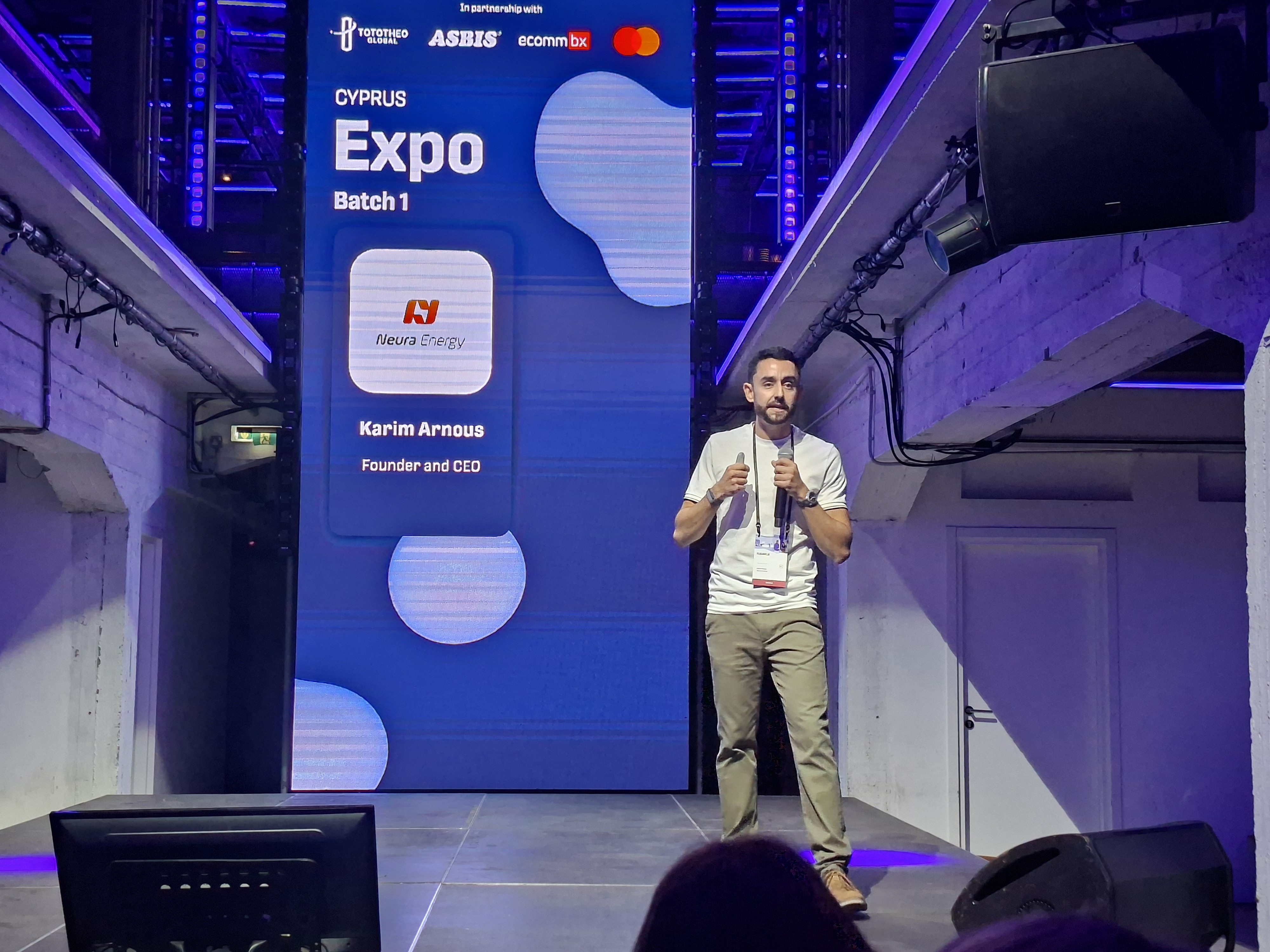
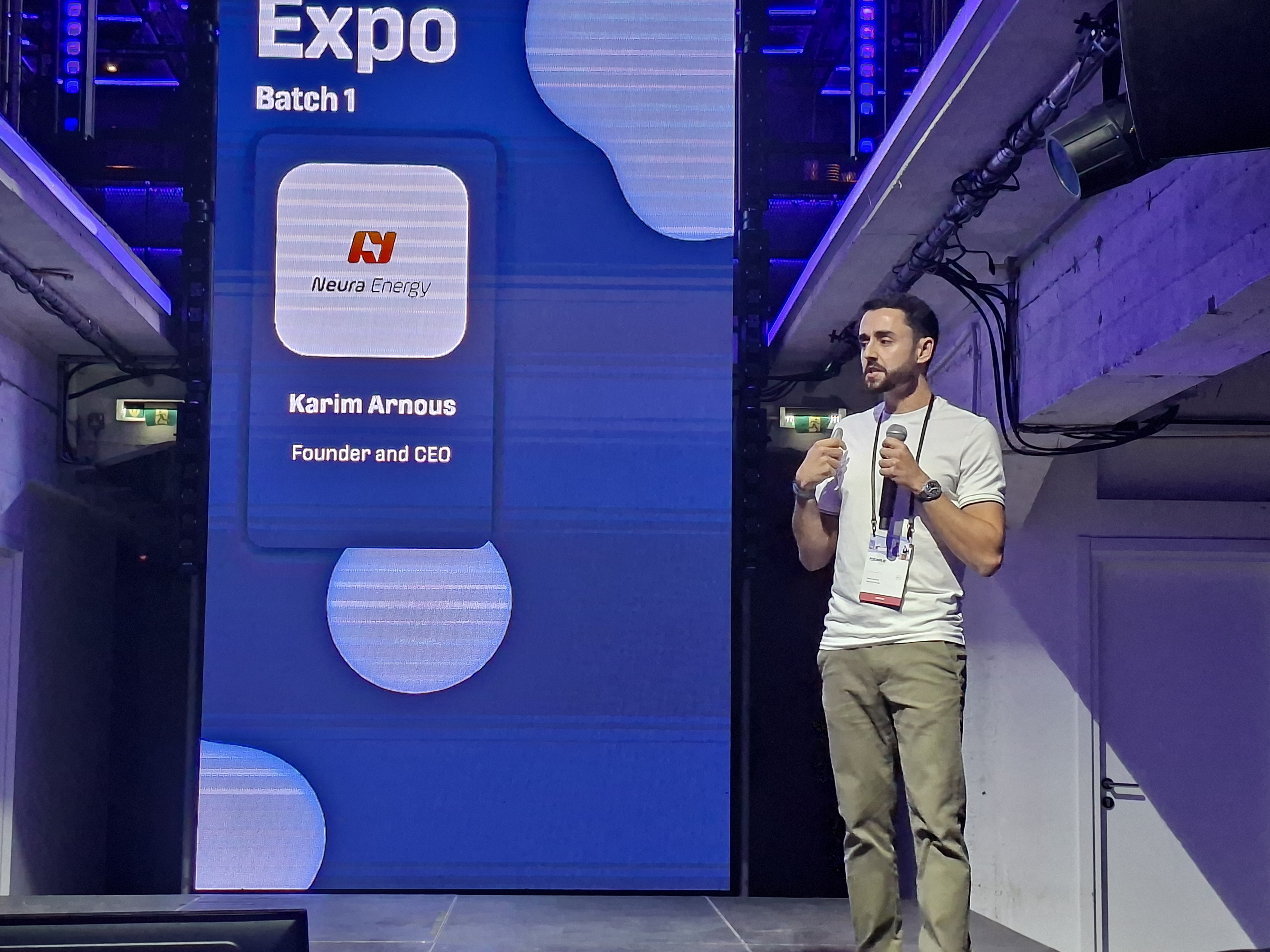
Neura Energy, presented by founder and chief executive Karim Arnous, is targeting inefficiencies in electricity consumption through technology designed to improve energy flexibility.
Arnous highlighted Cyprus’ dependence on oil-fired electricity generation and the increasing amounts of renewable energy being curtailed, arguing that the island needed better ways of matching energy supply with actual demand.
The company has developed two products, NeuraFlex, which manages solar and battery systems, and ThermaFlex, which controls large centralised cooling systems.
Using machine learning, forecasting and automated controls, the technology aims to shift electricity consumption towards periods when solar energy is available.
Neura Energy is working with electricity suppliers whose network and other partners represent a substantial amount of business customers.
It is also developing a funded model under which businesses can obtain managed energy systems without upfront investment, buying electricity at rates below those offered by the grid.
Arnous also announced a €1.5 million, two-year project with the University of Oxford’s Power Systems Lab to deploy an iteration of the company’s technology at data centres across Europe.
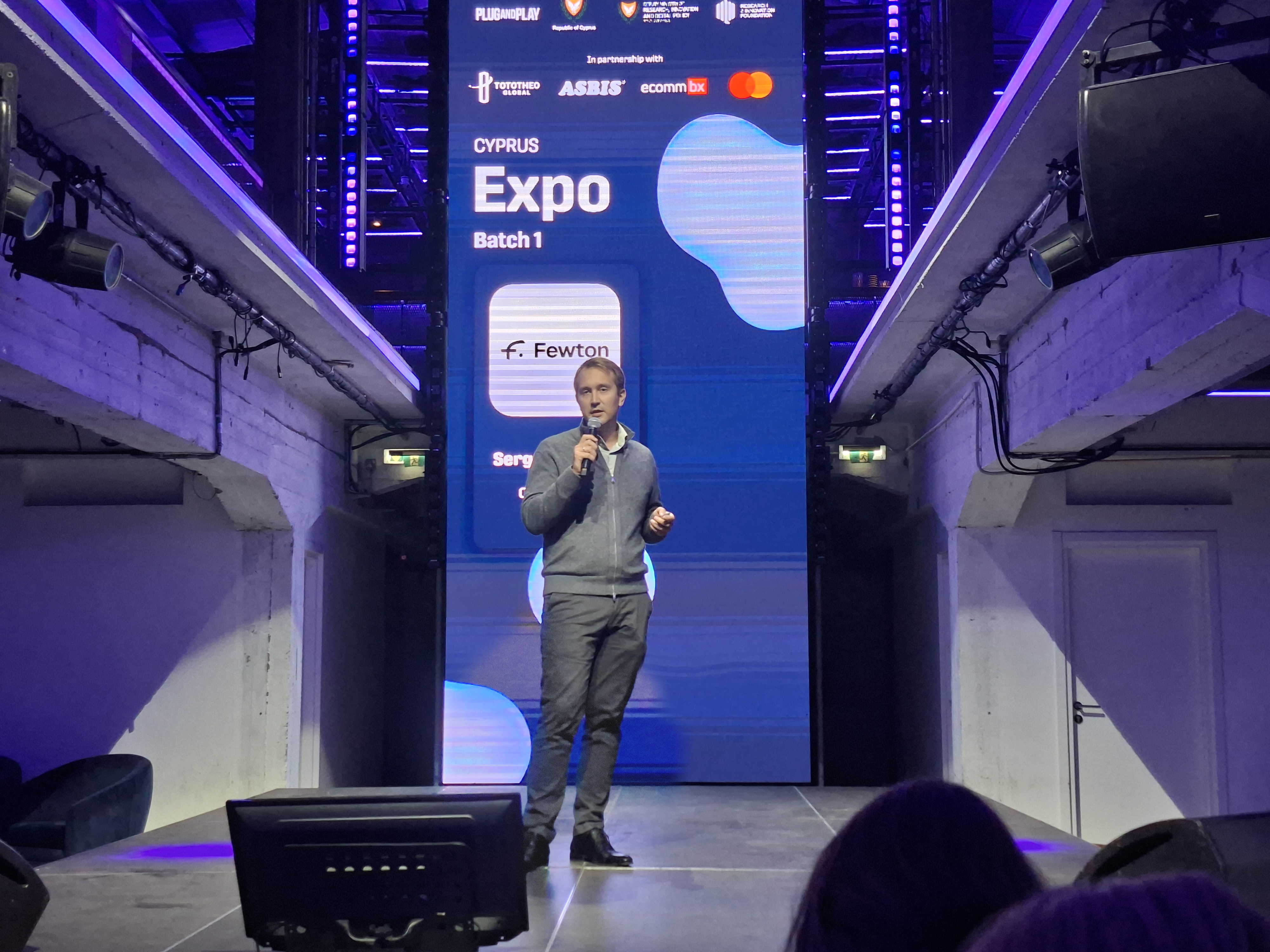
Fewton, presented by co-founder Sergey Novikov, is developing artificial intelligence-powered energy management specifically for hotels and other hospitality businesses.
Novikov said the sector wastes approximately €36 billion annually on energy, with utilities accounting for around 7 per cent of hotel revenue.
Fewton connects remotely to existing building equipment without requiring additional hardware, bringing together information from meters, building management systems, occupancy bookings and weather forecasts.
Its artificial intelligence system identifies energy waste and equipment faults, providing engineers with recommendations on what needs attention and how much money could be saved.
The company said its technology could deliver energy savings of up to 23 per cent, while improving hotels’ operating income and property valuations.
Fewton entered the programme with three customers and 27 buildings, but had grown to seven paying customers across 59 buildings by the time of the expo.
It reported €350,000 in annual contracts and monthly revenue growth of 109 per cent, and was seeking to raise €600,000 to reach €2 million in annual recurring revenue within 12 months.
Novikov added that the company had worked with ETKO’s management to demonstrate its technology during the event, making the venue itself a live example of its energy management capabilities.
Modelroom, presented by co-founders Dmytro Hrybov and Mikita Khazau, is developing an artificial intelligence-powered production platform and studio for short-form drama content.
The company focuses on vertical, mobile-friendly productions featuring episodes lasting one to two minutes, a format that Hrybov said had grown rapidly in China and was increasingly attracting international brands and digital platforms.
Its platform combines proprietary artificial intelligence production technology with an in-house studio, allowing clients either to commission content or train their own teams to produce it.
Hrybov said the global short-drama market outside China was already worth $3.5 billion and was projected to exceed $9.5 billion within five years.
The company reported a $30,000 production contract and $5,000 in monthly recurring platform revenue, while seeking $750,000 in investment to expand its operations and establish itself as a leading short-drama production platform in Western markets.


Environmental technology, workforce management and payments
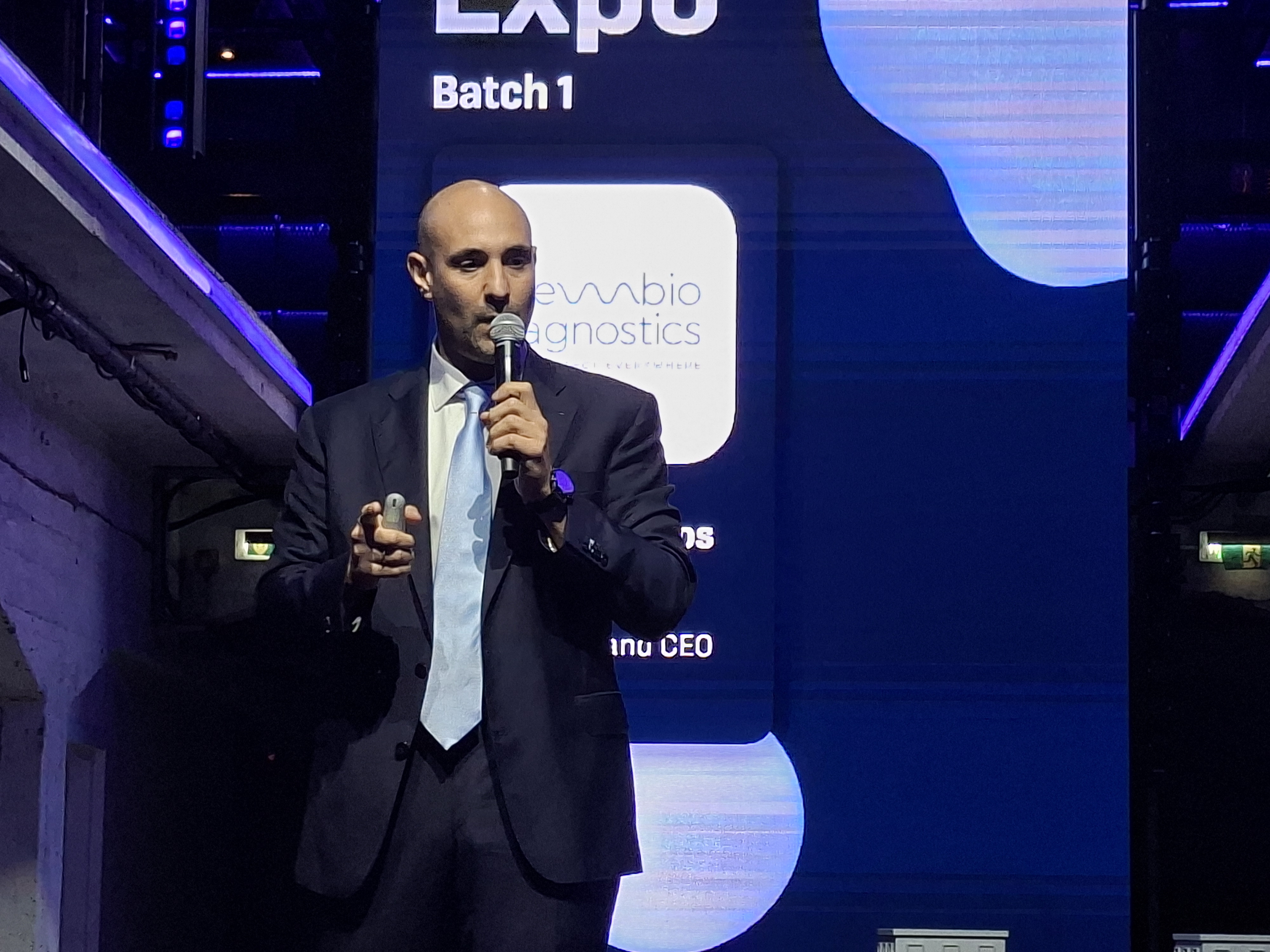
The second group of presentations began with EMBIO Diagnostics, whose founder and chief executive Constantinos Loizou demonstrated the company’s airbeld environmental monitoring technology.
Using a demonstration involving two model buildings, Loizou showed how one device detected a sudden increase in volatile organic compounds, with the measured index rising from 60 to 446 within seconds.
He explained that such compounds can indicate potential problems including mould, overheating electrical cables and hazardous indoor air quality.
The company’s fifth-generation sensing devices monitor 16 different environmental parameters, providing real-time alerts and information that can help businesses identify risks before they develop into serious incidents.
Loizou described the technology as the physical sensing component of artificial intelligence, allowing buildings to understand their surrounding environment in much the same way that wearable devices monitor human health.
The devices incorporate cryptographic hardware security and are designed to support compliance with European regulations.
EMBIO said its commercially available products were already being exported from Cyprus to the United States, Iceland, Spain and Italy, with the company inviting businesses to participate in a 60-day pilot programme.
Blend, presented by founder and chief executive Constantinos Samuel, is developing a workforce management application for smaller businesses, particularly restaurants, bars and retailers.
The platform helps managers prepare weekly schedules, manage working hours and leave requests, allocate shifts and communicate with employees.
Samuel said existing workforce management products often targeted large companies with dedicated human resources departments, leaving smaller businesses reliant on spreadsheets and fragmented processes.
Blend is instead targeting businesses employing between 10 and 50 people, with applications available on smartphones, tablets and desktop computers.
The company reported 250 paying customers, of whom 50 per cent are in the United States, 20 per cent in Britain and the remainder elsewhere.
It generates approximately $100,000 in annual recurring revenue and has monthly customer retention close to 98 per cent.

Its most popular subscription costs $49 per month for businesses with up to 20 employees, while its longer-term plans include payroll integrations, employee onboarding and training features.
Cleedee, presented by co-founders Michalis Georgiou and Stavros Kasinos, is tackling recruitment difficulties in the hospitality industry through an artificial intelligence-powered hiring platform.
Georgiou, who previously ran Bolt Food in Cyprus, said hospitality businesses faced persistent staffing shortages, with three out of four workers leaving their jobs annually and recruitment problems ranking as the leading concern for nine out of ten hospitality associations.
Cleedee combines a marketplace of 15,000 pre-screened hospitality candidates with an applicant tracking system for employers’ own recruitment processes.
Kasinos explained that the platform assesses practical skills rather than relying exclusively on CVs, while providing applicants with transparent information about pay, working hours, accommodation and employment conditions.
The system also automates candidate screening, interview scheduling, job offers and onboarding paperwork.
The company said it had achieved an average recruitment time of five days, a 90 per cent interview attendance rate and an average cost of approximately €150 per hire, compared with an estimated €2,500 to replace an unsuccessful hire.
Cleedee had already onboarded 15,000 hospitality professionals, partnered with 90 venues in Cyprus and completed more than 250 placements.
It is also launching in Athens, with plans to connect seasonal employment opportunities in Cyprus and Greece with winter demand in Alpine destinations.
Digital Fox, presented by co-founder Bane Patchev, is developing Fox Pay, a smartphone-based payment system intended to replace conventional card terminals in restaurants.
Customers scan a QR code at their table to view an itemised bill, divide payments, pay through Apple Pay or Google Pay and leave reviews without waiting for a physical payment terminal.
Patchev said waiters could spend more than 70 minutes per shift processing payments instead of serving customers.
Based on more than 100,000 transactions, the company reported faster table turnover, staff time savings equivalent to an additional part-time employee and a tripling of Google reviews.
Its business model charges customers a 2 per cent convenience fee, capped at 99 cents, with the charge displayed before payment.
At its leading partner venues, three out of every four euros in payments were already being processed through Fox Pay rather than conventional card terminals.
The company also announced Fox Loyalty, a loyalty scheme that uses customers’ bank accounts as their loyalty cards, removing the need for separate applications or physical stamp cards.
Digital Fox said it aimed to capture 10 per cent of its domestic market by April before expanding into Greece and subsequently other European markets.
It was seeking €900,000 in funding to support expansion and target €16 million in run-rate revenue and €1 billion in processed payment volume.
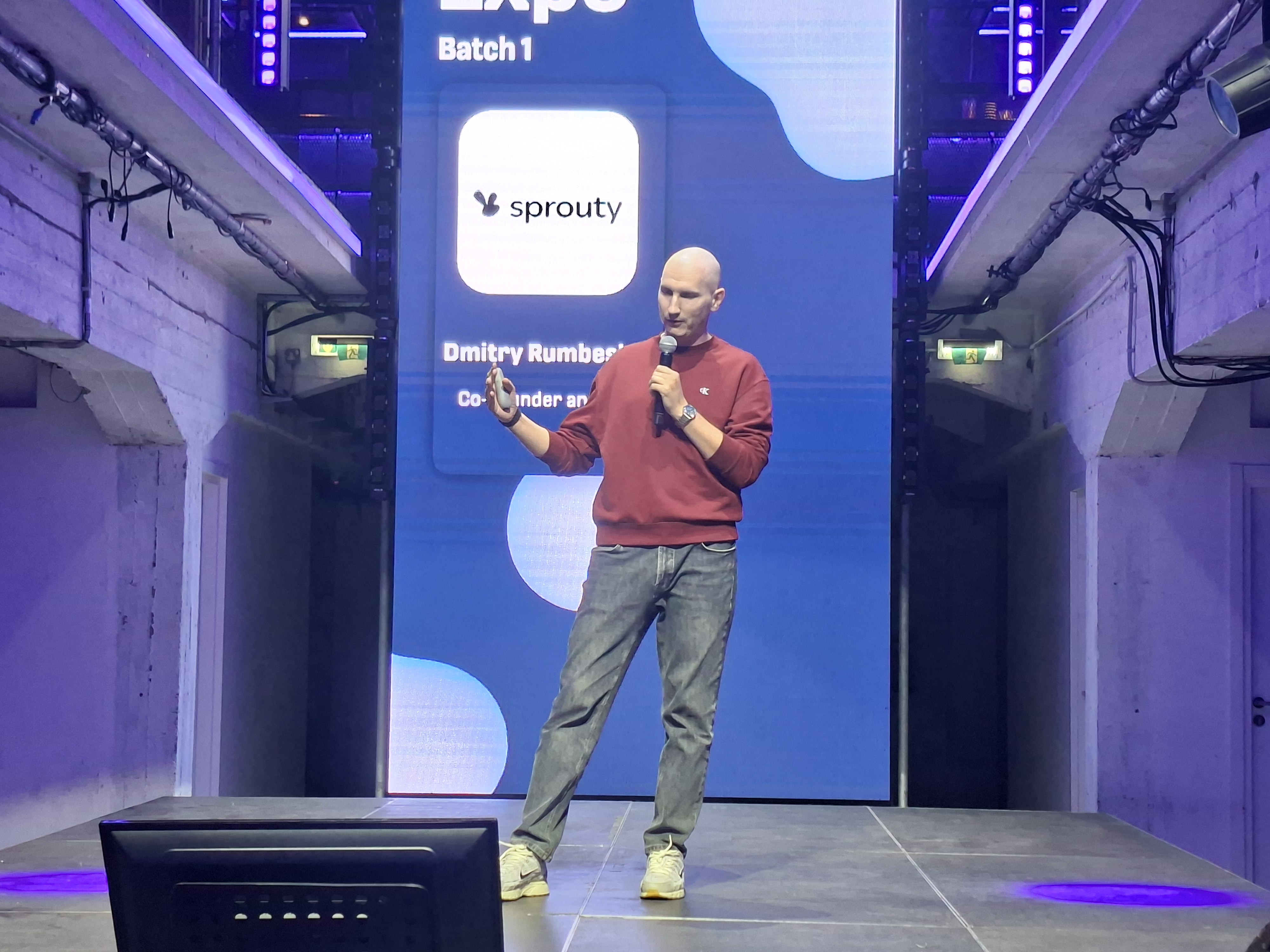
The final presentation came from Sprouty, an artificial intelligence-powered parenting platform founded by chief executive and co-founder Dmitry Rumbeshta.
Rumbeshta explained that the idea emerged after he and his wife moved to Cyprus and had their first child, finding that generic online information did not provide the personalised guidance they needed.
Sprouty allows parents to record information about feeding, sleeping and symptoms, using the data to build an understanding of each individual child and provide tailored guidance throughout pregnancy and early childhood.
The company said it had already helped 2.5 million parents worldwide, with approximately 500,000 returning every month.
Having initially grown through consumer subscriptions, influencer marketing and paid customer acquisition, it is now expanding towards institutional partnerships with paediatricians, neonatologists and healthcare providers.
Rumbeshta said discussions had also begun with federal programmes and national health systems in the United States and Britain.
He expressed the ambition of making Cyprus the first country where every new family receives Sprouty through the national health system.




Fintech panel examines stablecoins and AI-powered payments
The expo also featured a discussion on the future of financial technology, with particular attention to stablecoins, tokenised assets, instant payments and artificial intelligence-powered transactions.
The panel, titled Fintech Trends: Where Payments Go Next, was moderated by Anton Titov, chief executive and co-founder of Plexo, and featured Georgia Pitta, Group Chief Financial Officer of ECOMMBX, and Theodoros Hadjistyllis, Director and Country Lead for Cyprus at Mastercard.
Pitta explained that ECOMMBX had built its business around providing faster payments and lower fees, with investment decisions increasingly shaped by customer requirements and the potential to develop solutions that could subsequently be offered to a wider market.
She also highlighted the considerable cost of regulatory compliance, distinguishing it from product development, which represents a strategic investment intended to generate longer-term returns.
The discussion examined the growing role of stablecoins in international payments, with Hadjistyllis explaining that Mastercard had been investing in blockchain technology and stablecoins for approximately a decade, including through its acquisition of BVNK.
He said stablecoins could address particular inefficiencies in cross-border transactions, especially business-to-business payments and international transfers between individuals.
While conventional card networks already handle everyday consumer purchases effectively, stablecoins could reduce fees, delays and intermediaries in international transactions.
Pitta also highlighted the operational implications of the expansion of SEPA Instant Payments, which operate around the clock throughout the year.
She said financial institutions needed to invest in automation to manage liquidity, safeguarding, reconciliation and compliance without depending excessively on manual intervention, particularly during weekends.
Another major topic was agentic commerce, involving artificial intelligence agents carrying out transactions on behalf of individuals and businesses.
Hadjistyllis explained that Mastercard had developed Agent Pay, a protocol allowing artificial intelligence models and retail agents to verify themselves as trusted participants in the payments ecosystem.
He revealed that Cyprus’ three systemic banks had successfully completed live, end-to-end agentic transactions a few months earlier, demonstrating that the technology was moving beyond the conceptual stage.
He argued that the biggest opportunity could emerge in business-to-business transactions, where artificial intelligence agents could independently purchase digital advertising, data services and computing capacity through automated micro-payments.
However, he stressed that trust and security would determine how quickly new payment technologies gain widespread acceptance.
With artificial intelligence also being used by fraudsters to develop increasingly sophisticated scams, Hadjistyllis said the industry needed to move beyond traditional defensive cybersecurity approaches.
Asked when stablecoins and agentic payments would become mainstream, he said they were already established technologies and that the question was who would adopt them first.
Pitta offered a more specific prediction, suggesting that widespread adoption could happen within two years, provided the technologies deliver faster and cheaper transactions for customers.

Universities join Plug and Play’s innovation network
One of the evening’s most significant announcements concerned the involvement of higher education institutions in the development of Cyprus’ startup ecosystem.
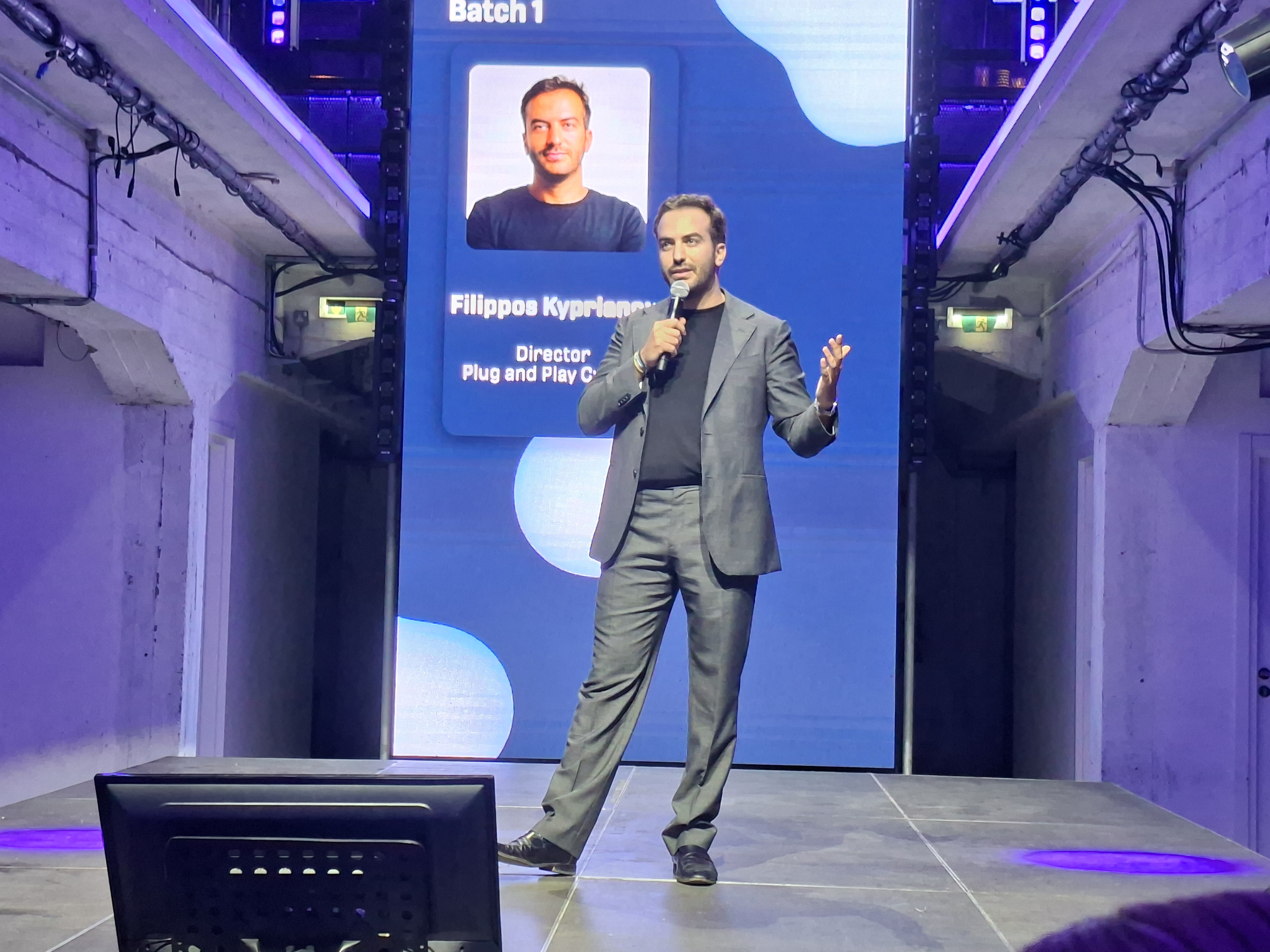
Plug and Play announced that AUB Mediterraneo and the University of Nicosia (UNIC) had become its first two university partners in Cyprus, following the signing of memorandums of understanding.
The agreements were announced by a Plug and Play representative, Alfredo, alongside Theodoros Loukaidis of RIF.
Loukaidis thanked Professor Wassim El Hajj, Rector of AUB Mediterraneo, and Antonis Polemitis, chief executive of the University of Nicosia, for their positive response to the initiative.
The collaboration will involve the development of dedicated activities and programmes designed to bring universities closer to industry and entrepreneurship.
Among the objectives are bringing industry experts directly into university lecture theatres, helping align academic curricula with market requirements, monitoring emerging industry trends and shaping research agendas.
The initiative is also intended to encourage students to develop an entrepreneurial mindset and potentially establish their own companies.
Alfredo said universities represented an essential component of an innovation ecosystem alongside government, corporations and startups.
He added that Plug and Play wanted to help develop the next generation of founders by embedding an entrepreneurial and innovation culture into student life.
The partners also indicated that the initiative would remain open to other universities interested in joining the programme.



Gaming becomes the focus of the next startup cohort
The other major announcement concerned the direction of Plug and Play Cyprus’ second acceleration programme, with the organisation confirming that gaming will be its next dedicated sector.
Evangelia Athanasiou, Ventures Associate at Plug and Play, announced that applications for the second cohort had officially opened, inviting interested companies to apply through the organisation’s website.
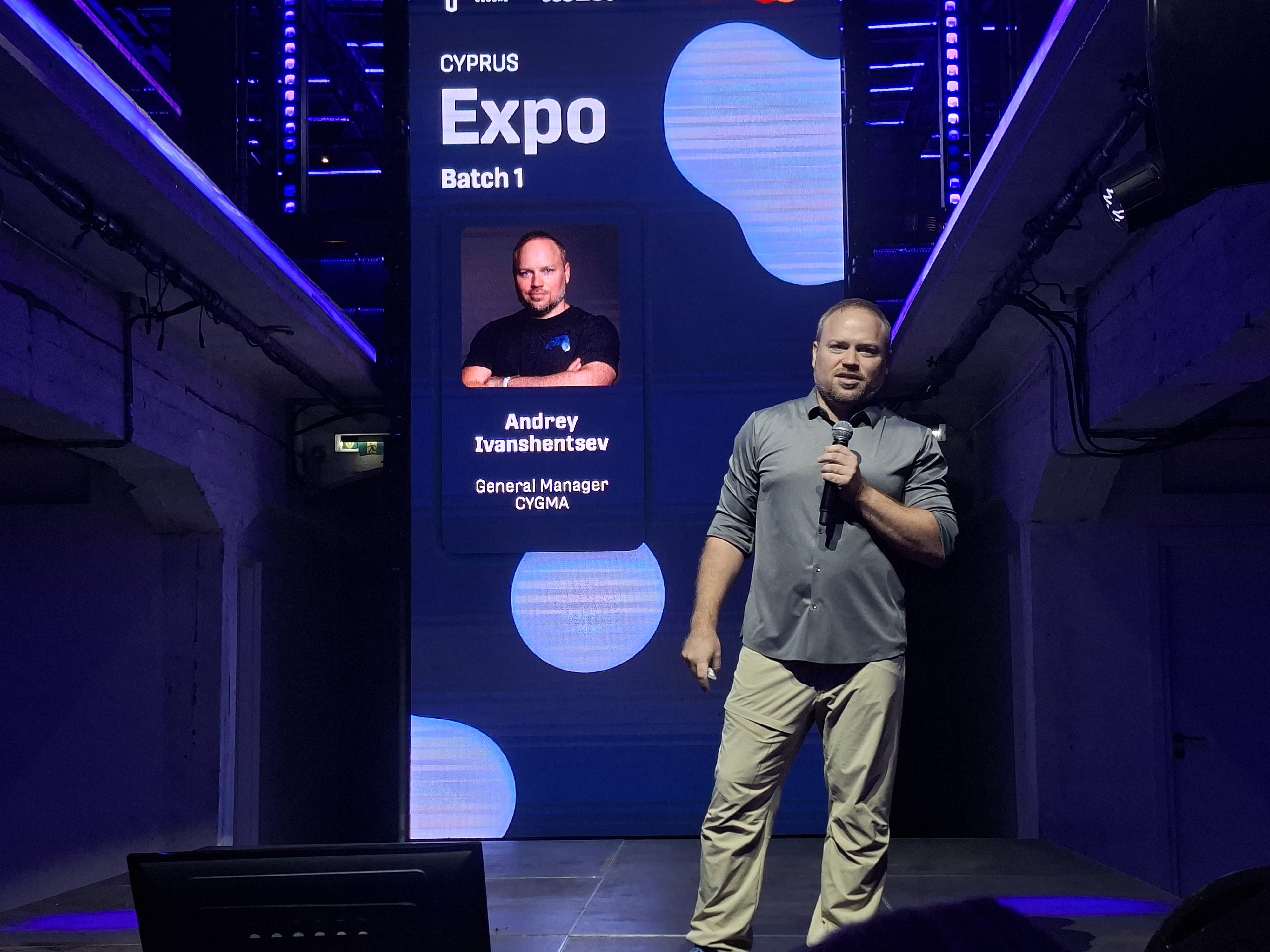
The announcement was accompanied by a presentation from Andrey Ivashentsev, General Manager of the Cyprus Game Makers Association (CYGMA), who outlined the scale of Cyprus’ gaming industry and its international significance.
Ivashentsev said Cyprus ranked first globally in gaming revenue per capita and gaming studio density, with local game development companies generating more than €3,000 in revenue for every resident.
He said the country’s gaming studio density was nine times higher than the closest comparable market, adding that the figures had been independently rechecked over a six-month period because of their scale.
The industry has expanded considerably since the rise of mobile gaming around 2015, with the number of studios increasing from 169 in 2019 to 415 today.
According to the figures presented, the sector generates approximately €3.2 billion in annual revenue across mobile, PC and console games, placing it on a comparable scale to Cyprus’ entire tourism industry.
Ivashentsev said gaming had developed into a substantial but previously under-recognised economic contributor, with Cypriot companies attracting approximately €3 billion in investment over the past five to seven years.
He welcomed Plug and Play’s decision to make gaming the focus of its next programme, arguing that the accelerator could help companies attract additional capital, develop their businesses and reach international markets.
He also referred attendees to the Cyprus Gaming Development Report, a 72-page publication containing the sector’s statistics and analysis.
Corporate partners support the expansion of the ecosystem
The expo was organised in cooperation with the Research and Innovation Foundation and the Deputy Ministry of Research, Innovation and Digital Policy, with corporate partners playing a central role in bringing Plug and Play to Cyprus.
The partners included ASBIS, Mastercard, ECOMMBX and Tototheo Global, whose participation reflects the importance of private-sector involvement alongside government funding and institutional support.
During his presentation, Karimpour also thanked the organisation’s founding corporate sponsors, referring to ECOMMBX, ASBIS, Mastercard and Tototheo Global for their commitment to supporting innovation initiatives and startups on the island.
Piki described the cooperation as a practical example of shared investment between the public and private sectors, while Damianou stressed that the international relationships established through Plug and Play would be important in attracting further investment and expertise.
The overall message from the event was that Cyprus’ startup ecosystem is moving beyond its earlier development stages, with growing interest from founders, more active investment, stronger international connections and increasing cooperation between academia, government and business.
The completion of the first cohort represents an initial milestone, but the university agreements and the decision to dedicate the next programme to gaming suggest that Plug and Play’s presence on the island is intended to develop into a broader, longer-term platform.
For Cyprus, the challenge now is to convert that enthusiasm into sustainable businesses, investment, international expansion and jobs, while ensuring that the island becomes a place where promising companies can not only start up, but also grow and remain.




Click here to change your cookie preferences