
The most dangerous lesson of the war with Iran may not be about Iran.
It may be about the bomb.
Would the US and Israel have attacked Iran if Tehran already possessed a credible nuclear deterrent? Governments, including Ankara, have been asking the question.
The answer is probably no. A nuclear-armed Iran would have presented Washington and Israel with the risk of nuclear retaliation. That is the brutal logic of nuclear deterrence.
North Korea is treated differently. India and Pakistan went nuclear and the world adjusted. Ukraine relinquished the nuclear arsenal left on its territory after the Soviet collapse, only to discover the limits of security assurances.
President Erdogan made his grievance explicit in 2019: some countries had nuclear-armed missiles, yet Turkey was told it could not. “This, I cannot accept.”
In February 2026, Foreign Minister Hakan Fidan went further. Discussing the danger of a regional nuclear arms race, he said that if Iran acquired nuclear weapons, Turkey might “inevitably” have to join the same race.
Turkey’s nuclear question is older than Erdogan
Turkey’s nuclear question, however, is much older than Erdogan.
In 1955, as part of Eisenhower’s Atoms for Peace initiative, Turkey became the first country to conclude a peaceful nuclear cooperation agreement with Washington under the US Atomic Energy Act of 1954.
Separately, as part of Nato’s Cold War nuclear posture, US nuclear weapons began arriving in Turkey in 1959, while Turkish forces were trained for a nuclear role under American control.
In January 1963, months after the Cuban Missile Crisis, Washington was preparing to remove its Jupiter nuclear missiles from Turkey as part of the secret understanding with Moscow that helped end the crisis.
Turkish Defence Minister İlhami Sancar demanded nuclear weapons for Turkish F-100 strike aircraft before the Jupiters left. He also sought Turkish participation aboard the new US Polaris nuclear submarines. Turkey did not get everything it wanted but did retain a nuclear role. Under the arrangement, US nuclear weapons were to be dispersed to Turkish airfields for delivery by Turkish aircraft, while remaining under American custody.
In 1966 came something more intriguing.
A secret US State Department memorandum, “Turkish Interest in Atomic Weapon Development”, reported that the head of Turkey’s Mineral Research and Exploration Institute had been asked to cooperate with General Refik Tulga and Professor Omer Inonu in a programme to develop an “atomic bomb”. It also noted Turkish uranium exploration and Ankara’s reservations over safeguards for future nuclear facilities.
That was 60 years ago.
The Pakistan connection
In the early 1980s, amid exceptionally close relations between Turkey’s Kenan Evren and Pakistan’s Zia ul-Haq, both military rulers, Turkish companies became conduits in Pakistan’s clandestine procurement of equipment for its uranium-enrichment programme.
In 1981, Associated Press correspondent Barry Schweid reported in The Washington Post on a secret US State Department cable describing a “covert purchasing organisation” involving Turkish companies. Over the decade, Washington made more than 100 démarches to Ankara over nuclear-related technology transfers involving Pakistan.
There were also allegations that Pakistan was prepared to share nuclear technology with Turkey in return. Nuclear scholar Mustafa Kibaroglu documented the nuclear dimension of the Evren-Zia relationship. Former Turkish Foreign Minister Yasar Yakis wrote that Evren favoured nuclear cooperation with Pakistan. There are also accounts that Evren, and later Prime Minister Turgut Ozal, were privately shown Pakistan’s secret Kahuta enrichment facilities.
A US-Turkey peaceful nuclear cooperation agreement was signed under Bill Clinton in 2000, but withheld from Congress after US agencies received information implicating Turkish private entities in proliferation-related activities. George W Bush transmitted it in 2008 after Turkey addressed US concerns. It entered into force that June.
None of this proves a continuous Turkish secret weapons programme. But it suggests that Ankara has repeatedly avoided closing the nuclear door.
From nuclear diplomacy to Akkuyu
In 2010, together with Brazil, Turkey brokered the Tehran Declaration, an attempted nuclear-fuel swap with Iran that also defended the right of members of the Treaty on the Non-Proliferation of Nuclear Weapons (NPT) to peaceful nuclear technology, including enrichment.
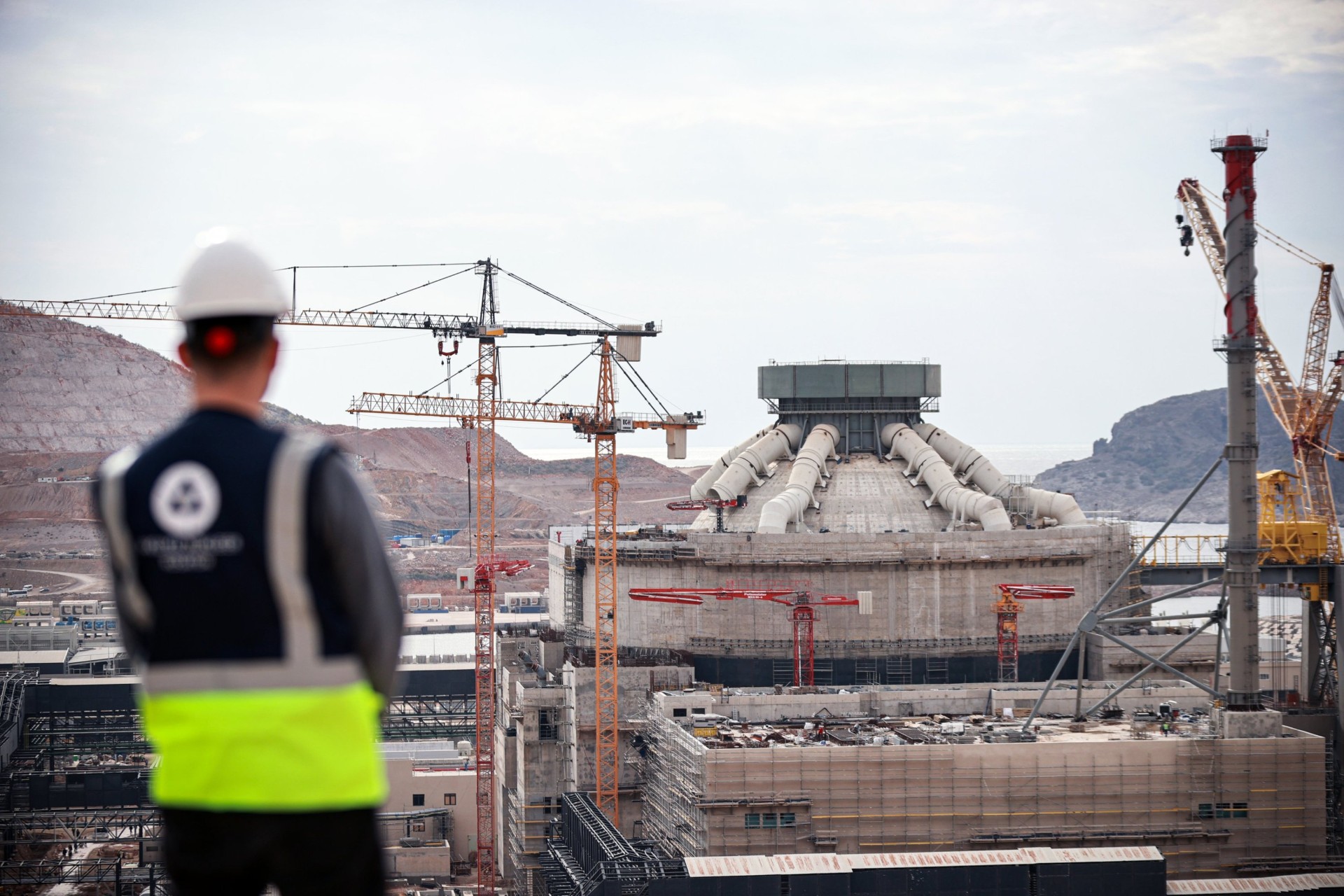
That same year Ankara agreed with Russia to build Akkuyu, Turkey’s first commercial nuclear-power plant.
Akkuyu itself is a civilian nuclear-power project, not a weapons programme. Built, owned and operated by Russia’s state-owned Rosatom, it leaves Turkey heavily dependent on Russia for technology and fuel, while helping Ankara build nuclear expertise.
Five years later, Hans Ruhle, a former senior German defence official, reported that Germany’s foreign intelligence service, the BND, believed Erdogan had ordered preparations in 2010 for uranium enrichment.
Turkey is a party to the NPT, accepts International Atomic Energy Agency (IAEA) safeguards and the Additional Protocol and, for the moment, has no industrial uranium-enrichment or spent-fuel reprocessing capability.
These would seriously complicate any Turkish pursuit of nuclear weapons. But history shows that, when states come to regard such weapons as essential to their security, political determination can overcome technological, economic and diplomatic obstacles.
Nuclear technology also has a dual character. Japan illustrates “nuclear latency”: a state can remain non-nuclear while acquiring much of the technological and industrial capacity needed to build the bomb. A 2026 study by the Carnegie Endowment for International Peace assessed that Japan could probably develop nuclear weapons “within a matter of months”.
Ankara wants more reactors, greater localisation and less foreign dependence. It is developing increasingly ambitious long-range missiles. And in 2025 its navy announced NUKDEN, its programme to develop a nuclear-powered submarine and master another advanced nuclear technology.
None of this amounts to a weapons programme. But capabilities create options. They expand Turkey’s nuclear optionality.
The nuclear umbrella is under pressure
And the strategic environment is changing fast.
Israel is a de facto nuclear-weapon state, although it maintains its longstanding policy of nuclear ambiguity. Iran’s future course remains uncertain. The Mecca defence agreement of August 2026 places Turkey and Saudi Arabia in a new collective-defence framework with nuclear-armed Pakistan. Nothing publicly disclosed establishes a Pakistani nuclear umbrella or nuclear cooperation. Saudi Arabia, meanwhile, signed a civilian nuclear cooperation agreement with the US in July 2026.
For nearly 70 years, Nato’s nuclear umbrella addressed Turkey’s concerns.
What happens if confidence in that umbrella keeps weakening?
The Iran war may have changed the calculus.
For Turkey, the nuclear question is getting harder to avoid.





Click here to change your cookie preferences