
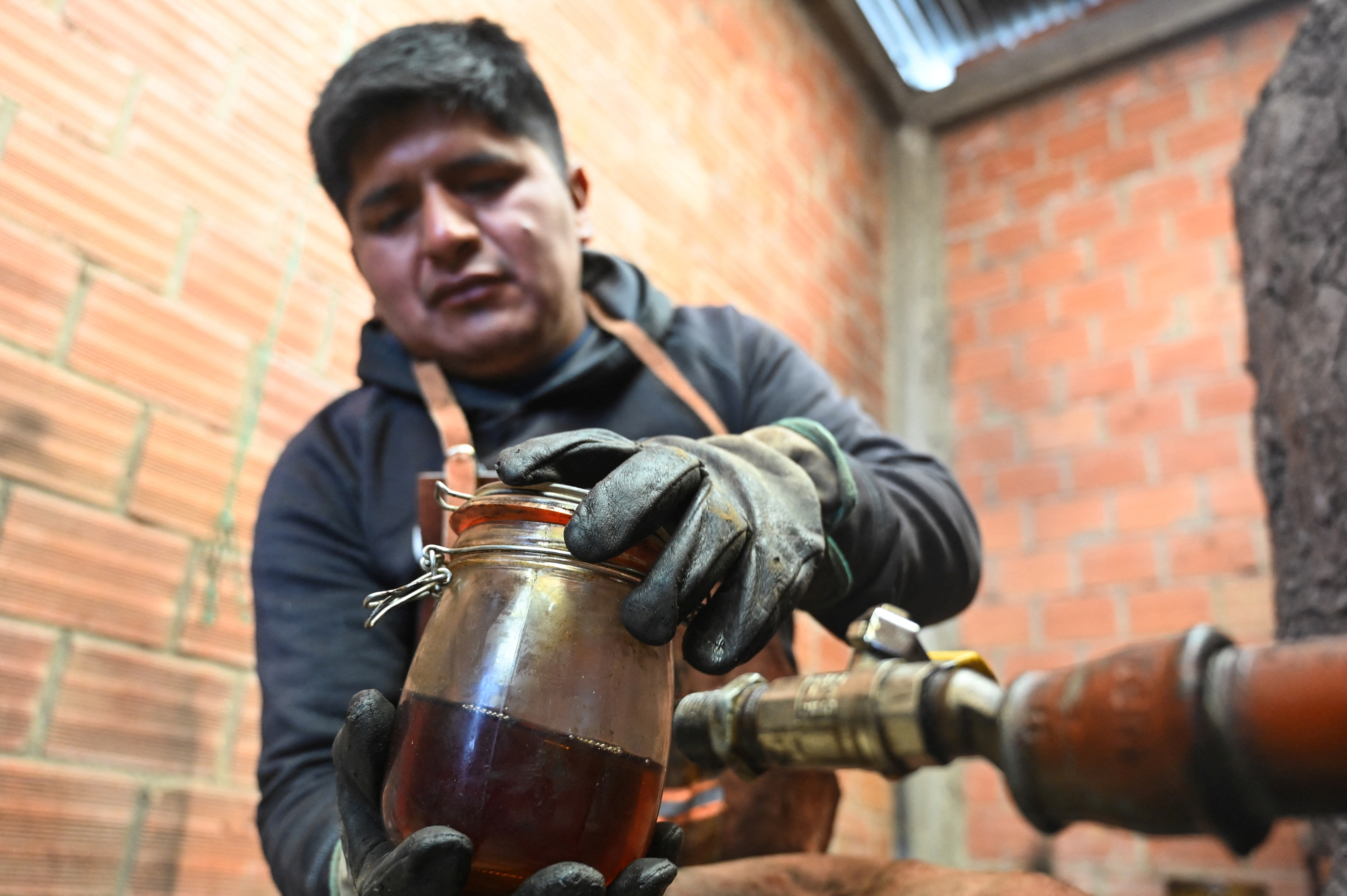
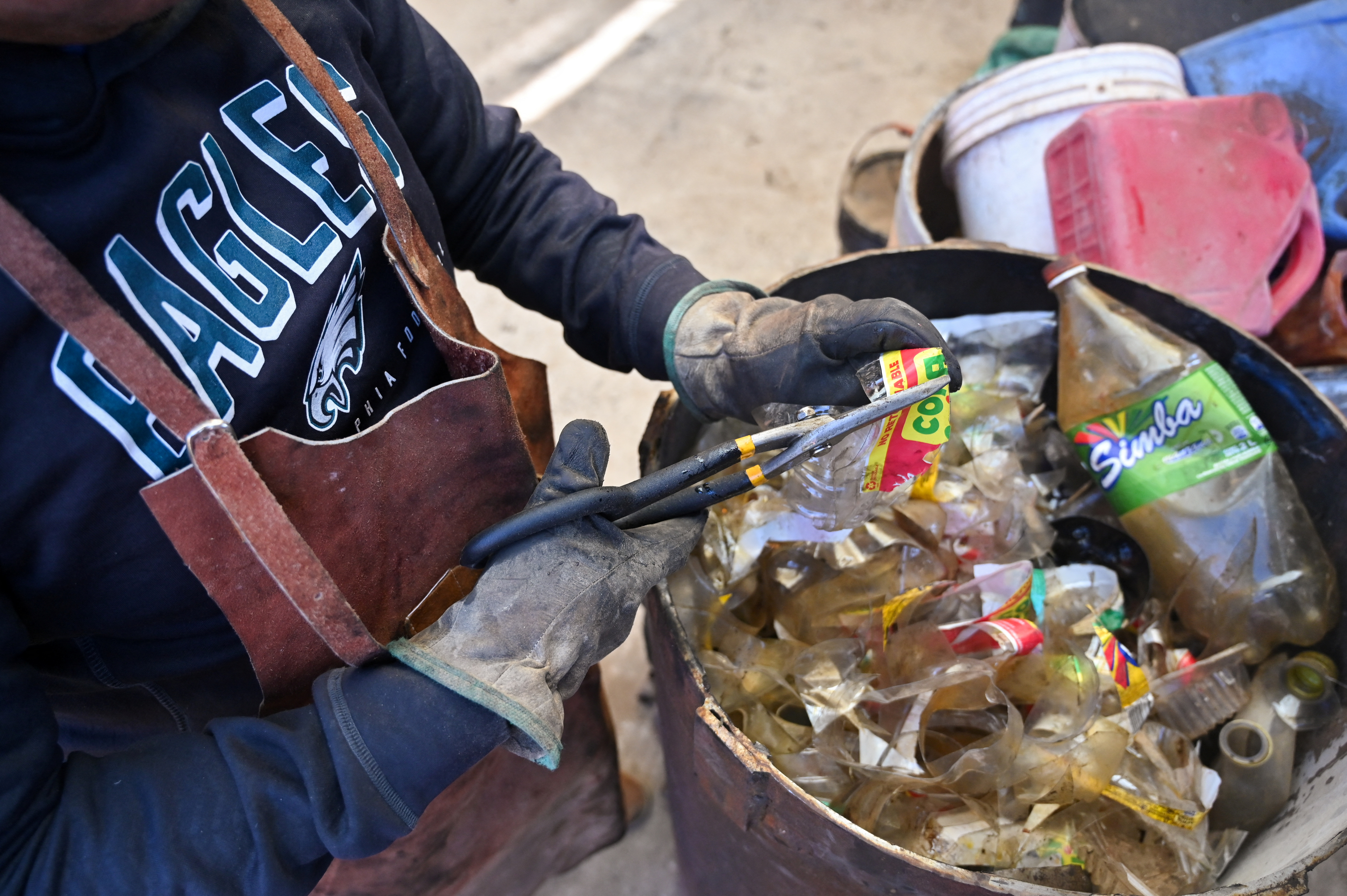
In the Bolivian Altiplano, where rising fuel costs are threatening farmers’ livelihoods, local resident Etson Machaca built a small plant that turns plastic bags, old tires and used oil into energy for his tractors.
Though the operation is small, producing only between 80 and 150 liters of gasoline and diesel a day, the savings are a lifesaver for Machaca after Bolivia’s centrist government last month ended state diesel subsidies in a bid to shore up public accounts.
The plant produces fuel at a cost of between 7 and 10 bolivianos ($0.60 to $0.86) per liter. Prices for diesel on the open market are about double, at 18 bolivianos ($1.54) per liter.
“We transform plastics, bags, tires, used oil. All of that has become raw material for us to produce fuel in the highlands,” said Machaca, whose plant is located in Ancocala, a community in the rural municipality of Laja, about 35 kilometers (22 miles) from La Paz.
The plant uses a process known as pyrolysis, which heats materials to high temperatures in the absence of oxygen to break them down into products that can be processed into fuel.
Machaca said he does not sell the fuel, but uses it for his tractors and other farm equipment.
The savings matter as many families in the Altiplano have replaced livestock with tractors to plow their fields more efficiently, making farms reliant on diesel.
“If we don’t sow today or tomorrow, there is no production here on the Altiplano. So diesel is very important for us,” Machaca said.
Bolivia for years relied on natural gas exports to earn foreign currency, but has seen its liquid hydrocarbon output fall and its reliance on foreign purchases grow.
The landlocked South American nation imports 95% of the diesel and 60% of the gasoline it consumes, according to official data.





Click here to change your cookie preferences