
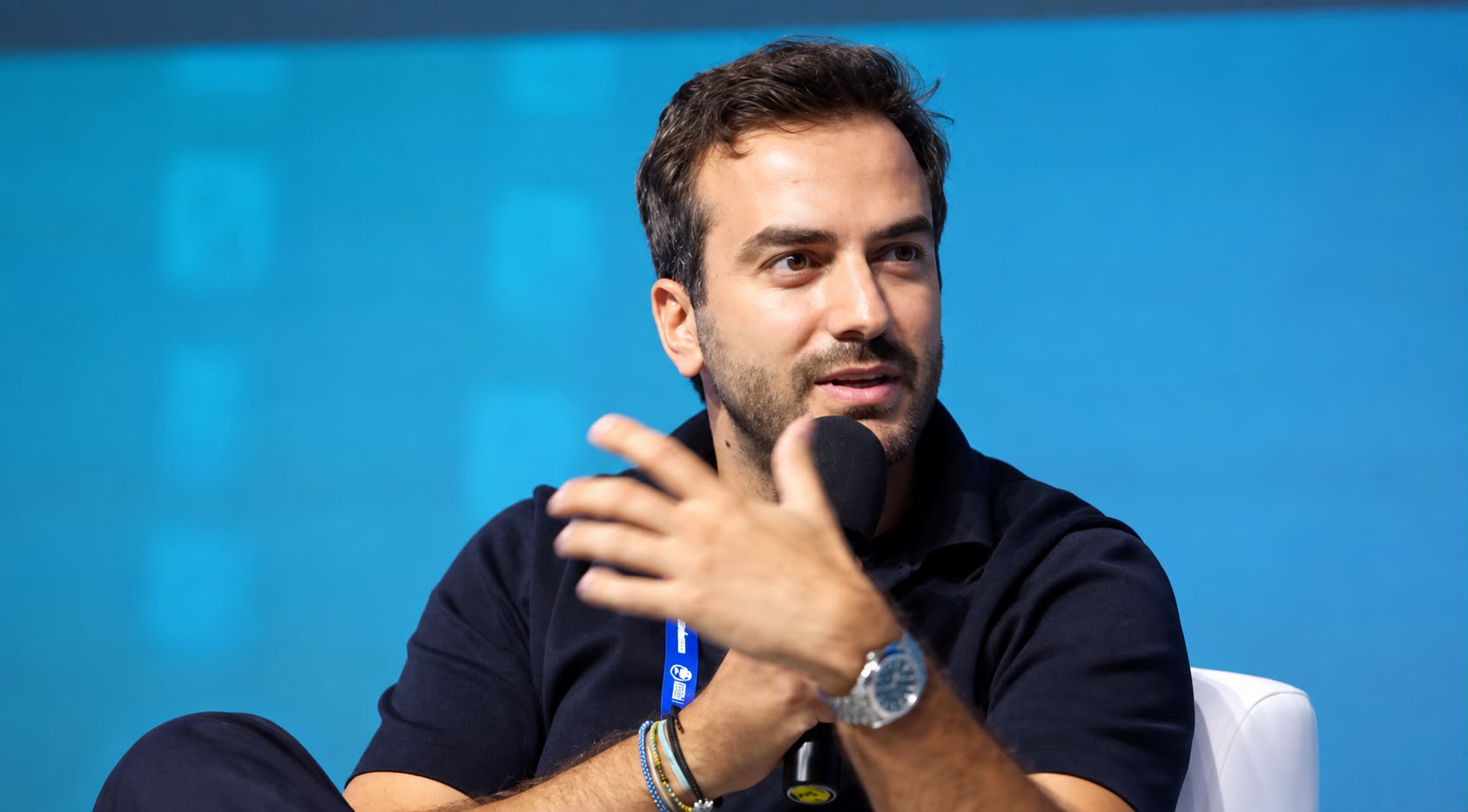
‘The island needs successful founders to show the next generation what is possible’
Cyprus has the potential to become a regional innovation hub, but turning that ambition into globally successful companies will require startups to look beyond the domestic market, stronger corporate partnerships and easier access to international customers and investors.
In an exclusive interview with the Cyprus Mail, director at Plug and Play Cyprus, Filippos Kyprianou, discussed how the global innovation platform is connecting Cypriot founders with more than 600 corporations across over 60 locations, while helping them develop the commercial skills needed to scale internationally.
He also examined the role of local corporate partners, the challenges facing startups and what success should look like over the next five years.
Plug and Play has a global network spanning more than 60 locations. What does bringing that network to Cyprus mean in practical terms for a startup based on the island, and what can founders access through Plug and Play that they could not easily access before?
In practical terms it means a founder in Limassol is one introduction away from a decision-maker at a bank in Frankfurt or a shipping company in Singapore. Plug and Play works with more than 600 corporations across 60-plus locations, and those are not logos on a wall. They are relationships where the corporate has a team, a budget and a mandate to work with startups. Until now a Cypriot founder who wanted that kind of conversation had to get on a plane and hope.
The second thing is people. Every week of the programme we bring in mentors from across the network: operators who have scaled companies, investors, people who have run innovation inside large corporations. They would not normally be in Cyprus on a Tuesday morning, and our founders get time with them, one to one, on whatever is actually broken that week.
The third is capital. Plug and Play’s venture arm is one of the most active early-stage investors in the world. It hasn’t invested in Cyprus yet but our investment team sees every company that comes through the programme, and we want the first Cypriot startup in the portfolio to be the first of many.
None of it costs the founder anything. We take no equity, and the programme is covered through the Research and Innovation Foundation’s voucher scheme. And we are not here only for the ten companies in a cohort. The centre is a front door for the whole ecosystem. If you are a founder in Cyprus and need to reach a corporate or an investor in our network, come and talk to us.
The Cyprus centre has been developed through cooperation between Plug and Play, the government, the Research and Innovation Foundation and corporate partners. How important is that collaboration to building a sustainable ecosystem, what does it look like in practice, and where is there room to improve?
I’d say the collaboration isn’t something that helps the ecosystem, it is the ecosystem. When people look at Silicon Valley they see the startups, but what they’re really looking at is a loop that has been turning for seventy years, where Stanford produces the talent and the research, the funds on Sand Hill Road put money behind it, the corporates buy from the startups and eventually buy the startups themselves, and all of it sits on decades of government research spending that nobody remembers paying for. Each part feeds the next, and if you took any one of them out you’d be left with a pleasant university town.
In practice, collaboration means each party puts something real on the table and is accountable for it, and you can see that happening across the island, not only in our programme. The government sets the direction and removes the obstacles, through the grants RIF puts into early-stage companies, the spin-off framework that lets researchers leave a university with their own work, and the visa schemes that bring talent in. The corporates are starting to treat startups as suppliers and partners rather than as a sponsorship line. The universities are beginning to see a company coming out of a lab as a success rather than a loss.
Local funds and programmes are backing companies at the stage before they reach us, and we bring the international network, the programme and twenty years of knowing how this is done. Our piece of it is funded by RIF and co-funded by our partners, the targets are public, and we sit down with RIF regularly to look at the numbers together, so anyone can see whether it’s working.
That’s what collaboration looks like when it’s real: everyone has something at stake and nobody can hide behind the others.
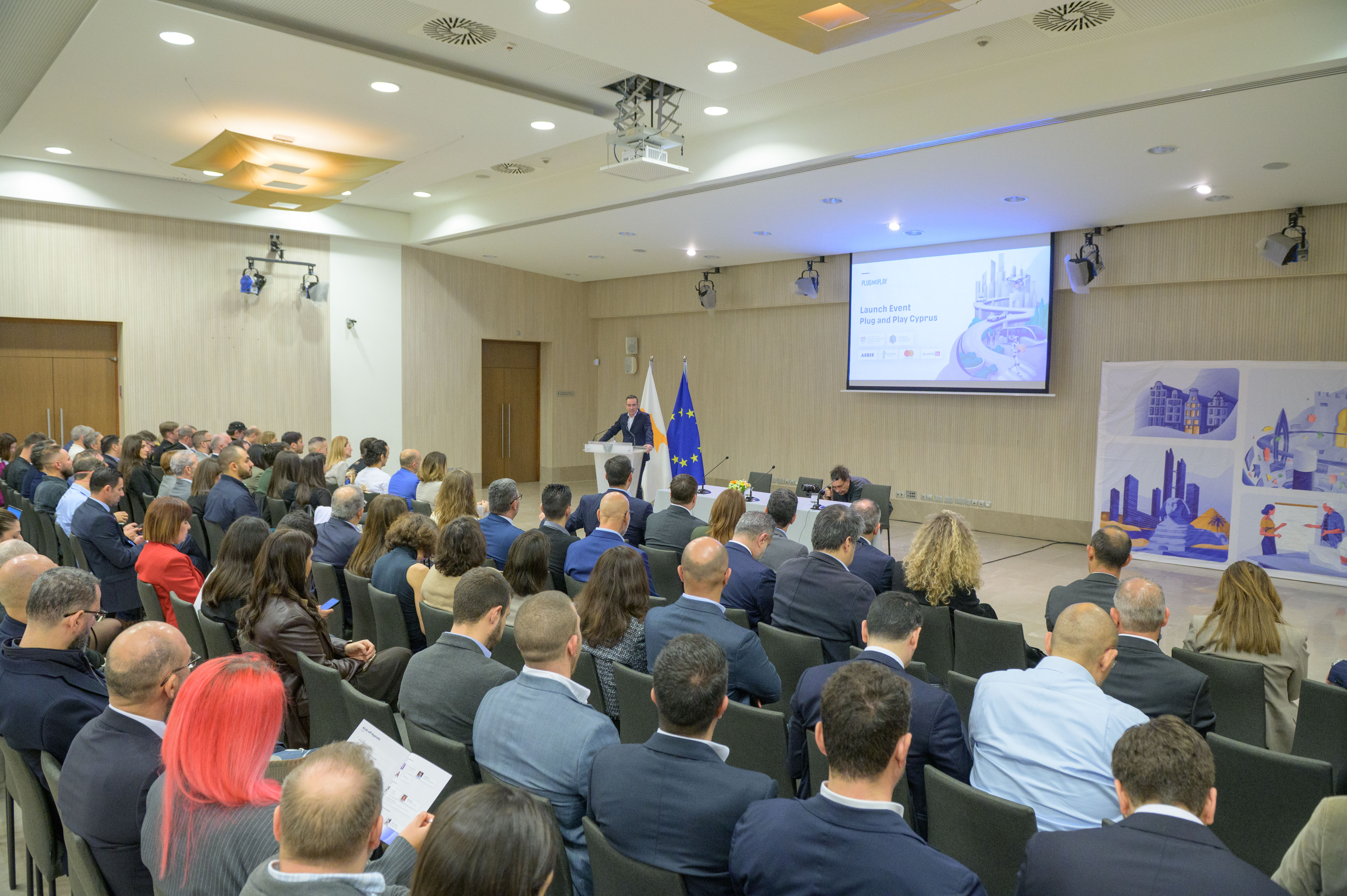
Plug and Play’s core business worldwide is helping large companies work with startups. What would you say to a Cypriot company that wants to do more of that?
Most of the Cypriot companies I speak to already want to do this. What they ask is where to start, and my answer is usually smaller than they expect, and with different people in the room than they expect.
The way we do it with corporates around the world – and we’ve been doing it for twenty years with more than six hundred of them – is to start from a problem the business actually has rather than from a general wish to innovate.
A bank might want to cut the time it takes to onboard a business customer from weeks to days. A ship manager might want better data coming off its vessels. We take that problem, go through the startups we know, which at this point is tens of thousands, and bring back the handful that have already solved something similar for someone else.
The company meets them, picks one or two, and runs a pilot with us helping on both sides. The difficult part is rarely the technology, it is getting a company of eight people through the legal and security process of a company of eight thousand, and getting the company of eight thousand to make a decision in weeks rather than quarters.
If the pilot works there is a contract, and sometimes the corporate invests as well. That is more or less how a navigation startup ended up in every new Mercedes vehicle.
Where it goes wrong is when it is treated as an event instead of as work. If the innovation team organises a demo day and the head of operations isn’t there, nothing comes of it no matter how good the startups are, and if a pilot starts without anyone having agreed what happens when it succeeds, it will finish without anyone deciding.
I have watched this happen in Germany and in Singapore, so it is not a Cypriot problem, but it is the main reason companies try once and give up.
So my advice to a Cypriot company would be to pick one problem that someone in the business is already losing sleep over, give that person a modest budget and the authority to run a pilot and let us find the startups. Do one properly and the second is much easier. None of it needs an innovation lab.
Plug and Play works with major corporations around the world. How do you see Cyprus-based corporates such as Tototheo Global, ASBIS, ECOMMBX and Mastercard contributing to the development of local startups beyond simply providing sponsorship or support for programmes?
The funding is the smallest part of what they do. Each of the four came into this for reasons of its own, and the longer I work with them the more I think that mix is one of the programme’s strengths.
What each of them brings is quite different. Tototheo Global started out in maritime technology and has grown well beyond it over the years, but what matters most for our founders is that it is a company that built itself in Cyprus and then scaled into international markets, which is exactly the road the startups in our cohort are about to go down.
ASBIS is headquartered here and operates in dozens of countries, so it offers the kind of reach into other markets that a Cypriot startup could never buy on its own, and it is also one of the few corporates on the island that already invests in technology companies, which gives it a very practical interest in what comes out of the programme..
ECOMMBX built its payments infrastructure in Limassol and sells it internationally, so it knows from its own experience what a regulator will ask and what a bank’s due diligence actually looks like, and that is knowledge a fintech founder would otherwise spend a couple of painful years acquiring.
Mastercard brings the view of a global network that sees where payments are going before almost anyone else.
Some of them are here because they want startups working on problems inside their own business, some because they want to invest, and some because they believe the island needs this and would rather be part of it than watch from the side. What they have in common is that they all committed before there was a cohort or a single result to show them, when it would have been very easy to wait a year and see how it went. In my experience that kind of early commitment is the hardest thing to get from corporates anywhere in the world, and here we had it from the first day.
The first Plug and Play Cyprus cohort includes ten startups operating in areas ranging from artificial intelligence and diagnostics to energy and digital platforms. What were you looking for when selecting the first cohort, and what have you learned from working with these companies so far?
We kept the first cohort open to every sector on purpose, because when you start somewhere new you don’t know where the talent is, and the quickest way to find out is to open the door and see who walks in. We spent time with the finalists and picked ten.
At this stage you are backing people rather than plans, since the plan will change several times before it works, so what I look at is what a team has managed to do with almost no money, whether they can explain what has changed in the world that makes this possible now, and whether they have a real reason for the decisions they’ve made on price, market and hiring or are telling themselves a story. I also pay attention to what has moved between our first conversation and the second, because two weeks is usually enough to tell.
What has struck me so far is that the technical quality here is better than people outside Cyprus assume, and we have companies in diagnostics, energy and AI that I would put in any cohort in our network. Where they need us is on the commercial side, pricing for a market bigger than Cyprus, building a sales process that doesn’t stop when the founder is on a plane, and turning a pilot into a contract, which is what the three months are for.
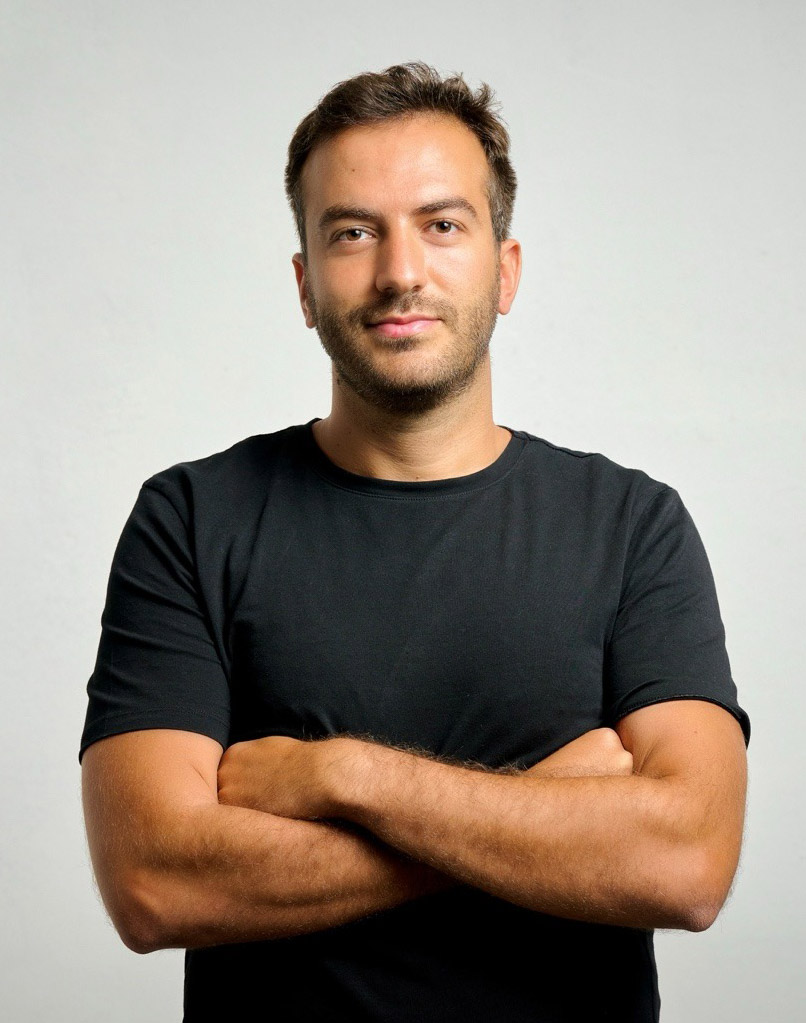
Cyprus has a growing technology community, but the domestic market is small. How important is internationalisation from the very beginning, and beyond funding, what are the biggest obstacles facing startups in Cyprus today?
It matters from before day one, from the moment you decide what to build. The question I ask every founder is: where do you want to be in five years? If the answer is Europe, build for Europe now. Price for it, hire for it, design for it and use Cyprus to test. You’ll hear me say this a lot. You’re not building a company for Cyprus. You’re building a company from Cyprus to serve global markets.
Estonia has about the same population as Cyprus and has produced around ten unicorns. It did that because nobody there could hide in a home market. A small market is only a problem if you let it set your ambition.
Beyond funding, the obstacles I see are distribution and ambition, in that order, and capital a long way behind. There’s more money looking at Cyprus than ever. What’s hard is the first international customer, the first salesperson who can close without the founder in the room, and being willing to fail in public. That last one matters more than people think. We have a culture, and it’s southern European more than Cypriot, where failure is something you hide. In Silicon Valley a founder who has failed once is easier to fund, not harder, because they learned something expensive and someone else paid for it. Part of what we’re here to do is bring that attitude with us.
Plug and Play has described Cyprus as having the potential to become an innovation hub in the Eastern Mediterranean. What would need to happen over the next five to ten years for that to translate into globally successful companies built from Cyprus, and how does Cyprus fit into the wider ecosystem?
The honest answer is that it needs a few Cypriot companies to make it internationally, because that is what sets everything else in motion. Once that happens, the people who built those companies go on to start new ones and invest in others, international investors begin to look at Cyprus seriously, and the next generation of founders can see that it is possible. Estonia is the clearest example: one exit, Skype, produced the founders and the capital behind most of the country’s startup scene today.
For that to happen here, a few things need to continue improving over the next five to ten years. Founders need to build for international markets from day one rather than for the island. Local corporates need to work with startups as a normal part of doing business, since a startup’s first serious customer is usually a local one. It must become easier to raise capital while keeping the company and the team in Cyprus, rather than relocating to raise. The island needs more experienced operators, people who have scaled companies before, which is what the government’s talent and visa schemes are designed to address. And universities need to see a company emerging from research as a success rather than a loss. None of this is new, and most of it is already moving. The next decade is about whether it compounds.
As for the region, Cyprus sits inside the EU, in a time zone that overlaps with Europe, the Middle East and India, and in a country small enough that you can reach anyone within a week, which makes it a natural meeting point. Reflect Festival already brings founders and investors from across the region to Limassol every May, and by bringing our network into it we want a founder from Athens or Dubai to be able to meet our corporates and our investors here, rather than having to fly to San Francisco to find them.
Looking beyond the first cohort and the November innovation Expo, what should success look like for Plug and Play Cyprus in three to five years, and what would convince you that the programme has made a lasting contribution to Cyprus’ startup ecosystem?
We have targets and we will be measured on them, and we take that seriously, but the targets describe the programme, not the ambition. What we want is for Cyprus to be a place where founders believe they can build something that matters and stay here while they do it, and we think that belief is the thing that is still missing. The talent is here and the money is coming. What hasn’t fully happened yet is the moment a few founders prove it can be done from here and everyone else stops asking whether it can.
In three to five years we would like to be able to point to Cypriot companies with customers in ten countries, with investors who came here to find them, with the first employees of those companies starting companies of their own. I would like a corporate in Limassol to have worked with enough startups that it does so without thinking, and a researcher at one of our universities to see starting a company as the obvious thing to do with a result, not a brave one. And we would like founders from abroad to consider Cyprus a serious place to build, not an unusual one.
The Expo on November 11 is the first time we put all of that in one room, our startups, our partners and investors from across the network, and I’m excited to see what comes out of it. As for what would convince me the contribution has lasted, it’s when the things we’ve described start happening on their own as well as through us, when the introductions we made in the first years have become relationships that no longer need us in the middle, and when Plug and Play has gone from being the reason a founder gets a meeting to being one of several good reasons to build a company from here. We’re in Cyprus for the long term.

Click here to change your cookie preferences