
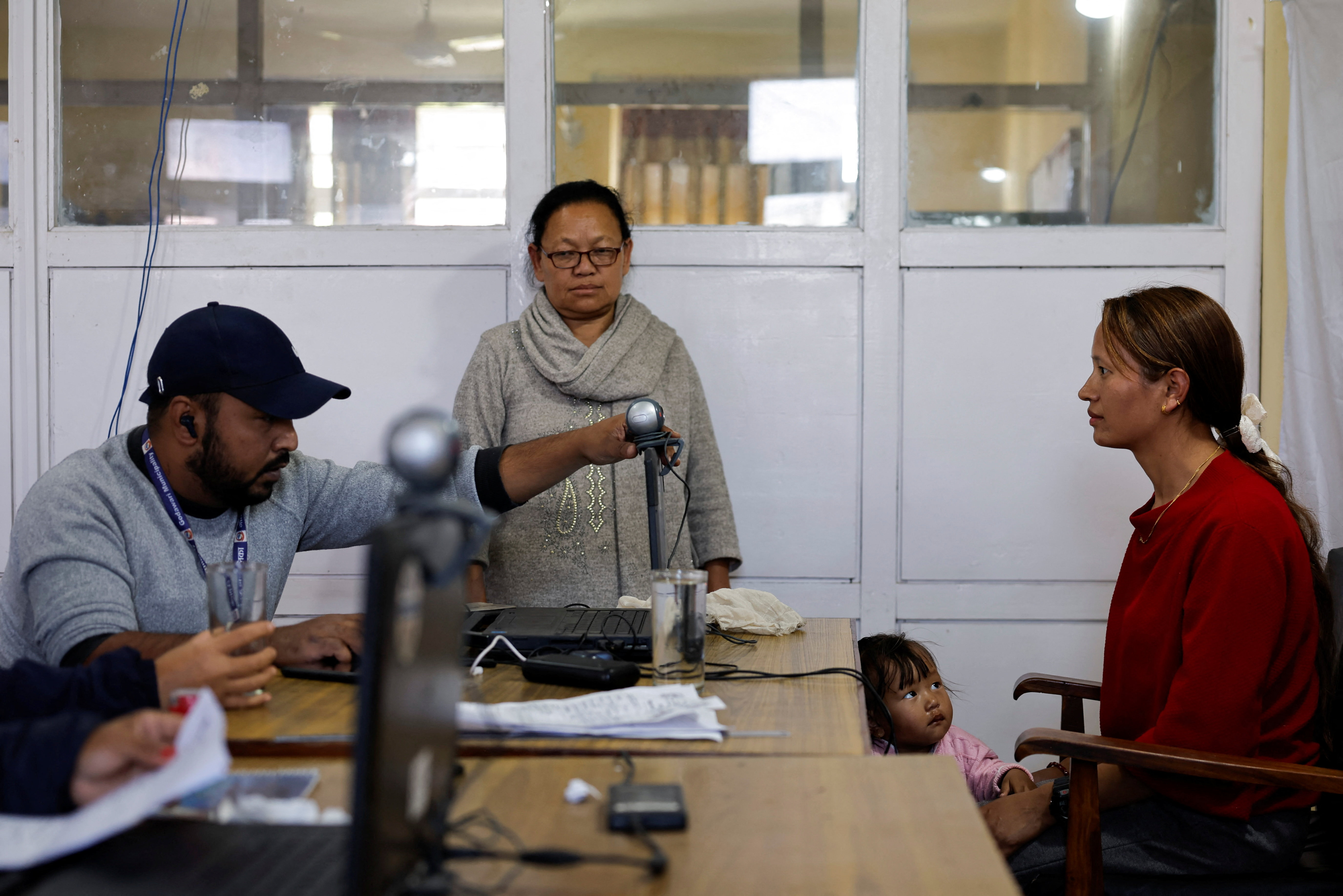
Depending on whom you ask, Nepalis are the second or third largest group of legally resident third-country nationals in Cyprus
The Nepalis in Cyprus tend to stay below the public radar. Perhaps it’s not surprising as they come mostly as domestic workers and are kept out of sight, busy cleaning houses and looking after kids or spending long hours caring for Cyprus’ ever growing, ailing elderly population.
So it may have come as a bit of shock recently when the deputy ministry of migration told MPs that Nepalis make up the third-largest group of the legally resident 175,677 third-country nationals. The ministry said there are 15,607 Nepalis, 40,735 Russians and 16,279 British. Indians at 14,237 and Syrians at 12,868 rounded up the top five.
The honorary consul of Nepal in Nicosia Dr Ram Jiwan Panjiyar told the Cyprus Mail the figure is even higher, saying there are around 20,000 Nepalis, thus pushing the British out of second slot.
He said there has been a surge in Nepali nationals seeking employment in Cyprus in recent years, mainly due to the rising costs of food and education back home. Most are women employed as domestic workers.
Although working in Cyprus is considered a solution, as money is sent to Nepal to help their families, it comes with some serious issues such as nutrition, payment, long working hours, harassment and even, the Cyprus Mail has learnt, reports of suicides.
When the paper asked Panjiyar about reports of up to ten cases, he acknowledged the issue but said the number had been exaggerated.
“We have had one or two suicides,” he said.
Nepali women often fall in love with Cypriots, he said.
“Someone loves and has a problem and commits suicide. Love, love, love. This love is very dangerous,” Panjiyar said. “It is very sad.”
So, what happens if someone dies?
“We have a very big problem. Insurance covers deaths and sending the bodies back. But if it is suicide, they don’t cover the expense of sending the body back to Nepal. Many insurance companies say that they cover death from medical reasons and accidents and the expenses to send the body back. But suicide is not covered. We have this problem and we are saying this is not a good system,” Panjiyar said.
In these cases, the consul sends a letter to the Nepali embassy in Tel Aviv – under which the consulate operates – and from there the Nepali government is contacted to cover the cost.
Panjiyar explained that some employment agencies contact the consulate when they are set to bring Nepali nationals to Cyprus for work, while others only make contact when there is a problem.
The same applies for Nepalis when already on the island.
Most complaints received by the consulate are from domestic workers, mainly regarding basic rights.
“Mostly by housemaids about employers not giving proper food, not giving salaries on time, some are sick and are not taken to hospital.”
Most Nepalis in Cyprus are women domestic workers, however men and women from Nepal are gradually making their way into other forms of employment.
“Now some are working in restaurants – for example cooks. Before they were not allowed to work in restaurants and other fields. Now I think you can find them in many fields. For the past two years people are slowly-slowly working in Lidl, Alpha Mega. This is a very small percentage,” Panjiyar said.
The Nepalis come to Cyprus out of necessity.
“Nepal has political problems, economic problems, not enough salary, not good food and they have children to feed, raise and pay for studies. This is expensive. That is why they come and they send money back to Nepal.”
The vast majority of the population is Hindi. Hinduism accounts for 81.2 per cent of the populations, Buddhism 8.2 per cent, Islam 5.1 per cent and Kirats – an indigenous religion – around 3.2 per cent.
However, cultural differences are of minimal importance.
“Nepali people come to earn money here. To work and send money to Nepal. So, they don’t think about cultural things. They want to work and get money and send to Nepal. They don’t want to get involved in politics and not thinking about anything else. Religion is not a problem.”
The consulate offers support when problems do arise.
“If someone has a real problem, sometimes we don’t know exactly what happened. Because some people are not telling the real thing. This is a problem. If it is real, I will support. Like sexual harassment. Is this real or not? How do I know? Many are real cases,” he said.
In cases of harassment, the consulate gathers information and helps the victims report the incident to the police.
Others are unhappy with their employment and wish to be released in order to seek work elsewhere.
“Sometimes [employers are] insulting. Not all people. They want to be released but the employer does not want to release them. That is a problem. We go to the immigration. This we are solving.”
Since 2022, domestic employment from third-country nationals has increased from 22,252 to 29,476, linked to ageing demographics and growing care needs.
In domestic work, 95.4 per cent of permits concern women, with Nepal again leading with 10,034, followed by Sri Lanka 6,908, the Philippines 6,106, India 4,152 and Vietnam 1,511.
Panjiyar called on the Nepalis in Cyprus to keep in touch, both among themselves through events and with the consulate.
Most events are organised on a Sunday, when the workers have a day off.
“Maybe 1 per cent or 2 per cent have a problem because some people have to take care of very old people.”
During 2026, the government intends to continue its policy of returns of irregular migrants while at the same time pursuing efforts to integrate lawful migrants into Cypriot society.
Nepali nationals can contact the consulate whenever they need to.
“If you have a problem, come to the consulate office. Come and give information and I can support them, give them help. Otherwise, how can I help? We help those who come to us.”
The honorary consulate is in Nicosia, at 71, Stavrou Avenue, Strovolos 2035, Office B001. Alternatively, call 22255511 or send a fax to 22519902 or an email to [email protected]





Click here to change your cookie preferences