
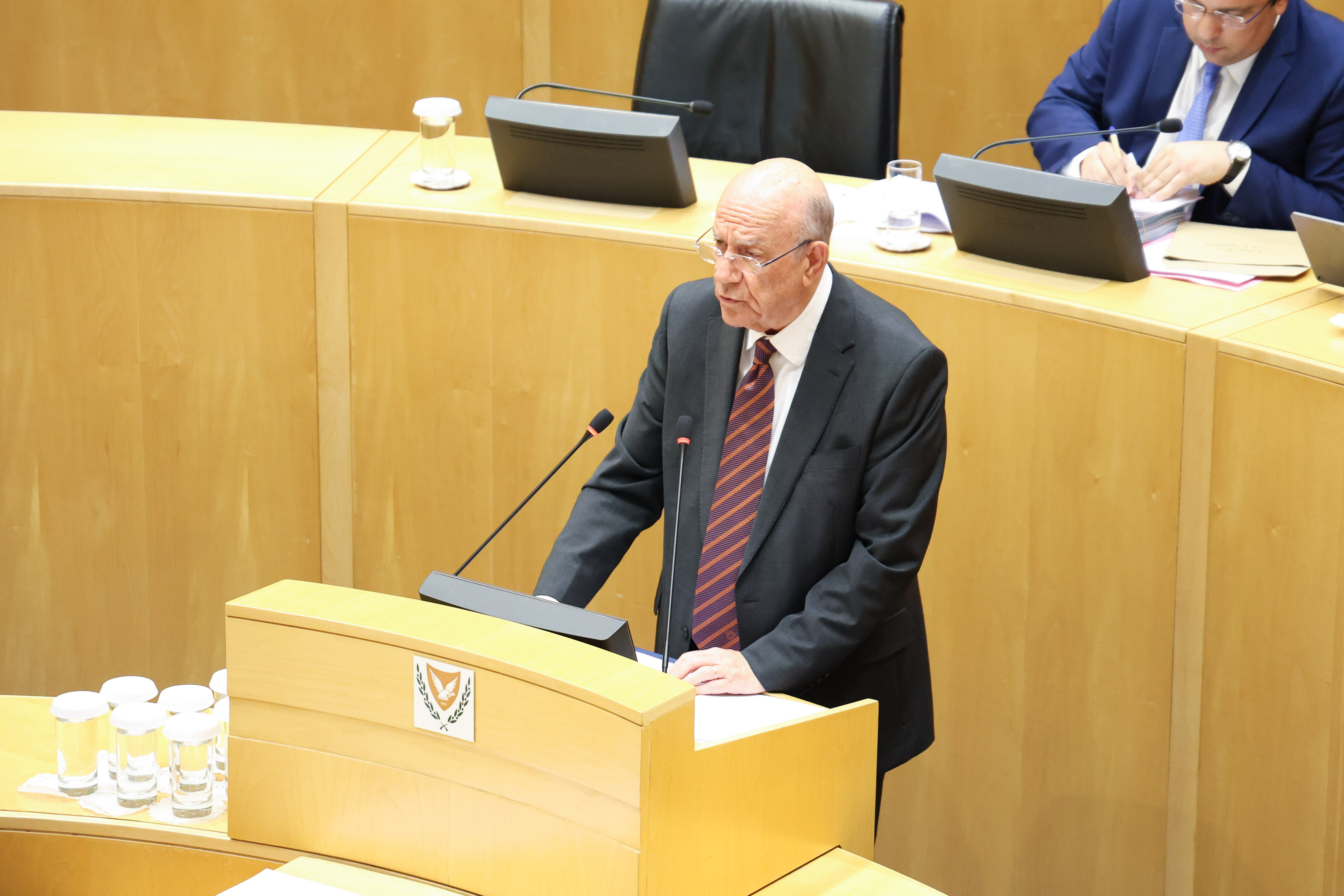
‘This is one of the most intense periods I’ve personally experienced as an MP’
MPs literally have their work cut out for them as the clock winds down on the calendar year, before the end of which the government expects them to have passed the vaunted overhaul of the tax system. And as the hard deadline looms, they’ll also have to deal with the state budget. Can it be done?
Possibly, but it will be very tight, said one parliamentarian who sits on the House finance committee vetting the government’s package of tax reform bills.
“It’s true, we have our backs against the wall,” Akel MP Andreas Kafkalias told the Cyprus Mail.
The government tabled the six bills at the end of October, with MPs taking the first peek at them in early November. It is a behemoth piece of legislation, but the administration let MPs tough it out, demanding they pass it in less than two months.
This type of gamesmanship is nothing new – the government ‘dumping’ pressing legislation on parliament, effectively presenting the latter with a fait accompli.
“They’re even guilt-tripping, telling us that if the tax reform doesn’t pass, it’ll be our fault,” Kafkalias said.
Asked whether the belated submission of the bills was deliberate, he didn’t think so.
“No, I wouldn’t go that far. It’s more down to poor planning on their part.”
So what’s the deal with the end-of-year deadline? Will it spell Armageddon if parliament misses it?
It has to do with the fact that in Cyprus the tax year begins on January 1. The rules and rates apply as of that date. And the reference period for any given tax year is from January 1 to the end of December.
So if the planned changes to the tax system don’t get enacted by January 1 of 2026, presumably a whole year would have to pass for them to kick in – meaning they’d get pushed back to the beginning of 2027.
At least that’s what the attorney-general’s office has let MPs understand.
“The AG insists there are constitutional reasons for passing the tax reform by end of year. Otherwise, they’ve warned, legal complications will arise.”
“Naturally, we complained about the tight timeframe. Despite this, as least as far as Akel is concerned, we’re scrambling, rolling up our sleeves and doing our best to work through the bills.”
The sentiment appears to be shared by all the parties in the House finance committee.
Last Friday the committee finished its first pass of the bills – the so-called article-by-article review. So they are making progress.
But there’s a twist: on Monday the government is supposed to table various changes it made to the original tax reform bills, following input from the parties and from interest groups.
If the government doesn’t submit the revised texts by Monday, it would really complicate matters, as every day counts.
Once MPs do get hold of the revised bills, they’ll have to do a second pass – making sure the government didn’t slip in something ‘naughty’.
And that will take up more time.
Next, assuming a consensus forms among the parties in the House finance committee, the bills can go to the plenum. But if there isn’t accord, the parties will draft their own amendments – more time.
Is there a consensus? It doesn’t look like it.
Kafkalias spoke of “major pending issues”: the tax-free threshold; the tax credits to families with three children or more; taxation of the provident funds; and the tax rates and the brackets.
Akel has already stated it intends to submit a comprehensive counter-proposal to the government plan. Among other things, the party proposes that provident funds be fully exempt from income tax, a permanent slashing of VAT on electricity from 19 per cent to 5 per cent, and zero VAT on essential goods.
It’s been 22 years since the tax regime was last revised. The government blueprint now envisages raising the tax-free threshold from €19,500 to €20,500.
Also, families can get tax credits of €1,000 per child (or €2,000 for single-parent households); €1,000 per student child (in full-time education); a €1,500 deduction for interest on performing loans or rent for a primary residence; and a €1,000 deduction for energy upgrades or electric-vehicle purchases.
Eligibility for these deductions applies to households with annual family income below €80,000, large families below €100,000, and single individuals below €40,000.
The scope of allowable tax deductibles will be expanded. Insurance premiums covering permanent or partial disability may now be deducted (in addition to life insurance), and home insurance premiums against natural disasters qualify for a deduction up to €500 per year.
Meantime corporate tax will rise from 12.5 per cent to 15 per cent.
And tax compliance will be tightened up, so that wayward businesses would get shuttered until they pay up.
At the same time as dealing with the monumental task of reviewing the tax reform legislation, MPs will also have to contend with the state budget for 2026. This will go to the plenum in the week starting December 14. The budget debate, along with the vote, will take up three whole days.
And, in another plot twist, the government has tabled amendments to the 2026 budget – these also have to be vetted.
Plus, and in a novelty seen this year, the government has submitted an amending bill for the 2025 budget. The amending bill involves shifting around funds from one expenditure item to another. More work for the MPs.
Lastly, the government has submitted a supplementary budget for 2025 – requesting additional funds.
The 2025 amending and supplementary budget bills will require separate sessions of the House plenary – although these two could be rolled into the same session.
“This is one of the most intense periods I’ve personally experienced as an MP,” Kafkalias told us.





Click here to change your cookie preferences