
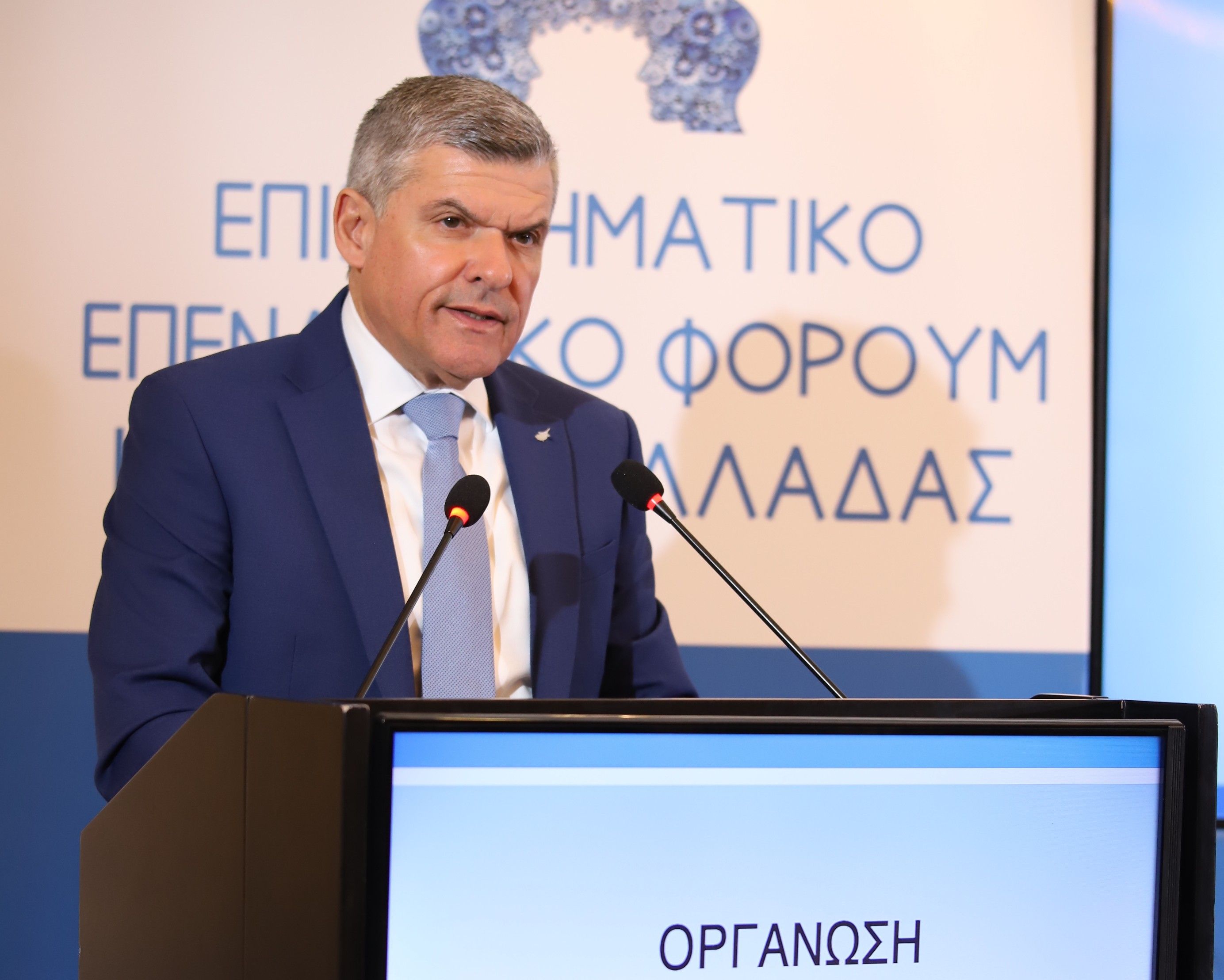
Three former ministers who left the government in last Friday’s reshuffle are now subject to strict restrictions on accepting work in the private sector, as required by Cypriot law.
George Papanastasiou, former energy minister, Yiannis Panayiotou, former labour minister, and Marilena Evangelou, former deputy welfare minister, must each obtain permission from an independent tripartite committee before taking up any private employment during the next two years.
The case of former energy minister Papanastasiou is considered particularly sensitive, as, in addition to privileged information, he also handled classified material concerning Cyprus’ strategic plans in the hydrocarbons sector.
Before entering government, he spent 26 years at British Petroleum in senior management roles and later served as general manager and chief executive of VTT Vasiliko Ltd, the company that built the energy products storage and management terminal at Vasiliko.
For the next two years he will not be permitted to work in related sectors without the committee’s explicit approval.
The aim is to prevent the use of privileged information gained in office for the benefit of new employers and to the potential detriment of the state.
The law requires that by former state officials, judges and civil servants must apply to the committee before beginning work with any private employer within two years of their departure.
The requirement applies to the first such job and to every subsequent role undertaken within that two-year period.
When applying, former officials must disclose whether they had dealings with a prospective employer during their final two years in office, whether they accessed sensitive commercial information relating to that employer’s competitors, whether they exercised decision-making powers or gave advice that could be construed as benefiting the employer, and whether they were involved in policy decisions not yet made public which could now offer an advantage.
For former judges, the committee also examines whether they had access to confidential material that could give rise to a conflict of interest.
The committee, composed of representatives of the legal service, the audit service and the general accounting office, was created to safeguard the public interest by preventing former officials from exploiting state information for personal gain.
Anyone who undertakes private employment without notifying the committee faces a fine of up to €30,000, imprisonment for up to three years, or both.
The same penalties apply to those who knowingly submit inaccurate information.
Failure to apply at all can lead to a €10,000 fine or up to one year in prison, while continued non-compliance carries a further €500 penalty for every day the infringement continues up to the maximum of €30,000.
Breaching the confidentiality of the committee’s procedures is punishable by a fine of €8,000, up to one year in prison, or both.





Click here to change your cookie preferences