
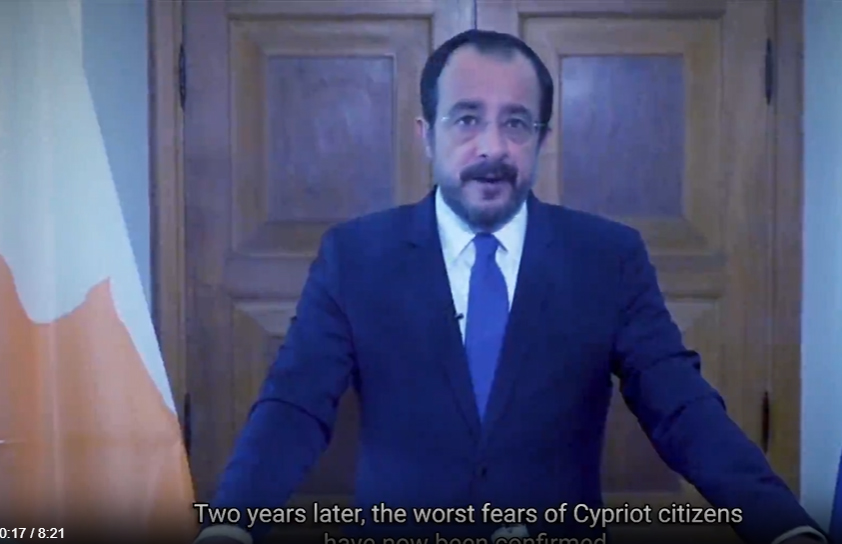
A video alleging campaign finance lawbreaking by President Nikos Christodoulides and his associates has left a bitter aftertaste among the majority of the public, hurting the president’s ratings, a poll published on Monday found.
The survey was carried out in the immediate aftermath of the release of the video, purportedly showing that friends and associates of the president solicited cash donations from business interests in exchange for influence and access to the presidential palace.
The video’s release on X led to a political firestorm and the resignation of the president’s chief of staff, one of the persons appearing in the clip.
The government described the incident as a “hybrid attack” against Cyprus. Authorities are investigating.
Commissioned by Alpha and carried out by RAI Consultants, the latest poll surveyed 1,032 respondents.
It found that 58 per cent think the affair has badly affected the president’s image; only 19 per cent think the damage to Christodoulides is slight.
An additional 11 per cent said the president’s image was not affected at all, nine per cent said they were not familiar with the matter, and three per cent gave no answer.
Commenting on the results, Olympios Toumazos, the CEO of RAI Consultants, said the vast majority of the public (71 per cent) have watched the video.
The negative impressions are shared across age groups and genders.
Asked about their first impression after having watched the video, 37 per cent of respondents expressed disappointment and shame, 24 per cent conveyed cynicism opining that such occurrences are not unexpected, 13 per cent attributed the affair to corruption and unlawful practices, and 12 per cent were outraged.
In addition, nine per cent said they have lost their trust in the political system.
At the same time, though, just 2 per cent blamed the president personally.
Another interesting find was that the government’s own narrative about the video failed to get much traction. Only 13 per cent of respondents doubt the video is authentic, just four per cent believe it’s a ‘conspiracy’ against the government, and two per cent will make up their minds once the case has been investigated.




Click here to change your cookie preferences