
The abolition of the controversial social support agency moved closer on Wednesday, as the government confirmed it is preparing legislation to transfer the body’s responsibilities to the grants and benefits service of the finance ministry.
Appearing before the House institutions committee, a ministerial representative affirmed the government considers “the agency’s lifecycle complete” and is working on a bill that would relocate its functions to the state’s existing allowances and student welfare mechanisms.
They further stressed that transitional arrangements would ensure the uninterrupted examination of applications and the timely payment of support to eligible students, with no beneficiary affected by the change.
The social support body for needy students was set up in 2014 and initially operated under the patronage of former first lady Andri Anastasiades, before responsibility passed to Philippa Karsera Christodoulides after her husband’s election.
On January 8, a video was released alleging that cash contributions to the body were used to sidestep campaign finance rules and gain influence with the state.
In the wake of the video’s publication, Karsera stepped down from her position, while the president had previously remarked that he was considering the organisation’s complete abolition following the revelations.
At the committee, two competing legislative proposals were discussed in parallel.
One, submitted by Akel and co-signed by Disy MP Kyriakos Hadiyiannis and independent MP Alexandra Attalides, calls for the agency’s outright abolition within a defined transition period.
The second, tabled by Disy MP Nikos Georgiou and supported by Edek MP Kostis Efstathiou, seeks to retain the agency but overhaul its governance framework.
Presenting his proposal, Georgiou said the bill respected both institutional norms and a recent court ruling that found the previous legal framework unconstitutional.
“The aim is to address the deficiencies that led to the judgement, while safeguarding transparency and accountability,” he said.
His proposal introduces limits on private donations, allowing contributions from individuals or legal entities up to a maximum of €50,000, alongside measures designed to prevent conflicts of interest.
It also bars the first lady or any person associated with the president from chairing the agency, stipulating instead that the chair be “a person of recognised standing and character” who is not politically exposed.
Donations exceeding €500 would be published, subject to donor consent.
Where consent is withheld, the contribution would not be accepted.
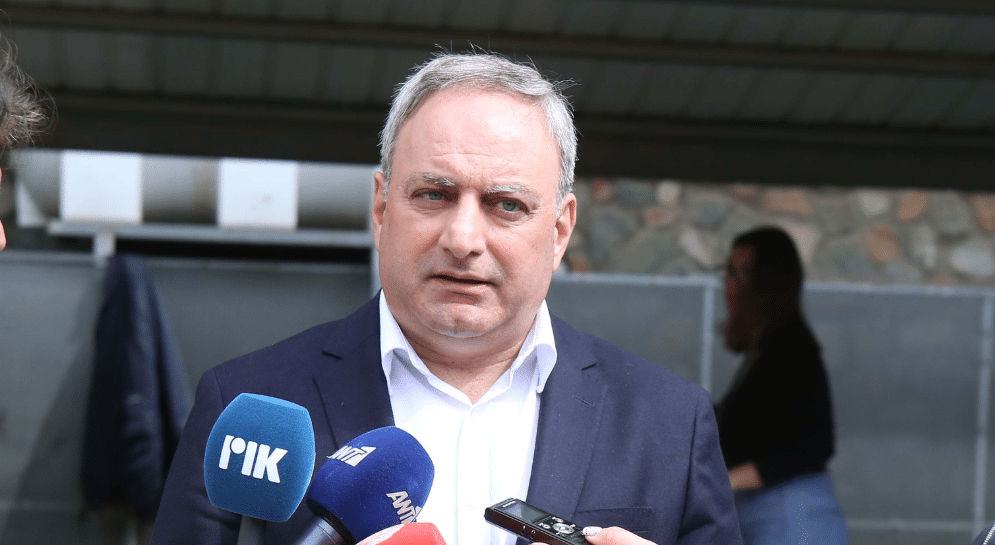
Akel secretary-general Stefanos Stefanou, presenting his party’s proposal, argued that reform was insufficient and that the agency should be dissolved altogether.
“Institutional entanglement and corruption unfortunately thrive in Cyprus,” he said, pointing to recent domestic scandals as evidence that parallel structures linked to the executive undermine public trust.
“The fund should terminate its operation if we want to convince society that we are serious about closing spaces that function as incubators of entanglement and corruption,” he said.
Stefanou stressed that student welfare could be adequately covered by existing institutions, citing the state scholarships foundation as an example of a body operating with defined accountability mechanisms.
“It does not operate out of the presidential palace,” he said.
He also warned that even well-intentioned sponsorships from individuals or companies with dealings with the state could create “an objective process that leads to institutional entanglement and corruption”.
Under Akel’s proposal, the agency would cease operations after a three-month transition period, during which all pending arrangements would be completed.
“No one should lose assistance they receive or expect to receive,” Stefanou stressed, adding that Akel supports strengthening the scholarships foundation so it can continue to reward excellence alongside social need.
The finance ministry representative told MPs that the government’s preferred solution is the transfer of obligations to the allowances and student welfare service within the ministry, which already has the administrative capacity and oversight mechanisms required.
“None of the applicants will be victimised,” he said, affirming the need for transitional provisions while the legislation is finalised.
Accountant-general, Andreas Antoniades, told the committee that transferring the agency’s assets to the scholarships foundation would not be legally permissible.
Antoniades said the grants and benefits service was better suited to absorb the agency’s functions.
“The same audits will apply, and the computer systems are compatible, which facilitates the transition,” he said.
He cautioned, however, that around 1,800 applications remain pending and must be processed to ensure eligible students receive support.
“A transition period of at least six months is necessary,” he advised.
Antoniades added that while donations could continue to be accepted by the grants service, the abolition of the agency was likely to reduce private contributions by as much as 70 per cent.
Akel MP Giorgos Loukaides argued that reliance on philanthropy was unsustainable and called for direct state funding.
He urged the government to allocate around €3 million to ensure continuity of student support.
“Students should not have to depend on the goodwill of companies,” he said.
Asked whether Akel would withdraw its bill if the government submitted its own legislation, Loukaides said the party was open to discussion.
“Since the agency is leaving the presidential office, we are ready to examine any alternative that achieves the same objective,” he said.
Attalides said recent revelations regarding donor access to the president raised serious questions.
“When charity intersects with the executive without adequate institutional filters, problems are bound to arise,” she said, adding that the agency had resisted accountability.
“The aim is not to abolish social support, but to move it to fully institutionalised and controlled mechanisms.”
MP Irene Charalambides further raised concerns over donor disclosure provisions, saying consent requirements for legal entities should align strictly with the court ruling.
Dipa MP Alekos Tryfonidis said his party supports transferring student grants to the deputy ministry of welfare, where comprehensive data on vulnerable families already exists.
“We are optimistic this proposal will be implemented soon,” he said.





Click here to change your cookie preferences