
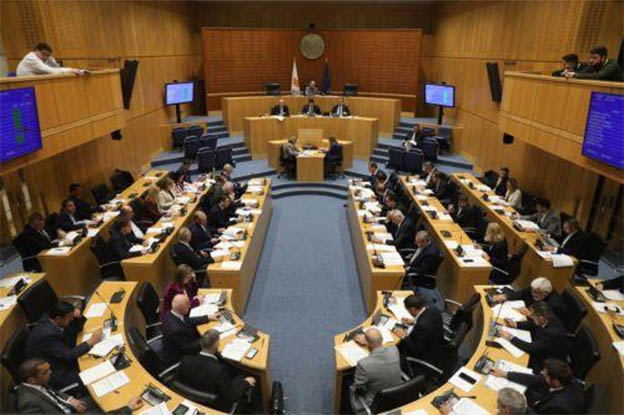
Cyprus held the lowest share of female representatives in the European Union in 2025, with women occupying only 14.3 per cent of seats in the national parliament, according to Eurostat.
This figure placed the nation at the bottom of the European rankings, trailing behind Hungary at 15.6 per cent and Romania at 22.0 per cent.
The situation in Cyprus stands in stark contrast to the EU-wide average, where women held 33.6 per cent of seats in national parliaments in 2025.
Across the broader Union, this average “marked a 5.4 percentage points (pp) increase compared with 2015” according to the latest figures.
While Cyprus struggled with low numbers, Finland at 46.0 per cent, Sweden at 44.8 per cent, and Denmark at 44.7 per cent boasted the highest shares of women in their legislatures.
Despite the low overall percentage, the report noted that all EU countries recorded increases in the share of female representatives compared with 2015, with the sole exception of Germany which saw a 3.5 pp decrease.
Some nations saw rapid transformations over the decade, such as Latvia with an increase of 19.0 pp, Malta at 14.8 pp, France at 10.9 pp, and Czechia at 10.6 pp.
The trend of rising female participation was also evident in national governments, where women held 31.9 per cent of seats across the EU in 2025.
This collective increase represented a 4.2 pp rise compared with the data from 2015.
Finland led the executive rankings with a female government share of 60.0 per cent on January 01, 2026.
Sweden achieved perfect parity at 50.0 per cent, and France reached nearly half at 48.6 per cent.
However, several nations continued to report very low numbers in their executive branches, including Hungary which had no women in its national government.
Romania recorded only 10.5 per cent female government members, while Czechia stood at 11.8 per cent.
In terms of growth since 2015, Finland saw the largest jump of 26.7 pp, followed by Lithuania at 20.4 pp and Estonia at 17.5 pp.
Conversely, six EU countries registered decreases in female government participation over the ten-year period.
Romania saw a major decline of 24.5 pp, while Slovenia dropped by 7.7 pp and Czechia fell by 5.8 pp.
The Netherlands decreased by 4.2 pp, Belgium by 1.1 pp, and Poland by 0.8 pp.
The data illustrates a widening gap between the leading Nordic nations and countries like Cyprus, which remain significantly below the continental average for gender representation.





Click here to change your cookie preferences