
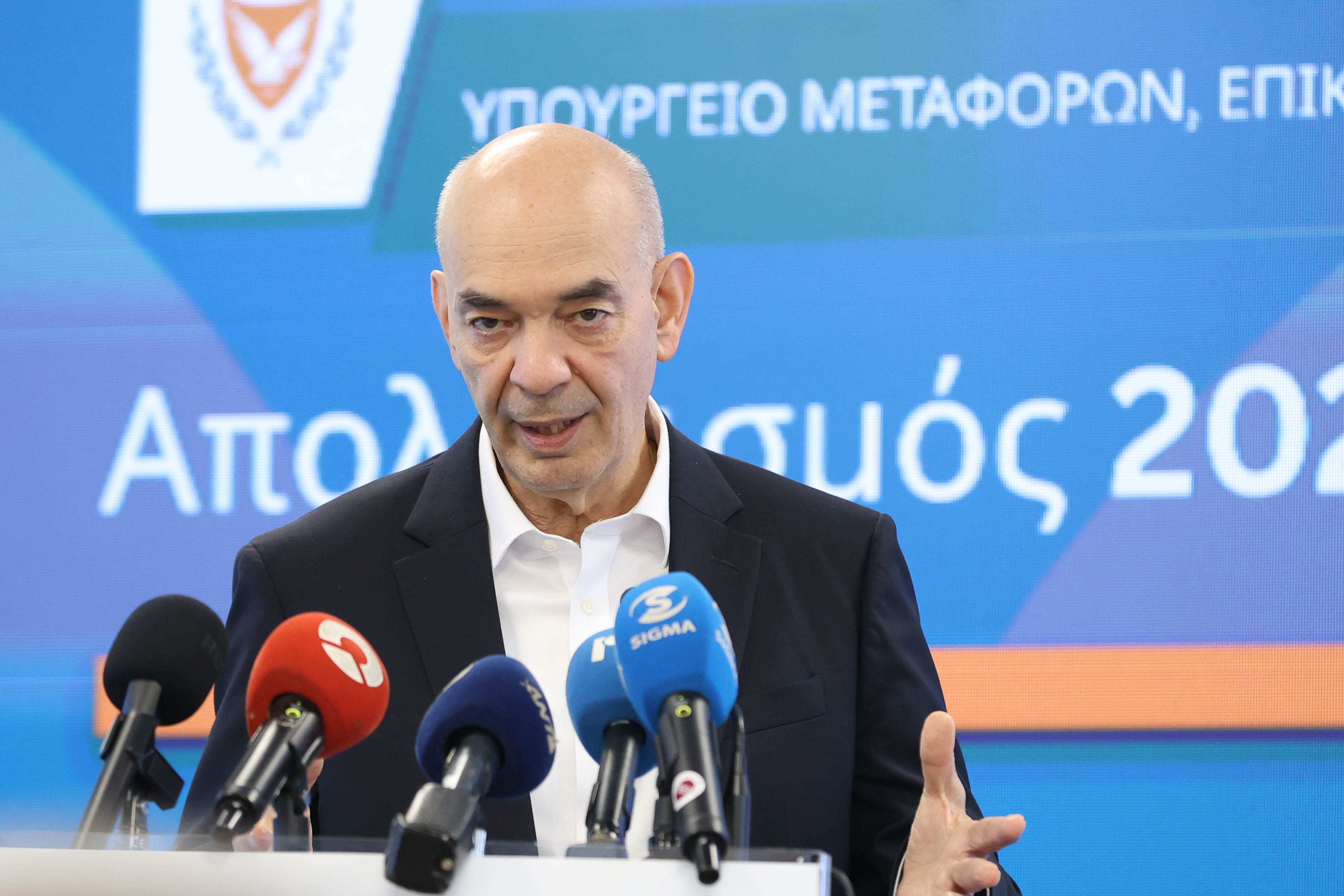
Transport Minister Alexis Vafeades on Monday outlined the implementation of his ministry’s policies and projects for 2025, highlighting progress in electromobility, road infrastructure, ports, airports and public transport.
Presenting the ministry’s annual review, Vafeades said policy is built around four key pillars: faster mobility, green transition, improved infrastructure and better service for the public.
On electromobility, he said a new grant scheme is being prepared, extending support until 2030, as the shift to electric vehicles (EVs) continues but still requires state backing.
“The market has not yet reached the point where electromobility will progress without government intervention,” he said, noting that although EV prices have fallen, they remain high enough to influence consumer choices.
Around 2,500 subsidies worth €21.5 million were granted in 2025, which he said shows the transition is gradually gaining pace.
The government aims to have about 85,000 electric vehicles on Cyprus roads by 2030, though Vafeades acknowledged that the target depends largely on international market trends. “If we register around 15,000 electric vehicles per year over the next four years, we can approach the target,” he said, while noting uncertainty due to developments in Europe and increased activity in China.
He added that growing interest in hybrid vehicles could also help reduce emissions, stressing that the ultimate goal is cutting pollution rather than reaching a specific number of EVs.
On charging infrastructure, he said a scheme to develop private charging points has not attracted the expected interest, prompting consideration of stronger public intervention.
Road projects and traffic
Vafeades also addressed delays in the Paphos-Polis Chrysochous road project, saying the original contract was terminated after the contractor failed to meet obligations.
“If the contract had not been terminated, we would still be at a standstill,” he said.
The project was retendered in August 2025, but legal challenges by the previous contractor caused delays. New bids are expected by the end of March, while plans for a four-lane highway extension are also underway.
The minister said the project is critical for the region’s development, improving road safety and connectivity.
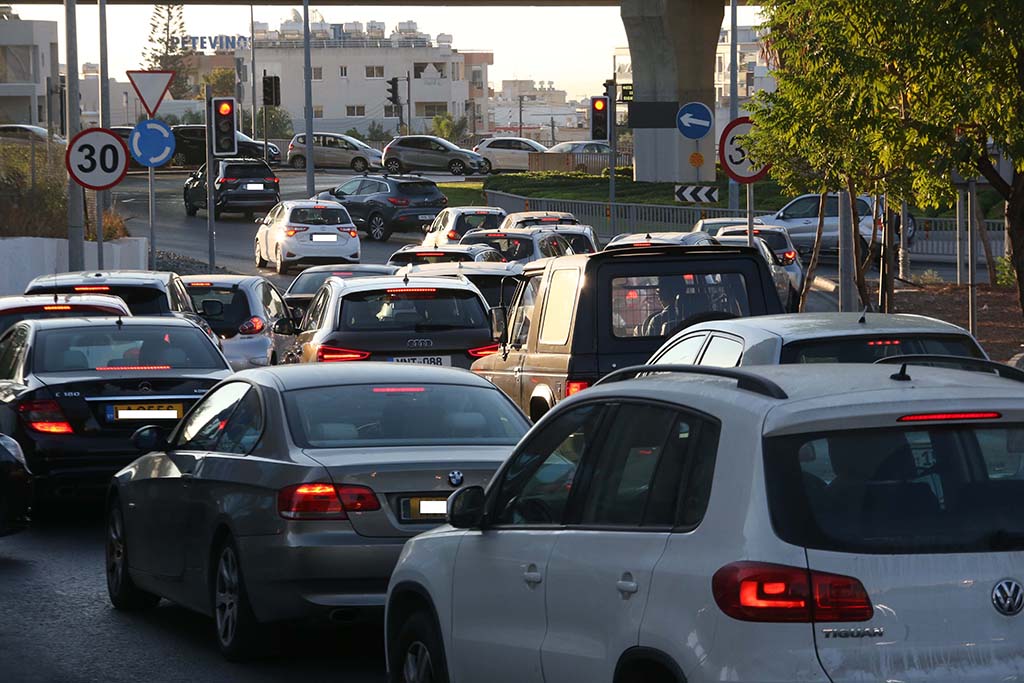
Traffic congestion in Limassol was also highlighted, with around 13,000 new vehicles registered annually in the city.
“This significantly increases pressure on the road network,” he said, noting that major expansions have not been carried out in the past 15 years.
Plans are underway for the Limassol northern bypass, with tenders for the first phases expected by the end of the year, alongside smaller projects to ease motorway congestion.
Ports, airports and public transport
On ports, Vafeades said revenues from Limassol port have risen significantly since its privatisation, reaching around €60 million in 2025, while container traffic approached 500,000 units.
In Larnaca, studies are underway to determine the future development model for the port and marina following the termination of the Kition contract.
In aviation, passenger traffic hit a record 13.7 million in 2025, with connections to 41 countries. The surge has put pressure on airport infrastructure, leading to expansion works following arbitration that ruled in favour of the state.
Public transport usage reached 28 million passenger trips and continues to rise, though overall usage remains low at 3–5 per cent of the population.
Vafeades said the ministry is addressing challenges such as a shortage of professional drivers, while warning that any unilateral suspension of services like Pame Express would breach contractual obligations.
On the prospect of introducing a tram system, the minister recalled that a previous study carried out on behalf of the European Commission had concluded that such a project would not be financially viable due to Cyprus’ low population density. The same study had recommended revisiting the issue in 2035. However, he said the ministry has requested an updated assessment to determine whether new data could make the project viable. “The worst thing is to create infrastructure that cannot be sustained. A project must be viable in order to stand the test of time,” he said.
Water, safety and future planning
The minister also defended the traffic camera system, saying it is not revenue-driven but has helped reduce violations and improve road safety.
Plans are underway to introduce “smart” traffic lights capable of adapting to real-time traffic conditions, instead of countdown timers, which experts say may cause confusion.
Nine major road projects were underway in 2025, including highways linking Nicosia with rural areas and upgrades to key infrastructure such as the Kalavasos bridge.
The ministry’s total budget for 2025 exceeded €500 million.
Vafeades said passenger traffic reached a record 13.7 million, which “reflects the serious work carried out not only in airport management but also in the development of the tourism and business model”. He expressed hope that 2026, despite ongoing challenges, “will be another good year and that we will at least reach these levels”.




Click here to change your cookie preferences