
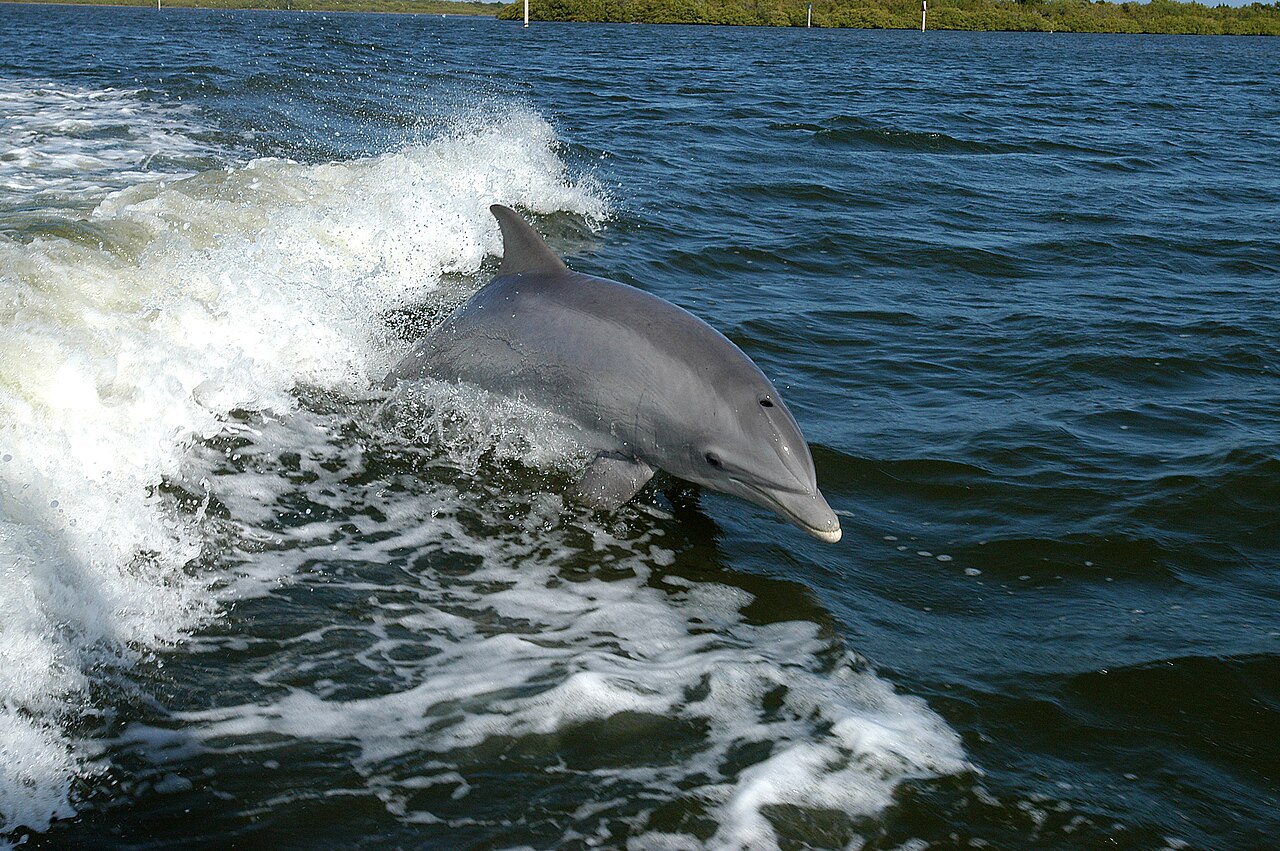
Dolphins – cute, clever dolphins, the tourist’s friend – are actually a menace, according to fishermen.
“This is an SOS,” says Antonis Zampas, a fisherman in the Famagusta district, describing how increasingly brazen and (he claims) more numerous dolphins are causing such destruction that he – and many of his colleagues – may be forced to withdraw from the sea altogether.
Bottlenose dolphins, the species found near the coast around Cyprus, can be three metres long, and a school includes as many as 10 specimens, says Zampas. The damage they cause as they tear through a fisherman’s net is considerable.
“It’s a double blow,” he told the Cyprus Mail. “They get our fish, so we can’t make a living, and they destroy our nets as well.”
Recently, he says, he suffered about €1,900 worth of damage in a single day.
The state offers some compensation – but it’s not about money, says Zampas, it’s about finding a solution to the problem.
“We’d prefer that they don’t give us a single cent, and drive away the dolphins.”
Unfortunately that’s out of the question, is the reply from the department of fisheries and marine research.
The department agrees that dolphin sightings have become more common, and put out a statement to that effect last week. However, they believe overall numbers haven’t increased, and remain quite low. There are fewer than 100 bottlenose dolphins in Cypriot waters, though a study is underway to carry out a more precise count.
It’s unclear why more are being spotted. One theory is that people have become more aware of their presence, often hyped by tourist boats. It may also be that climate change has pushed the cetaceans to shallower waters.
In any case, according to senior officer Myrto Ioannou, “dolphins are a protected species, we can’t drive away the dolphins.
“They’re in their natural environment, they’re protected – we have to respect them.” In fact, “we welcome dolphins in the sea. For a healthy marine environment, we want to have dolphins”.
Cyprus is actually the only EU country where the state even pays compensation for damage caused by dolphins. Other countries have asked to study our methodology, having none of their own.
What’s more, that compensation – paid through the EU fisheries fund – only covers lost yield, not fishing equipment, meaning Zampas and his fellow fishermen can only be paid for fish lost to dolphins, not damaged nets.
That’s unlikely to be enough. The two sides seem to be at an impasse, their priorities at cross-purposes with each other.
Solutions have been tried, like pingers sending out a signal to interfere with the dolphins’ sonar. Dozens were purchased and handed out to the fishermen – and they did work, for a couple of months.
Unfortunately, bottlenose dolphins are extremely intelligent, and soon figured out that they were being scammed. In fact, says Ioannou, far from repelling the animals, the pingers became “like a little bell signalling the presence of food”.
Zampas calls for the state to “take the matter seriously” and find a solution, instead of urging boats and tour operators not to disturb the protected species.
“Meanwhile fishermen are being destroyed,” he complains. “Who’ll protect us?”



Click here to change your cookie preferences