
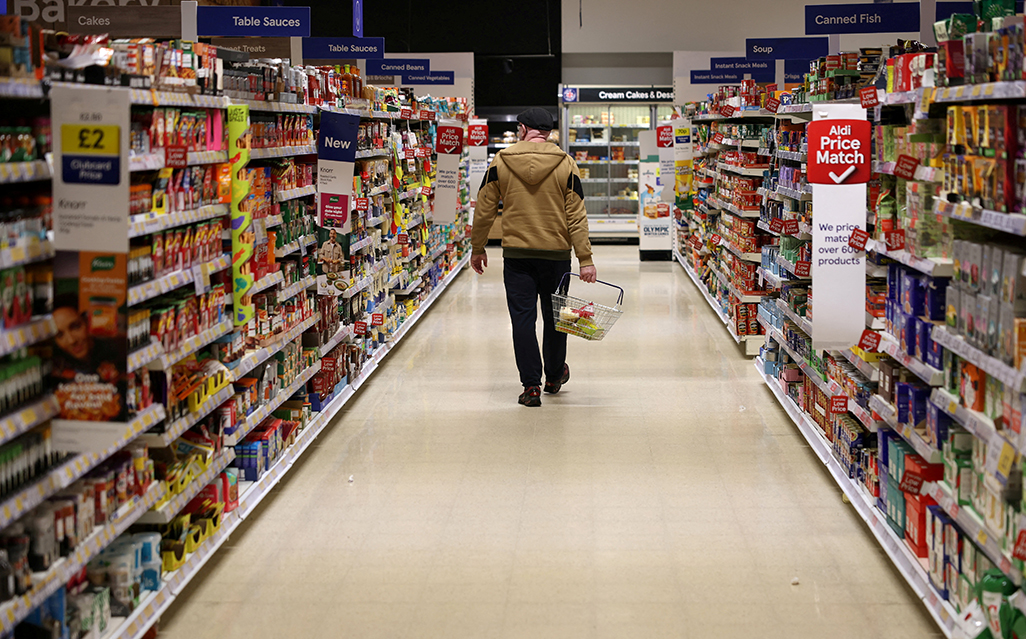
Britain’s government ruled out mandatory supermarket price caps on Wednesday, but said it was in talks with the sector on ways to ease cost-of-living pressures partly driven by the Iran war.
Prime Minister Keir Starmer, facing potential leadership challenges after a heavy local election defeat this month, is pushing departments to shield households from rising prices.
Suggestions of price caps, however, drew a sharp backlash.
Marks & Spencer Chief Executive Stuart Machin called the idea “completely preposterous”.
On Tuesday, a Financial Times report, later confirmed by Reuters, said the government was asking major supermarkets to introduce price caps on key products such as eggs, bread and milk, in exchange for delaying levies and relaxing regulations.
A day later, Treasury minister Dan Tomlinson played down the proposal.
“The government is going to be having conversations with supermarkets about what more we can do to support households, but no, we are not going to be implementing a mandatory price cap,” he told BBC radio.
The Scottish National Party, which holds power in Scotland’s devolved parliament, has announced a plan to introduce a maximum price for “essential” supermarket items.
“I don’t think the government should be trying to run business. I think they should probably try to understand business better,” Machin told reporters after M&S reported annual results.
He said many retailers, including M&S, already sold staples such as milk, bread and bananas at a loss, adding that easing tax and regulatory pressures would do more to curb food inflation.
The sector says recent government measures – higher employer taxes, a rise in the minimum wage, new packaging levies and proposed product reformulations – were already stoking inflation before added pressure from the Middle East conflict.
Asked about the FT report, a finance ministry spokesperson said on Tuesday that finance minister Rachel Reeves “has been clear we want to do more to help keep costs down for families, and will set out more detail in due course”.
Official data on Wednesday showed food inflation eased to 3.0% in April, but the Bank of England has said firms it spoke to last month expect it to reach 6% to 7% later this year.
The British Retail Consortium, which represents major supermarket groups including market leader Tesco TSCO.L and Sainsbury’s SBRY.L, said it opposed price caps.
“Rather than introduce 1970s-style price controls and trying to force retailers to sell goods at a loss, the government must focus on how it will reduce the public policy costs which are pushing up food prices in the first place,” BRC CEO Helen Dickinson said.
A 2023 investigation by Britain’s competition regulator cleared supermarket groups of profiteering during a cost-of-living crisis, when food inflation peaked at 19%.
On Wednesday, Reeves said she will give the Competition and Markets Authority stronger powers to crack down on companies found to have raised prices unfairly during crises.





Click here to change your cookie preferences