
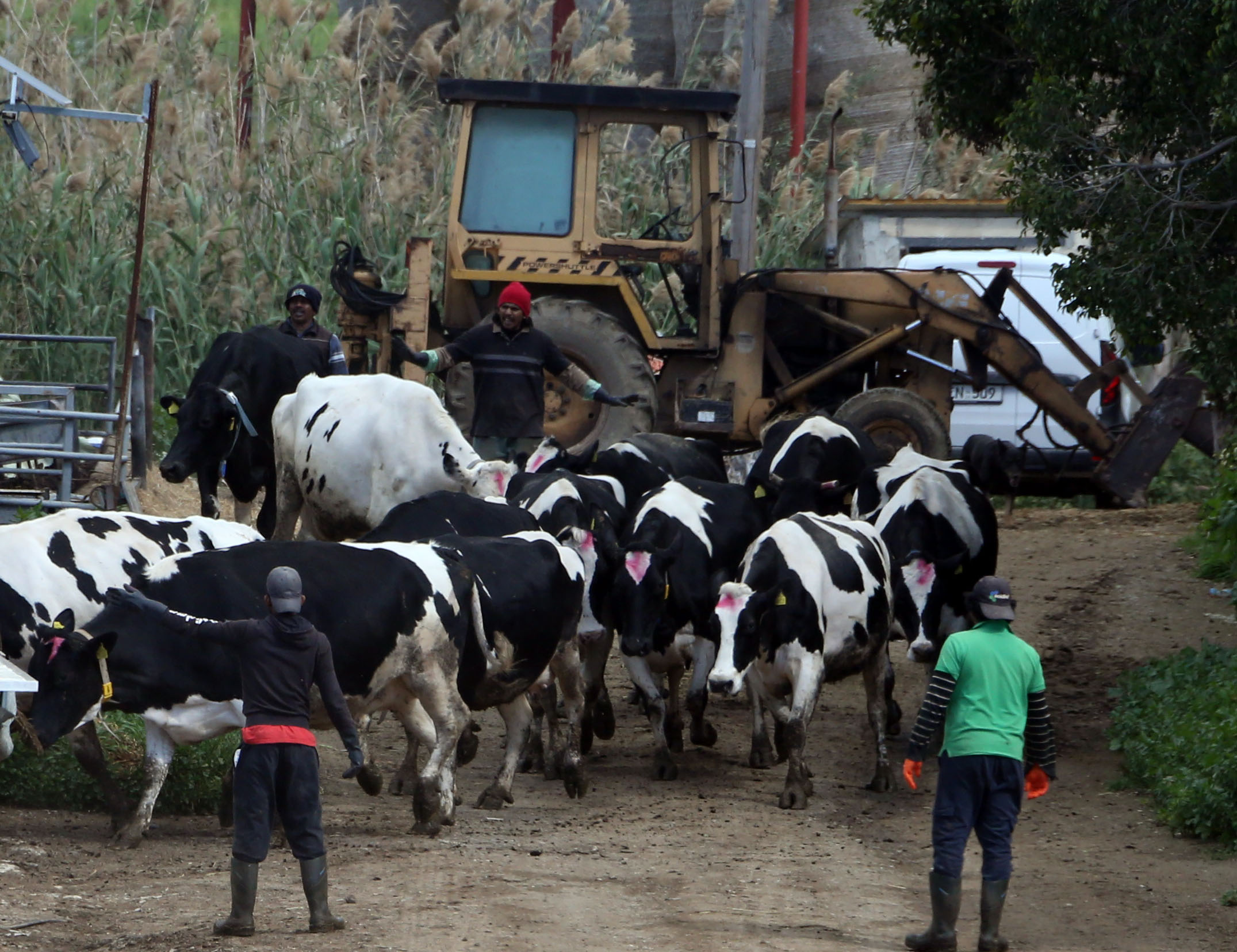
The culling of about 6,000 animals affected by foot-and-mouth disease is still pending Dimitris Epaminondas, president of the Pancyprian Veterinary Association said on Wednesday.
He added that the second phase of the national vaccination programme should finish in the next two to three months.
He said the measures were discussed at an expanded meeting held at the presidential palace, where authorities reviewed the ongoing response to the outbreak and agreed on further steps to contain the disease.
Epaminondas said the planned culling follows European Union regulations, which require the removal of animals in confirmed infected units.
He stated that the president had ordered the immediate culling of animals in affected units to enhance containment and surveillance within 10-kilometre protection zones around new cases in Nicosia and Limassol.
Approximately 70,000 animals have already been culled since the outbreak began, with a further 6,000 still awaiting the procedure.
“These will be carried out as soon as possible once suitable burial sites are identified and the necessary teams are ready,” he said.
Epaminondas stressed that the safety of personnel involved in the culling operations remains the top priority.
He said operations will not proceed without police presence to ensure security and coordination on the ground.
“The protection of the personnel carrying out the killings is the most important criterion,” he said.
He mentioned measures to prevent the illegal movement of animals to occupied areas, highlighting that enforcement will depend on stricter monitoring at crossing points and the ceasefire line by police and military, along with higher fines for violations.
He said effective compliance by livestock farmers would be crucial for the success of these measures.
On vaccination efforts, Epaminondas said the programme is progressing in line with vaccine availability.
He confirmed that additional doses are expected in the coming weeks, with 500,000 doses for ruminants such as cattle, goats and sheep due by the end of the week, and a further 500,000 doses for pigs expected later in the month.
He said these deliveries would allow completion of the second phase of the vaccination campaign, covering the entire animal population nationwide.
“We will probably even have quantities left for a third booster dose,” he said.
However, he noted that some livestock units have not yet completed full vaccination, while others are still awaiting second doses.
“Realistically, we will need another two to three months to complete the second phase of vaccination,” he said, adding that full coverage depends on logistics, distribution schedules and farm-level access.
Epaminondas concluded that sustained coordination between veterinary services, police authorities and livestock farmers will be essential to bring the outbreak under control and complete the vaccination programme effectively.





Click here to change your cookie preferences